




Is Peppermint Tea Good for Gut Health? A Soothing Deep Dive
October 05, 2026
October 05, 2026

You have probably been there. You just finished a delicious meal, but instead of feeling satisfied, you feel like you are carrying a bowling ball in your abdomen. You quietly unbutton the top of your jeans under the table and wonder if everyone can see the "food baby" currently making its debut. It is a frustrating, uncomfortable moment that makes you dread the next time you sit down to eat. This is where the quest for relief begins, and for many, that journey leads straight to a warm mug of peppermint tea.
At Zenwise Health, we believe that you should look forward to your meals, not fear the aftermath. Our philosophy is simple: "Zenwise. Then Eat.®" This means prioritizing your digestive environment so that food remains a source of joy. Peppermint tea has been a household staple for centuries, often touted as the ultimate "stomach soother." But is it truly the secret to a happy gut, or just a pleasant-smelling distraction?
Peppermint tea can be a powerful ally for many people seeking occasional relief from bloating and gas. It works by interacting with the muscles of your digestive tract to help things move along more smoothly. However, it is not a one-size-fits-all solution. Whether peppermint tea is "good" for your specific gut health depends on your unique digestive profile and how you use it.
Quick Answer: Yes, peppermint tea is generally excellent for gut health because it helps relax the smooth muscles of the digestive tract, which can reduce occasional gas and bloating. However, people with acid reflux or GERD should avoid it, as it may worsen heartburn.
Peppermint (Mentha × piperita) is actually a natural hybrid—a cross between watermint and spearmint. While it grows abundantly today, it has been used for thousands of years by ancient civilizations, including the Greeks, Romans, and Egyptians. They recognized early on that this aromatic herb was more than just a breath freshener.
The tea itself is made by steeping the leaves of the peppermint plant in hot water. This process releases essential oils, most notably menthol, menthone, and limonene. Menthol is the heavy hitter here; it is the compound responsible for that cooling, tingling sensation and the distinct minty aroma.
When we talk about gut health, we are often talking about the microbiome. This is the massive community of trillions of bacteria and microorganisms living in your intestines. While peppermint tea does not necessarily "feed" these bacteria like a prebiotic would, its essential oils interact with the physical structure of the gut to create a more comfortable environment for digestion to occur.
The primary reason peppermint tea is so highly regarded in the wellness world is its ability to act as an antispasmodic. This is a fancy way of saying it helps prevent muscles from spasming or cramping. To understand why this matters, we have to look at how food moves through your body.
Your digestive tract is essentially a long tube lined with smooth muscle. These muscles engage in peristalsis, which is the wave-like contraction and relaxation that pushes food through the system. Sometimes, these muscles can become "dramatic." They might contract too tightly or out of sync, leading to that cramped, painful feeling we often associate with indigestion.
Menthol in peppermint tea acts as a calcium channel blocker for these smooth muscles. By blocking the flow of calcium into the muscle cells, it prevents them from over-contracting. This allows the walls of your gut to relax, which can help ease the passage of gas and reduce the sensation of "trapped" air.
Another way peppermint tea supports digestion is by encouraging the flow of bile. Bile is a fluid produced by the liver and stored in the gallbladder. Its main job is to help break down fats. When you drink peppermint tea, it may stimulate your gallbladder to release bile more effectively.
If you have ever felt a heavy, greasy weight in your stomach after a fatty meal, your body might be struggling to process those lipids. By supporting bile flow, peppermint tea helps the body move those fats through the small intestine more efficiently.
Key Takeaway: Peppermint tea works primarily by relaxing the smooth muscles of the digestive tract and supporting the breakdown of fats through increased bile flow.
Bloating is perhaps the most common digestive complaint in the US. It is that feeling of excessive pressure, often accompanied by a visible swelling of the stomach. For many, it feels like their digestive system has just hit a "pause" button.
Bloating usually happens for a few reasons:
Peppermint tea addresses the "trapped" aspect of bloating. By relaxing the gut muscles, it allows that built-up gas to move through the system rather than staying stuck in one painful spot. It is a gentle way to encourage the body to finish the job it started.
While a cup of tea is a lovely ritual, many of our community members find they need something a bit more robust when a heavy meal is on the horizon. This is where the "Zenwise. Then Eat.®" philosophy truly shines. We believe in preparing the gut before the first bite is taken.
If you know you are heading into a situation where bloating is likely—like a celebratory Italian dinner or a busy workday lunch—relying solely on a post-meal tea might leave you playing catch-up. Combining the soothing nature of peppermint with a proactive supplement can make a world of difference.
Our NO BLØAT® formula was designed exactly for these moments. It provides fast relief for bloating and gas by utilizing a blend of enzymes and botanicals. While peppermint is a great herbal choice, NO BLØAT® includes Fennel, Dandelion Root, and Ginger, which work alongside BioCore Optimum Complete enzymes to break down food before it can cause trouble.
As much as we love a good herbal remedy, peppermint tea is not a miracle cure for everyone. In fact, for a specific group of people, it can actually make things worse.
If you struggle with GERD (Gastroesophageal Reflux Disease) or chronic heartburn, you might want to keep the peppermint tea in the cupboard.
Remember how we mentioned that peppermint relaxes smooth muscles? Well, there is a specific muscle called the Lower Esophageal Sphincter (LES). This is the "gatekeeper" muscle located between your esophagus and your stomach. Its job is to stay tightly closed so that stomach acid does not splash back up into your throat.
Because peppermint is so good at relaxing muscles, it can inadvertently relax the LES. When that gate stays open, acid can escape, leading to that burning sensation we know as heartburn.
Myth: Peppermint tea is the best remedy for all stomach aches. Fact: If your stomach ache is actually acid reflux or heartburn, peppermint tea can worsen the irritation by relaxing the valve that keeps acid in your stomach.
People with a history of gallstones should also be cautious. Since peppermint stimulates bile flow, it could potentially cause issues if there are existing blockages in the gallbladder. As with any herbal supplement, if you have a diagnosed medical condition, it is always a good idea to have a quick chat with your healthcare provider.
Many people wonder if they should stick to drinking tea or if they need a digestive supplement. The answer usually comes down to your lifestyle and the intensity of your discomfort.
Tea is a fantastic, low-cost ritual. It forces you to sit down, breathe in the steam, and slow down. The warmth itself can be very soothing to a cramped stomach. However, the concentration of active oils in a standard tea bag is relatively low. You would have to drink a lot of tea to get the same concentration of menthol found in a targeted extract or supplement.
Supplements like Zenwise Digestive Enzymes offer a "3-in-1" approach that a single cup of tea cannot match. While peppermint relaxes the gut, our Digestive Enzymes actually do the heavy lifting of breaking down your food.
They contain:
If you are looking for a daily habit to support regularity and long-term gut health, a comprehensive supplement is often more effective than an occasional cup of tea.
| Feature | Peppermint Tea | Zenwise Digestive Enzymes |
|---|---|---|
| Primary Goal | Temporary muscle relaxation | Daily breakdown of fats, carbs, & proteins |
| Active Compound | Menthol / Essential Oils | Enzymes, Prebiotics, & Probiotics |
| Best For | Post-meal ritual / mild gas | Consistency / long-term regularity |
| Portability | Requires hot water | Easy-to-take capsule |
| Caffeine | None | None |
If you decide that peppermint tea is right for you, how you make it matters. You want to extract as many of those beneficial oils as possible.
Step 1: Choose your leaves. Fresh peppermint leaves from the garden or grocery store usually have a higher oil content than old tea bags that have been sitting in the pantry for two years. If using tea bags, look for high-quality, organic options.
Step 2: Use hot (but not boiling) water. Water that is at a rolling boil can sometimes "scorch" the delicate volatile oils in the leaves. Aim for just under a boil.
Step 3: Cover your mug. This is the most important step! Those minty aromas you smell are the essential oils escaping into the air. By placing a lid or a small saucer over your mug while it steeps, you force those oils to stay in the water.
Step 4: Steep for 5-7 minutes. Give it enough time to fully release the menthol. The water should turn a deep golden or greenish-amber hue.
Step 5: Sip slowly. Don't chug it. Part of the benefit of tea is the relaxation of the mind, which tells your nervous system to switch from "fight or flight" to "rest and digest."
In the world of gut health, one-off solutions rarely provide the lasting comfort people are looking for. Your gut microbiome is like a garden; it needs consistent care to flourish. While peppermint tea is a great "as-needed" tool, the real magic happens when you build a routine.
Maintaining a healthy gut environment supports your immune system, your energy levels, and even your mood. This is why many of our customers choose to use a daily supplement alongside their favorite herbal teas. Consistency is what turns "I feel okay today" into "I feel great every day."
For those who are always on the go, our Papaya Chewables are an excellent alternative to tea. They provide a tasty, effortless way to kickstart digestion after a meal without needing to find a kettle. They are perfect for the office or for keeping in your bag when you are traveling.
Bottom line: Peppermint tea is a valuable tool for occasional gas and muscle relaxation, but long-term digestive wellness is best supported through a consistent routine of enzymes and probiotics.
Think of your digestive health like a toolbox. Peppermint tea is your "finishing tool"—it is great for the final touch of comfort after a meal. But you also need the "foundation tools" like Digestive Enzymes and Women's Probiotics to ensure the whole structure is sound.
Our Women's Probiotics, for example, go beyond the gut to support vaginal and urinary tract health. By including ingredients like Cranberry and D-Mannose, they address the specific needs of the female body while still promoting a balanced gut flora.
When you have the right tools, you don't have to worry about the "Proof In The Poop™." You will see the results in your regularity, your comfort, and your confidence. No more fear of the restaurant menu. No more hiding under oversized sweaters. Just food freedom and a stomach that behaves itself.
Is peppermint tea good for gut health? For most people, the answer is a resounding yes. It provides a natural, caffeine-free way to soothe the digestive tract, ease occasional bloating, and support the breakdown of fats. By relaxing the muscles of the gut, it helps you move past that "stuck" feeling so you can get back to your day.
However, remember that tea is just one piece of the puzzle. "The Key To Good Health Is Gut Health.®" To truly transform how you feel, you need to look at the big picture—from the enzymes that break down your lunch to the probiotics that support your microbiome.
"A warm cup of peppermint tea is a wonderful way to tell your digestive system to relax. But for the heavy lifting of daily digestion, a consistent enzyme routine is your best friend."
If you are ready to take the guesswork out of your gut health, we invite you to try a more consistent approach. Consistency matters more than any single dose, as your microbiome thrives on regular support. Our Subscribe & Save Digestive Enzymes program makes this easy by giving you 15% off and ensuring you never run out of the support you need. It is a simple way to turn your gut health into a habit that sticks.
While peppermint tea is excellent at relaxing the muscles of the gut, it is not a stimulant laxative. It may help ease the discomfort associated with sluggish digestion, but it is typically used more for gas and bloating than for moving the bowels directly.
Yes, for most healthy individuals, drinking peppermint tea daily is perfectly safe and can be a beneficial part of a digestive routine. Just be mindful if you start experiencing heartburn, as that may be a sign to cut back.
Drinking it after a meal is the traditional way to support digestion and ease "fullness." However, some people enjoy sipping it between meals to keep their digestive system feeling calm and refreshed throughout the day.
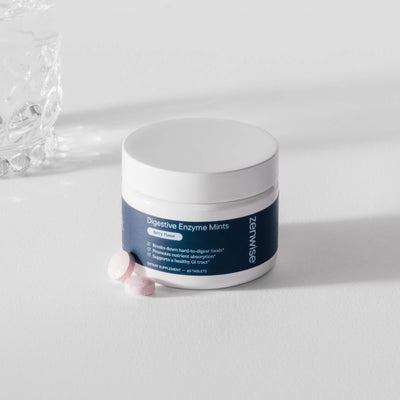
Yes, because peppermint has a calming effect on the smooth muscles and the aroma can be soothing to the nervous system, it is often a go-to for those who feel digestive tension during stressful times. For convenient post-meal support, Digestive Enzyme Mints can also fit easily into a daily routine.
These statements have not been evaluated by the Food and Drug Administration. This product is not intended to diagnose, treat, cure or prevent any disease.
Share this article


