




Do Prebiotics and Probiotics Help With Bloating?
May 11, 2026
May 11, 2026

We’ve all been there. You just finished a delicious dinner—maybe a big bowl of pasta or a stack of tacos—and suddenly, your jeans feel three sizes too small. You’re not just full; you’re "food baby" full. Your stomach feels like a tight drum, and you’re scanning the room for the nearest exit so you can discreetly unbutton your pants.
At Zenwise Health, we believe you should be able to enjoy your favorite meals without the looming fear of digestive drama, and our Digestive Enzymes fit neatly into that daily routine. Our philosophy is simple: "Zenwise. Then Eat.®" Because we know that the key to good health is gut health. When your digestive system is balanced, food becomes a source of joy and energy rather than a source of anxiety and discomfort.
One of the most common questions we hear is: do prebiotics and probiotics help with bloating? The short answer is yes, but the way they work together is a bit more nuanced than most people realize. By understanding how these two digestive powerhouses interact with your microbiome, you can stop guessing and start feeling like yourself again.
Before we dive into the solutions, we need to talk about why your stomach decides to act like an overinflated balloon in the first place. Bloating isn’t a mystery; it is usually a signal from your gut that something in the digestive process has hit a speed bump.
Occasional bloating is often caused by excess gas production. This happens when your gut bacteria ferment undigested food in your large intestine. If your microbiome—the community of trillions of bacteria living in your gut—is out of balance, you might have too many "gas-producing" bugs and not enough "gas-reducing" ones.
Slow digestion can also lead to that heavy, puffed-up feeling. When food moves through your system at a snail's pace (a process called peristalsis), it has more time to sit and ferment. This leads to more gas and more pressure. Whether it’s caused by a heavy meal, travel, or just a stressful Tuesday, the result is the same: discomfort that gets in the way of your life, and sometimes a fast-acting option like NO BLØAT® is the right fit.
Quick Answer: Yes, prebiotics and probiotics can help reduce occasional bloating. Probiotics add beneficial bacteria to balance your microbiome, while prebiotics provide the fuel those bacteria need to thrive and support efficient digestion.
Think of probiotics as the "good guys" you’re inviting to the party in your gut. They are live microorganisms that, when taken in the right amounts, provide a health benefit to you.
Probiotics help by crowding out the less-helpful bacteria. When your gut is populated with plenty of beneficial strains, there is less room for the microbes that produce excessive gas. They also help maintain the gut barrier, which is the lining of your intestines that keeps everything moving where it should.
At Zenwise, we use specific, high-quality strains in our formulas, and our Digestive Enzymes include DE111®, a spore-forming probiotic. Unlike some delicate probiotics that might die off in the harsh, acidic environment of your stomach, DE111® is built to survive. It stays tucked away in its protective "spore" until it reaches your lower digestive tract, where it can actually get to work.
Not all probiotics are the same. If you’re looking for support with gas and bloating, these are some of the most researched genera:
If probiotics are the guests at the party, prebiotics are the catering. You can take all the probiotics in the world, but if they don't have anything to eat, they won't stay long or do much work.
Prebiotics are specialized plant fibers. Your body can’t actually digest them, but your beneficial gut bacteria love them. When probiotics consume prebiotics, they produce short-chain fatty acids. These compounds help fuel the cells in your colon and help maintain a healthy, balanced environment.
We include prebiotics in our daily 3-in-1 Digestive Enzymes. By combining enzymes, prebiotics, and probiotics, we ensure that the "good guys" have the fuel they need the moment they arrive. This helps create a sustainable ecosystem in your gut rather than just a temporary fix.
When you combine these two, you create what is known as a synbiotic relationship. They work better together than they do alone.
Probiotics improve the population of your microbiome, while prebiotics ensure that population stays strong. Together, they help speed up gut transit time. When food moves through you more efficiently, there is less time for it to sit, ferment, and create the gas that leads to bloating.
They also support the breakdown of difficult foods. Many people feel bloated because they lack the necessary tools to break down things like fiber, dairy, or fats. While probiotics and prebiotics support the long-term environment, adding digestive enzymes provides immediate support for the meal right in front of you.
Key Takeaway: Probiotics add "good" bacteria to your gut, and prebiotics feed them. This dual approach helps balance the microbiome, which may reduce the gas production and slow transit times that cause occasional bloating.
| Component | Function | Real-World Benefit |
|---|---|---|
| Probiotics | Adds beneficial bacteria | Crowds out gas-producing microbes |
| Prebiotics | Feeds beneficial bacteria | Keeps the "good guys" strong and active |
| Enzymes | Breaks down food | Reduces the amount of undigested food that ferments |
When you first start taking prebiotics and probiotics, you might notice something unexpected: you feel a little more gassy for a few days.
Don't panic—this is actually a sign that things are changing. Think of it like a home renovation. Before you get the beautiful new kitchen, there’s a period where there is dust everywhere and you can’t find your toaster. Your gut is going through a similar "reshuffle."
As the new bacteria move in, they start rearranging the furniture. This can cause a temporary increase in gas as your old microbiome makes way for the new one. This typically lasts only a week or two. Once your system adjusts, the long-term result is a much calmer, happier stomach.
Myth: If a probiotic makes me gassy at first, it’s not working. Fact: Temporary gas is often a sign of "microbial reshuffling." Consistency is key to letting your microbiome find its new, healthier balance.
We know that everyone’s gut is different. Some days you need a daily maintenance routine, and other days you need a "break glass in case of emergency" solution for a three-course dinner.
Our best-selling Digestive Enzymes are designed to be your daily core. They combine a broad-spectrum enzyme blend with prebiotics and the DE111® probiotic. This 3-in-1 approach supports nutrient absorption and helps break down fats, carbs, protein, and fiber. It’s for the person who wants to stay regular and avoid that "normal Tuesday" bloat.
We created NO BLØAT® for those moments when you know a meal is going to be a challenge—like pasta night or a celebratory steak dinner. It uses BioCore Optimum Complete enzymes along with botanical heavy hitters like Dandelion Root, Fennel, and Ginger. It’s designed to ease bloating within hours, so you don't have to spend your evening on the couch in your pajamas.
The female gut has its own set of needs. Our Tribiotic Complex focuses on both gut and vaginal health, using strains that support a healthy flora balance while including pre-, pro-, and postbiotic support for urinary tract balance.
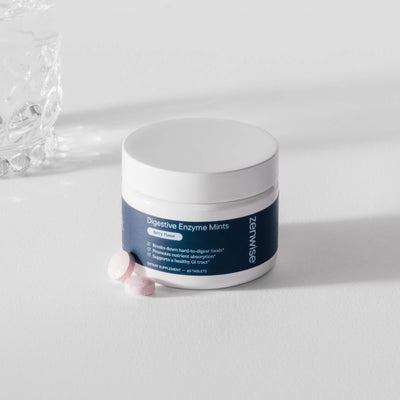
If you want something tasty and effortless after a meal, our Digestive Enzyme Mints are a classic. They kickstart the digestive process immediately after eating, helping to reduce that post-meal "brick in the stomach" feeling.
If you’re ready to see if prebiotics and probiotics can help your bloating, the secret isn't just taking a pill—it's building a habit. The gut microbiome responds to consistency, not one-off efforts.
Step 1: Start with your daily core. Take a supplement like our Digestive Enzymes before your largest meal of the day. This prepares your system for what’s coming.
Step 2: Hydrate. Prebiotics are fibers, and fibers need water to move through your system. If you’re increasing your prebiotic intake but skipping the water, you might end up feeling more backed up.
Step 3: Listen to your body. Pay attention to "The Proof Is In The Poop™." Your regularity and comfort levels are the best indicators of whether your current routine is working. If you feel great, keep going.
Step 4: Keep the "fast-acting" tools handy. Keep NO BLØAT® in your bag or car for when you’re eating out or traveling. Knowing you have a backup plan reduces the "food anxiety" that often makes digestive issues worse.
While we believe high-quality supplements are a massive help, they work best when paired with a gut-friendly lifestyle.
So, do prebiotics and probiotics help with bloating? For many people, they are the missing piece of the puzzle. By populating your gut with beneficial bacteria and giving them the "lunch box" they need to survive, you’re creating an environment where digestion is efficient and gas is kept in check.
At Zenwise, we want to help you move from fearing your food to enjoying every bite. Whether you’re looking for daily support or fast-acting relief, our formulas are built to bridge the gap between clinical science and your everyday life.
We encourage you to consider our Digestive Enzymes Subscribe & Save option. Not only does it save you 15% on every order, but it also ensures you never run out of the tools you need. Consistency is the most important factor in maintaining a healthy microbiome. Your gut bugs don't take weekends off, and your support shouldn't either.
"The Key To Good Health Is Gut Health.®" Start there, and the rest of your wellness journey will follow.
For most people, it takes about two to four weeks of consistent daily use to see a noticeable difference in occasional bloating. While some ingredients in products like NO BLØAT® work within hours, the "microbial rebalancing" from probiotics requires time to build up a stable population in your gut.
Yes, it is common to experience a temporary increase in gas or mild bloating when you first start a new routine. This is often referred to as an adjustment period where your existing gut bacteria are reacting to the new arrivals. This typically subsides within 7–14 days as your microbiome reaches a new, healthier balance.
It depends on the product, but for our Digestive Enzymes, we recommend taking them right before you eat. This ensures the enzymes are present the moment food hits your stomach, while the probiotics and prebiotics can begin their journey through the digestive tract alongside your meal.
While you can take them separately, taking them together is often more effective. Prebiotics act as the fuel for probiotics. Without prebiotics, the beneficial bacteria may struggle to survive and colonize your gut effectively. Using a 3-in-1 formula simplifies your routine and ensures your gut has all the tools it needs at once.
These statements have not been evaluated by the Food and Drug Administration. This product is not intended to diagnose, treat, cure or prevent any disease.
Share this article


