




Enjoy Every Bite: Why Some Foods Feel Harder to Digest Than They Used To
August 10, 2026
August 10, 2026


Summer has a funny way of bringing everyone together around food.
Backyard BBQs. Beachside tacos. Ice cream after dinner. Fresh pasta on vacation. Late-night pizza with friends.
These are the meals that become memories.
But for many people, those same foods can come with a little hesitation.
Over time, many of us begin quietly avoiding certain foods. Not because we don't love them, but because they don't always love us back.
The good news? It doesn't always mean those foods are the problem.
Sometimes it's simply that your body needs a little extra digestive support.
Digestion isn't static.
As we age, our bodies may naturally produce fewer digestive enzymes, the proteins responsible for breaking food into nutrients your body can absorb. Some pancreatic enzymes, including those that help digest fats and carbohydrates, have been shown to gradually decline with age in some people by up to 35%.
When certain foods aren't broken down as efficiently, they can linger longer in the digestive tract before reaching the large intestine, where gut bacteria ferment them. That process may contribute to occasional bloating, gas, or digestive discomfort after meals.
That doesn't mean you need to stop eating the foods you enjoy.
It may simply mean your digestion could use a little support at mealtime.
Ice cream on vacation.
Pizza night.
A creamy pasta after a day spent exploring somewhere new.
Some of the best summer memories happen around meals. But if dairy tends to leave you feeling uncomfortable afterward, you're far from alone.
Remember those little cartons of milk that came with every school lunch?
Fast forward a few decades, and many of us are lucky if we add a splash to our morning coffee.
Somewhere along the way, dairy stopped feeling quite as easy to enjoy. That's because many adults naturally produce less lactase, the enzyme responsible for breaking down lactose, than they did as children.
If dairy tends to leave you feeling uncomfortable afterward, you're far from alone. In fact, about 1 in 3 people in the U.S. have difficulty digesting lactose, the natural sugar found in milk.
When we're babies, our bodies produce plenty of lactase because milk is our primary source of nutrition. As we grow up, though, many of us naturally begin producing less of this enzyme due to genetics. That means lactose isn't always broken down as efficiently as it once was.
Instead of being fully digested in the small intestine, lactose can travel into the large intestine, where it's fermented by gut bacteria. For some people, that may lead to occasional bloating, gas, or digestive discomfort after enjoying dairy-rich foods.
Digestive enzyme that helps: Lactase
Vacation and summer celebrations often include burgers, fries, wings, fried seafood, or buttery appetizers.
Fat is one of the slowest nutrients to digest, and breaking it down relies on an enzyme called lipase, one of several digestive enzymes produced by the pancreas. Research suggests that the production of some pancreatic digestive enzymes may gradually decline with age, with reductions of up to 35% reported in some studies. As a result, richer meals may not always feel as easy to digest as they once did.
When fat isn't broken down efficiently, it can linger in the digestive tract longer, sometimes contributing to that heavy, overly full feeling after eating.
Digestive enzyme that helps: Lipase
Whether it's fresh sourdough, vacation pastries, pasta, or pizza crust, carbohydrates make up many of our favorite comfort foods.
Complex carbohydrates require several enzymes to be broken down into smaller sugars your body can absorb.
When digestion slows, some carbohydrates may continue into the colon where they're fermented by gut bacteria, contributing to occasional gas and bloating.
Digestive enzymes that help: Amylase, Glucoamylase, Diastase & Invertase
Protein is essential, but it's also one of the more complex nutrients to digest.
Breaking proteins into smaller amino acids requires several different protease enzymes.
If your digestive system could use a little extra support, larger, protein-rich meals may sometimes leave you feeling overly full.
Digestive enzymes that help: Protease, Bromelain & Papain
Even healthy foods can sometimes be challenging to digest.
Certain vegetables, beans, and whole grains contain plant fibers your body can't fully break down on its own.
Cellulase helps support the digestion of plant cell walls, something our bodies don't naturally produce in significant amounts.
That means even nutritious meals can occasionally leave you feeling bloated afterward.
Digestive enzyme that helps: Cellulase
Here's something most people don't realize:
Meals rarely contain just one type of food.
Think about a cheeseburger and fries.
You're eating:
Protein
Fat
Dairy
Carbohydrates
Plant fibers
That's why Zenwise® Digestive Enzymes includes 10 different digestive enzymes, along with 10 clinically studied probiotic strains and a prebiotic, to help support the digestion of a wide variety of foods, not just one ingredient.
Because real meals are made up of more than one nutrient, digestive support should be too.
Summer isn't the season for overthinking every menu.
It's the season for saying yes to the backyard BBQ.
Ordering dessert.
Trying the local bakery.
Sharing appetizers.
Making memories around the table.
That's why we like to think about digestive support as your mealtime routine.
Take Zenwise® Digestive Enzymes before eating to help support the breakdown of proteins, fats, carbohydrates, dairy, and fiber while also supporting your gut microbiome with probiotics and a prebiotic.
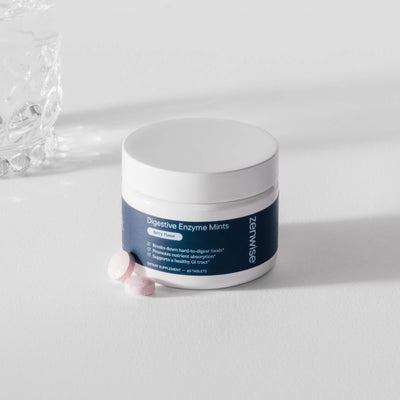
Traveling light? Digestive Enzyme Mints offer convenient digestive support in a pocket-friendly format. Perfect for restaurants, vacations, and meals on the go.
If you've already enjoyed the meal and want a little extra support afterward, No Bloat combines digestive enzymes with a thoughtfully selected herbal blend to help ease occasional post-meal bloating and digestive discomfort.
Food is about so much more than nutrition.
It's celebrations. Vacations. Family dinners. Birthday cake. Fresh pasta in a new city. Ice cream on a hot afternoon.
You shouldn't have to spend those moments wondering how you'll feel afterward.
Supporting your digestion doesn't mean saying no to the foods you love, it means giving your body the tools it needs to enjoy them with confidence.
This summer, enjoy every bite. We're here to help support the journey.
If you have questions, we're always here to help.
Reach us anytime at support@zenwise.com or (800) 940-1972, Monday–Friday, 9 a.m.–5 p.m.
Share this article




