




Can Bad Gut Health Cause Body Odor?
August 10, 2026
August 10, 2026

You’ve probably been there: you’re sitting in a quiet office or standing in a crowded elevator when you catch a whiff of something… distinct. You did your laundry. You used your deodorant. You even took a shower this morning. So, why does it feel like your body is projecting a scent that belongs in a locker room? It’s a frustrating moment that can make you want to shrink into your sweater and stay there until next Tuesday.
At Zenwise Health, we believe that your body is a complex, interconnected system. When something feels off on the outside, the answer often lies deep within. Our philosophy, "Zenwise. Then Eat.®," isn't just about avoiding a bloated belly after a big pasta dinner; it’s about understanding that the key to good health is gut health. When your internal "factory" isn't running efficiently, the byproducts have to go somewhere.
The truth is that your digestive system and your skin are in constant communication. This article explores the biological link between your microbiome and your scent, helping you understand how your gut might be the silent narrator of your personal aroma.
To understand the gut connection, we first have to clear the name of a common scapegoat: sweat. Most people believe sweat is inherently smelly, but that isn't quite right. Humans have two primary types of sweat glands that serve very different purposes.
These glands are located all over your body. They primarily secrete water and salt to help regulate your body temperature. This sweat is almost entirely odorless. If you’re running on a treadmill and dripping with "watery" sweat, that liquid itself isn't the source of the funk.
These are the glands found in areas with high concentrations of hair follicles, like your armpits and groin. They secrete a thicker, oilier fluid containing proteins and lipids (fat molecules). While this fluid is also odorless when it first hits the surface, it serves as an all-you-can-eat buffet for the bacteria living on your skin.
Quick Answer: Bad gut health can contribute to body odor through the gut-skin axis. When the gut is imbalanced or digestion is incomplete, the body produces malodorous byproducts (metabolites) that travel through the bloodstream and are released through sweat and breath.
The idea that your stomach affects your skin isn't just a hunch; it’s a biological pathway known as the gut-skin axis. Think of your gut as a high-intensity processing plant. It breaks down everything you eat, filters out toxins, and absorbs nutrients.
When your gut microbiome—the community of trillions of bacteria in your digestive tract—is balanced, these processes happen smoothly. However, if your digestion is sluggish or your microbial balance is off, your body may produce an excess of certain metabolites (microbial byproducts). A daily formula like Digestive Enzymes can support digestion, nutrient absorption, regularity, and a balanced gut microbiome.
If these byproducts aren't efficiently eliminated through your "main exits," they can be absorbed into the bloodstream. From there, they travel to your sweat glands and lungs. When they are finally released through your pores or your breath, they can interact with skin bacteria to create a much stronger scent than usual.
If food isn't broken down properly, it doesn't just sit there. It undergoes a process of fermentation or putrefaction (the breakdown of proteins) by bacteria in the gut. This process releases volatile organic compounds (VOCs). VOCs are chemicals that easily become vapors or gases.
Proteins and sulfur-rich foods are the most common culprits. When you eat a heavy steak, your body needs specific enzymes called proteases to break those proteins down into amino acids. If you lack enough of these enzymes, the undigested protein reaches the large intestine, where bacteria break it down into thioalcohols.
Thioalcohols are incredibly pungent compounds that smell like onions, sulfur, or even skunk spray. Even in tiny amounts, they can significantly alter your body's natural scent once they are released through your apocrine glands.
Similarly, if you struggle to break down fats, your body may release more lipids through your skin. Since skin bacteria thrive on lipids, this provides more "fuel" for the microbes on your skin to produce smelly fatty acids. Using a supplement with lipases (enzymes that break down fats) can help ensure these molecules are processed internally rather than excreted through your skin. Digestive Enzymes contains enzymes that support the breakdown of fats, proteins, carbohydrates, and fiber.
Key Takeaway: Body odor is often a "smoke signal" from your digestive system. Improving how you break down fats and proteins can reduce the number of stinky byproducts that escape through your pores.
You are what you eat, but you also smell like what you eat. Some foods contain specific compounds that the body simply cannot fully neutralize before they reach the skin.
Myth: If you smell bad, it means you’re "dirty." Fact: You can have a perfect hygiene routine and still experience body odor if your gut is struggling to process specific compounds in your diet.
Since the gut-skin axis is a two-way street, supporting your gut microbiome is a logical step in managing your scent from the inside out. Probiotics are "friendly" bacteria that help maintain the balance of your internal ecosystem. Tribiotic Complex provides targeted microbiome support for women’s gut and vaginal health.
At Zenwise, we use a specific spore-forming probiotic called DE111® in our core Digestive Enzymes formula. Unlike many standard probiotics that die in the harsh, acidic environment of the stomach, DE111® is built to survive. It reaches the small intestine where it can actually go to work.
By promoting a healthy balance of gut flora, probiotics may help:
It might be a "taboo" topic, but at Zenwise, we aren't afraid to say it: The Proof Is In The Poop™. Your bowel movements are the primary way your body clears out the leftovers of digestion. If things are moving too slowly—a process called peristalsis—those leftovers begin to ferment.
When you aren't regular, your body is effectively holding onto a bag of trash in a warm room. The gases and compounds produced during this delay can be reabsorbed into your system. If you've ever noticed your breath or skin smells a bit more "earthy" when you're backed up, your gut is likely trying to tell you it needs a bit more fiber and enzymatic support to move things along. Digestive Enzymes also supports regularity as part of a daily digestive routine.
If you suspect your gut is the culprit behind your scent, you don't need a radical lifestyle overhaul. Small, consistent habits can make a significant difference over time.
Take a comprehensive supplement like Zenwise Digestive Enzymes. This 3-in-1 solution combines enzymes to break down fats, carbs, and proteins, plus prebiotics and probiotics to support long-term gut health. It’s designed to help your body process meals more efficiently so there’s less "waste" for your skin to deal with.
On nights when you know you’re diving into a big plate of garlic pasta or a heavy steak dinner, consider a targeted solution like NO BLØAT®. It contains BioCore Optimum Complete enzymes along with Dandelion Root and Fennel to help ease occasional bloating and speed up the breakdown of those tricky sulfur compounds before they become an issue.
Water is the "rinse cycle" for your body. It helps flush out the acetic acid from alcohol and the sulfuric byproducts of veggies. Aim for a variety of fiber-rich foods (fruits, legumes, whole grains) to keep your transit time quick.
The gut microbiome doesn't change overnight. It responds to regular, sustained support. This is why we encourage a daily routine rather than just reaching for a solution when things get "dramatic."
While most body odor is a result of diet, hygiene, or minor gut imbalances, there are times when a scent can indicate something more serious. Certain metabolic conditions can cause very specific odors:
If you notice a sudden, drastic change in your odor that doesn't resolve with diet changes or improved digestion, it is always a good idea to speak with a healthcare professional.
Maintaining a healthy gut is about more than just what you take; it’s about how you live. Stress, for example, can slow down your digestion and trigger "fatty sweat" from your apocrine glands, which bacteria love.
By prioritizing your gut health, you're giving your body the tools it needs to process food effectively, absorb nutrients, and eliminate waste. When your internal factory is running at peak performance, you can spend less time worrying about how you smell and more time enjoying that dinner out with friends.
Our range of products, typically priced between $19 and $25, is designed to be an accessible part of your daily wellness toolkit. Whether it's our Papaya Chewables for a quick post-meal kickstart or our Women's Probiotics for targeted gut and vaginal health, we’re here to help you feel confident in your own skin.
Can bad gut health cause body odor? The answer is a clear yes. Through the gut-skin axis, your digestive efficiency (or lack thereof) directly impacts the compounds your body releases through its pores. By focusing on breaking down foods properly with enzymes and supporting your microbiome with probiotics, you can manage your personal scent from the inside out.
"The gut is the center of your health universe. When it's balanced, the rest of you—including your skin and scent—can follow suit."
To keep your gut microbiome in top shape, consistency is everything. Our Subscribe & Save program offers 15% off your essentials, making it easier than ever to build a habit that supports your digestive health every single day. Because when your gut is happy, you can "Zenwise. Then Eat.®" with total confidence.
Yes, when certain bacteria in the gut break down sulfur-rich foods like garlic or broccoli, they produce thioalcohols. If your digestion is slow, these pungent compounds can enter your bloodstream and be released through your sweat, creating a sulfur-like odor. For occasional digestive discomfort after trigger foods, NO BLØAT® may be a targeted option.
Probiotics may help by balancing the gut microbiome and reducing the production of malodorous waste products. While they aren't a replacement for deodorant, they support the gut-skin axis, which can lead to a more neutral natural scent over time. A daily formula such as Digestive Enzymes combines digestive enzymes, prebiotics, and probiotics.
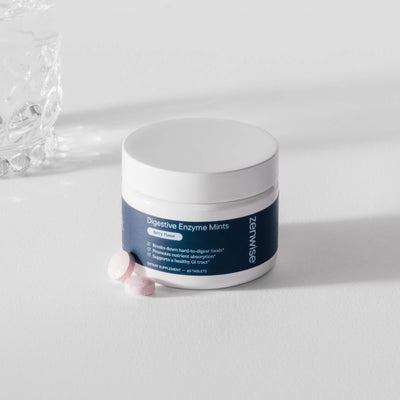
Red meat is high in proteins and fats that can be difficult for some people to break down. Undigested proteins can putrefy in the gut, releasing VOCs that eventually escape through your pores and interact with skin bacteria to intensify your scent. Digestive Enzyme Mints offer a chewable option for post-meal digestive support.
Results vary, but many people notice a difference within a few weeks of consistent digestive support. Because the microbiome needs time to adjust, maintaining a daily routine with enzymes and probiotics is essential for long-term changes. Digestive Enzymes can fit into that consistent daily routine.
These statements have not been evaluated by the Food and Drug Administration. This product is not intended to diagnose, treat, cure or prevent any disease.
Share this article


