




Why Do Probiotics Cause Bloating? Tips for Gut Comfort
May 11, 2026
May 11, 2026

You decided to take charge of your gut health. You bought the high-quality supplements, cleared a spot on the counter, and started your new routine with visions of a flat stomach and perfect digestion. Then, the irony hit. Instead of feeling light and energized, you feel like a parade float. Your favorite jeans are suddenly staging a protest against your waistline, and you’re wondering why "good" bacteria are making you feel so bad.
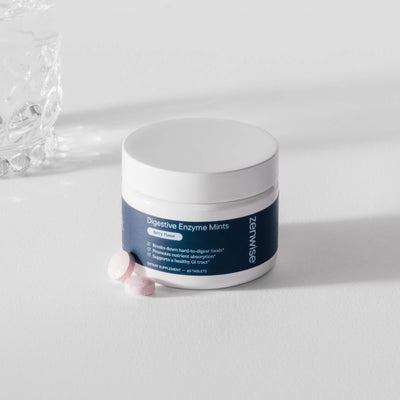
At Zenwise Health, we hear this all the time. If you want a gentler daily foundation while your system adjusts, Digestive Enzymes can help make the transition feel more manageable. It is a frustrating paradox: taking something to fix bloating that actually causes more of it. This experience often leads people to quit their supplements before the real benefits kick in. We believe in a "Zenwise. Then Eat.®" philosophy, which means gut support should make food more enjoyable, not more stressful.
The truth is that probiotic bloating is common, usually temporary, and often a sign that things are actually moving in the right direction. This article will explain exactly why your gut is reacting this way and how you can find comfort without giving up on your microbiome.
The human gut is home to trillions of microorganisms, a complex community known as the gut microbiome. When you introduce a probiotic supplement, you are essentially dropping billions of new "residents" into an already crowded neighborhood. These new bacteria need to find a place to settle, and the current residents do not always give up their real estate without a fight.
When new, beneficial bacteria enter the system, they begin to compete with existing microbes for nutrients and space. This process is called microbial competition. As the probiotics work to balance the environment, they may displace less helpful bacteria.
This "changing of the guard" can cause a temporary stir in your digestive tract. Think of it like a home renovation. Before you get the beautiful new kitchen, there is a period of dust, noise, and general chaos. In your gut, that chaos manifests as gas and pressure.
The primary job of many gut bacteria is to break down the parts of your food that your body cannot handle on its own, particularly certain fibers. This process is called fermentation.
Quick Answer: Probiotics cause bloating because they are actively breaking down fibers and competing with existing bacteria. This process produces gases like hydrogen and carbon dioxide as byproducts, leading to temporary internal pressure.
When bacteria ferment food, they produce gas as a byproduct. Common gases include hydrogen, methane, and carbon dioxide. If you have introduced a large number of new bacteria all at once, the sheer volume of fermentation increases rapidly. This sudden puff of gas is what makes your stomach feel distended and tight.
Not all probiotics are created equal, and your body might be reacting to a specific factor within the supplement itself. If the bloating persists for more than a few weeks, it is time to look closer at the details.
You might see "CFU" on your supplement label. This stands for Colony Forming Units, which is basically a fancy way of saying how many live bacteria are in each dose. While it is tempting to think "more is better," a massive dose like Tribiotic Complex can overwhelm a sensitive system.
If your gut is not used to high levels of supplemental bacteria, jumping straight into a high-potency formula is like trying to run a marathon without ever having walked around the block. Your digestive system needs time to build up its tolerance.
Many probiotic supplements are actually "synbiotics," meaning they contain both probiotics and prebiotics. Prebiotics are specialized plant fibers that act as fertilizer for the good bacteria. Common ones include inulin, fructooligosaccharides (FOS), and galactooligosaccharides (GOS).
While prebiotics are great for long-term health, they are highly fermentable. For some people, these fibers are actually the real cause of the bloat, not the bacteria themselves. If your gut is sensitive to certain carbohydrates, the prebiotics in your supplement might be fueling a gas factory in your intestines.
Probiotics are categorized by genus, species, and strain. For example, Lactobacillus acidophilus NCFM. Different strains do different things. Some are experts at supporting the immune system, while others focus on peristalsis, which is the wave-like muscle contractions that move food through your gut.
If you take a strain that your body doesn't currently need, or if you take a blend that is too diverse for your current state of health, your gut might react with discomfort. This is why we focus on clinically studied ingredients like DE111®, a spore-forming probiotic. Unlike many delicate strains, spore-formers have a protective outer shell that helps them survive stomach acid so they can reach the small intestine where they are needed most.
Sometimes, the probiotic is just the messenger. If you experience severe or immediate bloating after taking a supplement, there might be an underlying digestive situation that needs your attention.
Most of your gut bacteria should live in your large intestine (the colon). SIBO is a condition where too many bacteria end up in the small intestine instead. When you add more bacteria via a probiotic into this environment, they can start fermenting food way too early in the digestive process.
This usually results in bloating that happens very quickly after eating or taking your supplement. If your stomach feels like a balloon within 30 minutes of a dose, it might be worth discussing SIBO with a healthcare professional.
Some people have a more sensitive "gut-brain connection." This is called visceral hypersensitivity. In these cases, the amount of gas being produced might actually be normal, but the nerves in the gut perceive it as painful or excessive. This is common for people who deal with everyday digestive drama and feel every single rumble and gurgle.
Key Takeaway: Bloating is often a sign of "microbial renovation." The combination of new bacteria competing for space and the fermentation of fibers produces temporary gas that usually subsides once the microbiome reaches a new balance.
You don't have to choose between a healthy microbiome and your favorite pair of pants. There are several ways to ease the transition and help your gut handle its new residents more gracefully.
If you are new to probiotics, do not start with the highest dose available. Start with a smaller dose (or even half a dose if the format allows) and stay there for three to five days. Once your body feels comfortable, gradually increase to the full recommended serving. This "low and slow" approach gives your microbiome time to adjust without the dramatic gas production.
Timing is everything. Many people find that taking their probiotic with a meal helps buffer the effects. Food can help slow down the transit time and provide a more stable environment for the bacteria to begin their work. Alternatively, some people prefer taking them right before bed. This allows the "renovation" to happen while you sleep, so you are less aware of the minor rumbles and gurgles.
One of the best ways to reduce probiotic bloating is to help the bacteria do their job. Digestive enzymes are proteins that act like tiny scissors, cutting down fats, proteins, and complex carbohydrates into smaller, more manageable pieces.
When you use our Digestive Enzymes formula daily, you are attacking the problem from two sides. The enzymes (including proteases for protein and lipases for fats) break down the food so it doesn't sit and ferment longer than it should. Meanwhile, the prebiotics and probiotics work on the long-term balance. This 3-in-1 approach is often much gentler on the system than a probiotic alone.
We all have those meals—the big Italian dinners, the holiday feasts, or the accidental bean-fest—where bloating feels inevitable. For these specific moments, a daily probiotic might not be enough to stop the immediate pressure.
In these cases, we recommend a targeted solution like NO BLØAT®. It is designed for fast relief using a blend of BioCore Optimum Complete enzymes and botanicals like Dandelion Root, Fennel, and Ginger. These ingredients help ease the gas and move things along, making it the perfect partner for when you want to enjoy a heavy meal without the "food baby" aftermath.
It is tempting to take a probiotic for two days, feel a little bloated, and put the bottle in the "graveyard" of unfinished supplements in your cabinet. But gut health is not a one-time event; it is a habit.
Your microbiome is constantly changing based on what you eat, how much you sleep, and your stress levels. To see real results—like improved regularity and long-term comfort—you need to give your gut time to stabilize. Most people find that the initial "adjustment bloat" disappears within one to two weeks of consistent use, especially with a daily Digestive Enzymes routine.
Myth: If a probiotic makes you bloated, it means it is "bad" or not working. Fact: Bloating is often a sign that the bacteria are active and colonizing. Unless the discomfort is severe or lasts longer than a few weeks, it is usually just a sign of your microbiome shifting toward a healthier balance.
Beyond supplements, how you live and eat can dictate how much gas your probiotics produce.
While a bit of "construction noise" in your gut is normal, you should always listen to your body. If you experience severe pain, persistent diarrhea, fever, or blood in your stool, those are not standard side effects of a probiotic. Those are signs that something else is going on, and you should consult a medical professional.
For most of us, however, the "proof is in the poop™." When your body finds its balance, you will notice more regular bathroom trips, less overall gas, and a stomach that feels comfortable even after a solid meal.
At Zenwise Health, we design our products to be accessible and effective for everyday people. We know you have a life to live, and you don't want to spend it worrying about where the nearest bathroom is or if your pants will fit by 4:00 PM.
Probiotics are powerful tools for your wellness journey, but they can be a little dramatic when they first arrive in your system. Understanding that bloating is usually a temporary side effect of bacterial fermentation and competition can help you stay the course. By starting with lower doses, using digestive enzymes to assist the process, and staying consistent, you can move past the discomfort and into a life of food freedom.
The key to good health is gut health, and that health is built through consistency. We recommend our Subscribe & Save option on Digestive Enzymes, which gives you 15% off and ensures you never miss a day of support. Your microbiome thrives on routine, and maintaining a steady supply of beneficial bacteria and enzymes is the best way to keep your digestive system running like a well-oiled machine.
Bottom line: Don't let a little temporary gas stop you from achieving a balanced gut. Give your body a few weeks to adjust, support it with enzymes, and soon you'll be enjoying your meals with total confidence.
For most people, the adjustment period lasts between three and fourteen days. As your microbiome reaches a new state of balance and the "good" bacteria settle in, the excess gas production typically subsides. If bloating persists beyond three weeks, you may want to try a lower dose or a different strain.
Yes, but you should be strategic. If you are already gassy, adding a high-dose probiotic might temporarily increase the pressure. Start with a Digestive Enzymes 3-in-1 formula, which will help break down the food that causes gas in the first place, making the probiotic's transition much smoother.
It depends on the strain, but for those prone to bloating, taking them with food is often better. Food acts as a buffer and can slow down the fermentation process, leading to less sudden gas production. It also helps protect the bacteria as they travel through the acidic environment of the stomach.
Many probiotics include prebiotics, which are types of fiber like inulin or FOS. These fibers act as "food" for the probiotics to help them grow and thrive. While beneficial for the bacteria, these fibers are highly fermentable, which is often the actual cause of the temporary bloating you feel.
These statements have not been evaluated by the Food and Drug Administration. This product is not intended to diagnose, treat, cure or prevent any disease.
Share this article


