


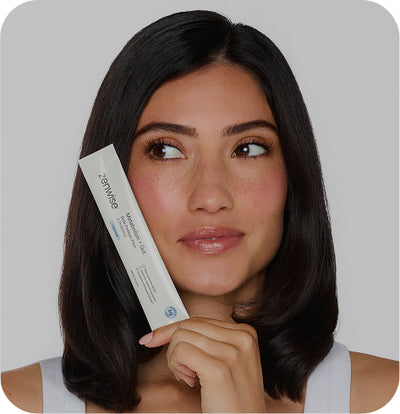


Which Pancreatic Enzyme Is Effective in Digesting Protein?
February 09, 2026
February 09, 2026

We’ve all been there: you’re at a summer barbecue, the smell of grilled steak is in the air, and your mouth is watering. But as you look at that high-protein spread, a familiar pang of "menu anxiety" kicks in. You start wondering if those extra few bites of brisket are going to result in your jeans feeling three sizes too tight by dessert. Or perhaps you’re the person who meticulously tracks their macros, hitting the protein goals like a pro, yet you feel like a lead balloon is sitting in your stomach for hours afterward. If you’ve ever felt like your body and your favorite protein-rich meals are at war, you aren't alone.
The secret to winning that war—and achieving true food freedom—lies in a small but mighty organ tucked behind your stomach: the pancreas. Specifically, it’s about understanding which pancreatic enzyme is effective in digesting protein so you can support your body’s natural breakdown processes. While many people focus on "what" they eat, at Zenwise Health (Zenwise®), we believe the real magic happens during the "how" of digestion.
In this deep dive, we’re going to explore the biology of the pancreas, identify the specific enzymes responsible for breaking down those tough protein chains, and explain how you can optimize your gut environment to ensure you’re actually absorbing the nutrients you consume. After all, "The Key To Good Health Is Gut Health.®" and our goal is to get you to a place where you can "Zenwise. Then Eat.®" without the looming fear of the "post-meal pouch."
Before we answer the specific question of which enzyme does the heavy lifting for protein, we need to appreciate the factory itself. The pancreas is about the size of your hand, yet it functions as a master alchemist for your digestive system. It performs a dual role: endocrine (releasing hormones like insulin into the blood) and exocrine (secreting digestive "juices" into the small intestine).
Every day, your pancreas produces about eight ounces of enzyme-rich fluid. This fluid travels through a series of ducts into the duodenum, the upper part of the small intestine. Think of this as the "delivery system" for the tools your body needs to dismantle your lunch into usable energy.
When your pancreas is firing on all cylinders, you barely notice it. But when it struggles—whether due to age, stress, or lifestyle factors—the results are hard to ignore. We like to say "The Proof Is In The Poop™," and irregular, oily, or foul-smelling bathroom trips are often the first sign that your pancreatic enzymes aren't meeting the demand of your diet.
To understand protein digestion, we have to look at the "Big Three" enzymes that the pancreas produces. Each has a highly specific "lock and key" relationship with the food groups they break down:
Protease isn't actually just one single enzyme; it’s a family of proteolytic enzymes (including trypsin and chymotrypsin) that work together to dismantle protein polymers. When you eat a piece of chicken, a scoop of pea protein, or a slice of cheese, the protein arrives in your digestive tract as long, complex chains of amino acids. Your body cannot use these chains in their "raw" form.
Protease acts like a pair of biological scissors, snipping those long chains into smaller fragments called peptides and, eventually, into individual amino acids. These amino acids are then absorbed through the lining of the small intestine and sent to the liver to be redistributed for muscle repair, hormone production, and immune support.
For the person who loves a good "pasta night" but finds that the meat sauce and cheese leave them feeling sluggish and heavy, supporting your protease levels is essential. Our Digestive Enzymes are designed to act as a "3-in-1" daily maintenance hero, providing a robust blend of enzymes (including protease) along with prebiotics and probiotics to ensure that your "biological scissors" stay sharp.
It’s a frustrating reality: you can eat a "perfect" diet and still feel like a bloated mess. Why does the pancreas sometimes fall short on its protease production?
As we age, our natural enzyme production begins to decline. It’s a bit like a factory that’s been running for 40 years—the machinery is still there, but it might not be as efficient as it once was. This is why many people find they can no longer "stomach" the large steaks or dairy-heavy meals they enjoyed in their twenties.
Diets high in processed sugars and low in whole foods can put an undue burden on the pancreas. When the pancreas is constantly overworking to manage blood sugar (the endocrine side), its ability to produce high-quality digestive enzymes (the exocrine side) can sometimes take a backseat.
High stress levels trigger the "fight or flight" response, which redirects blood flow away from the digestive organs. If you’re eating a high-protein meal while stressed or on the run, your pancreas might not receive the signal it needs to release a sufficient amount of protease.
For those moments when you know you’re going into a "heavy meal" situation—like travel or a celebratory dinner—you might need more than just daily maintenance. This is where No Bloat Capsules come in as the "lifestyle hero." They provide fast-acting relief for those times when your clothes feel a little too tight, utilizing a blend of enzymes and botanicals like Dandelion Root and Fennel to ease discomfort within hours.
To truly appreciate the role of protease, let’s follow a high-protein meal through your system.
Digestion actually begins in your brain when you smell food, triggering saliva (which contains amylase). Once you swallow that protein, it hits the stomach, where it meets hydrochloric acid (HCL) and an enzyme called pepsin. HCL denatures the protein, essentially "unraveling" it so the enzymes can get to work.
As the partially digested food (called chyme) moves from the stomach into the small intestine, the pancreas gets the "all-call" signal. It releases its juices, rich in amylase, lipase, and—most importantly for protein—inactive forms of protease like trypsinogen.
Once in the small intestine, these inactive enzymes are converted into their active forms (like trypsin). This is a safety mechanism; if the enzymes were active inside the pancreas, they would start "digesting" the pancreas itself! Once active, the protease begins the rapid-fire dismantling of protein into amino acids.
In the small intestine, the now-tiny amino acids are absorbed through the intestinal wall. This is the goal of the "Zenwise. Then Eat.®" philosophy—ensuring that the food you enjoy actually becomes the building blocks of a healthier you.
If you’re a woman looking for comprehensive support that addresses both gut health and female-specific needs (like vaginal and urinary tract health), our Women’s Probiotics can be a great addition to this journey, helping to maintain the delicate microbial balance that supports overall nutrient absorption.
While we often focus on the "breakdown" aspect, protease (or proteolytic enzymes) plays a much broader role in our health. Beyond just answering which pancreatic enzyme is effective in digesting protein for your next meal, science shows that these enzymes are involved in:
For a quick, tasty way to kickstart this process right after a meal, many of our customers love our Papaya Chewables. They are an effortless way to introduce papain (a plant-based protease) to your system, helping to reduce that post-dinner "heavy" feeling.
When we talk about supplementing enzymes, quality and survivability are everything. It’s one thing to swallow a capsule; it’s another for that capsule to actually do its job.
In our Digestive Enzymes, we include a specific, spore-forming probiotic called DE111® (Bacillus subtilis). Why does this matter for your protein digestion?
Most probiotics are fragile; they die in the harsh, acidic environment of the stomach before they ever reach the small intestine. DE111®, however, is built like a tiny tank. It remains in its spore state until it reaches the intestine, where it "wakes up" and begins to support the healthy gut flora that works alongside your pancreatic enzymes. A healthy microbiome is the "wingman" for your pancreas, helping to maintain the ideal pH and environment for protease to function at its peak.
How do you know if your pancreas is shouting for help? While we always recommend chatting with a healthcare professional for persistent issues, the "Symptom-Aware Optimizer" often notices these common signs:
If any of this sounds like your daily reality, it’s time to stop white-knuckling through your meals. Adding a high-quality supplement like our Digestive Enzymes before your largest meal can be a game-changer for your comfort and confidence.
Let’s look at how to use these tools in real-world situations:
One of the most important things we’ve learned at Zenwise Health is that gut health isn't a "one-and-done" fix. Your microbiome and your enzyme levels thrive on consistency. When you provide your body with the tools it needs daily, you create an environment where your pancreas doesn't have to struggle, and your gut flora can truly flourish.
To help you stay consistent (and save some money while you're at it), we aggressively encourage our Subscribe & Save program. Not only do you get 15% off every order, but you also ensure that you never run out of your "secret weapon" for digestion. Most clinical research on probiotics and enzymes shows that the best results come after 30 to 60 days of consistent use. Subscription takes the "thinking" out of the process, so you can just focus on enjoying your food.
While supplementation is a powerful tool, we always encourage a "food first" mindset. Some foods contain natural proteolytic enzymes that can give your pancreas a helping hand:
Integrating these foods into your diet—perhaps as a side dish to your steak or as a post-dinner snack—is a delicious way to live the "Zenwise. Then Eat.®" lifestyle.
We’ve covered a lot of ground, from the inner workings of the pancreatic acinar cells to the practical benefits of taking an enzyme supplement before a "pasta night." The takeaway is simple: you don't have to live with the discomfort of poor protein digestion.
By understanding that protease is the pancreatic enzyme effective in digesting protein, you can take targeted steps to support your body. Whether that means choosing whole, enzyme-rich foods, managing your stress levels, or enlisting the help of Digestive Enzymes or No Bloat Capsules, the goal is the same: food freedom, confidence, and comfort.
Remember, your gut is the foundation of everything—your energy, your mood, and your overall wellness. When you take care of your gut, your gut takes care of you.
1. Which pancreatic enzyme is specifically responsible for breaking down protein? The primary pancreatic enzyme responsible for protein digestion is protease. This is actually a group of enzymes, including trypsin and chymotrypsin, which break down long protein chains into smaller peptides and then into individual amino acids that your body can absorb.
2. Can I get enough protease just from the food I eat? While foods like pineapple (bromelain) and papaya (papain) contain natural proteases, many people find that supplemental enzymes are more effective, especially as they age or if they consume large amounts of protein. Supplementing with Digestive Enzymes ensures a consistent, high-potency dose of the enzymes your pancreas might be under-producing.
3. What happens if my body doesn't produce enough protease? When protease levels are low, undigested protein can travel into the large intestine. This can lead to symptoms like occasional bloating, gas, abdominal discomfort, and even feelings of anxiety or insomnia due to the way undigested protein affects your internal chemistry. You might also notice changes in your stool consistency—a phenomenon we call "The Proof Is In The Poop™."
4. When is the best time to take a digestive enzyme supplement? For the best results, you should take your enzymes (like our Digestive Enzymes) about 15 to 20 minutes before you eat. This allows the capsule to begin breaking down in your stomach so the enzymes are ready to "meet" the food as it enters your digestive tract. If you forget until after the meal, Papaya Chewables are a great post-meal option to kickstart the process.
At the end of the day, digestive health shouldn't be a source of stress or taboo. It’s a vital part of your human experience. By giving your pancreas the support it needs and understanding the science behind enzymes like protease, you’re not just avoiding a "food baby"—you’re investing in your long-term vitality.
We invite you to join the Zenwise Health family and take the first step toward a more comfortable, confident you. "The Key To Good Health Is Gut Health.®" starts with the simple choice to support your body’s natural wisdom. Don’t wait for the next "bloat-fest" to happen. Subscribe & Save today to get 15% off your order and ensure that your gut health routine is as consistent as your appetite. Your future self (and your favorite pair of jeans) will thank you!
These statements have not been evaluated by the Food and Drug Administration. This product is not intended to diagnose, treat, cure or prevent any disease.



