




What's the Difference Between Digestive Enzymes and Probiotics?
March 04, 2026
March 04, 2026

We’ve all been there: you’re at a beautiful dinner, the atmosphere is perfect, the company is great, and the pasta carbonara looks like a masterpiece. But instead of savoring that first creamy bite, you’re mentally calculating the "bloat timeline." You know the one—the internal countdown until your jeans feel three sizes too small, your midsection begins to resemble a basketball, and you’re scanning the room for the nearest exit (or at least a very large napkin to hide your unbuttoned waistband).
This "menu anxiety" is a common companion for many of us. Whether it’s occasional gas, irregularity, or that heavy, sluggish feeling that follows a "cheat meal," digestive discomfort can turn a night of fun into a night of frustration. When looking for relief, you’ve likely stumbled upon two major players in the wellness aisle: digestive enzymes and probiotics.
But what’s the difference between digestive enzymes and probiotics, and more importantly, which one is going to help you get back to feeling like yourself? While they both reside in the gut-health neighborhood, they have very different jobs. One is the "demolition crew" that breaks down your food, while the other is the "resident manager" that keeps the peace in your internal ecosystem.
In this guide, we’re going to strip away the clinical jargon and get into the nitty-gritty of how these supplements work, why your gut needs both, and how you can use them to reclaim your food freedom. At Zenwise Health, we believe that The Key To Good Health Is Gut Health.® By the end of this article, you’ll understand exactly how to support your system so you can live by our favorite motto: "Zenwise. Then Eat.®"
Think of digestive enzymes as the "scissors" of your digestive system. Their primary job is mechanical and immediate. They are non-living proteins that act as catalysts to speed up the chemical reactions required to break down the complex polymers in your food (carbs, fats, and proteins) into tiny, absorbable monomers (sugars, fatty acids, and amino acids).
Without these enzymes, your body would struggle to get the nutrients out of your food. Imagine trying to fit a whole piano through a mail slot; it’s just not going to happen. Enzymes chop that piano into tiny pieces so it can slide right in.
Your body naturally produces enzymes in your saliva, stomach, and pancreas, but sometimes—due to age, stress, or just a particularly "adventurous" meal—we don't have enough to get the job done efficiently. Here are the stars of the show:
For the person who loves a "pasta night" but hates the "pasta bloat," digestive enzymes are your best friend. They work in the upper gastrointestinal tract (the stomach and small intestine) and they work now. Because they are focused on the food itself, they should be taken right before you eat.
If you’re someone who feels "heavy" for hours after a meal or notices that certain foods (like cruciferous veggies or dairy) always trigger gas, you might benefit from a daily core supplement. Our Digestive Enzymes are a 3-in-1 solution that includes a broad spectrum of these enzymes to ensure that no matter what’s on your plate, your body has the tools to handle it.
If enzymes are the demolition crew, probiotics are the "peacekeepers" or "resident managers" of your gut. Probiotics are live, beneficial bacteria and yeasts that live in your large intestine (the colon). They don't directly "digest" your steak or your salad in the same way enzymes do. Instead, they manage the environment where digestion happens.
Your gut is home to trillions of microbes—a bustling city known as the microbiome. When this city is in balance, everything runs smoothly. When it’s out of balance (due to poor diet, stress, or antibiotics), the "bad" bacteria can move in, leading to occasional gas, bloating, and irregular bathroom habits.
Probiotics help crowd out the less-desirable bacteria and support the integrity of your gut lining. They also play a massive role in your immune system—since about 70% of your immune cells live in your gut.
A healthy microbiome is essential for:
The biggest challenge for any probiotic is the journey. Your stomach is a literal vat of acid designed to destroy bacteria. Many standard probiotics die before they ever reach your lower GI tract.
That’s why we use DE111® in our Digestive Enzymes. DE111® is a spore-forming probiotic, which is a fancy way of saying it has a natural "armor" that allows it to survive stomach acid and reach your gut alive and ready to work. Because when it comes to gut health, The Proof Is In The Poop™. If your probiotics aren't surviving, you won't see the results in your daily "routine."
To help you distinguish between the two, let's look at them side-by-side.
| Feature | Digestive Enzymes | Probiotics |
|---|---|---|
| Nature | Non-living proteins | Living microorganisms |
| Primary Goal | Break down food into nutrients | Balance the gut ecosystem |
| Location | Mouth, Stomach, Small Intestine | Large Intestine (Colon) |
| Timing | Take immediately before/during meals | Take consistently every day |
| Effect | Immediate (meal-specific) | Long-term (system-wide) |
| Best For | Heavy meals, food intolerances, bloating | Regularity, immune health, gut balance |
While they are different, they aren't competitors—they’re teammates. Enzymes prepare the food for the journey, and probiotics make sure the destination is a healthy, well-managed environment.
Still not sure which bottle to grab? Let’s look at some real-world scenarios.
You’re at a wedding, the buffet is incredible, and you’ve definitely overindulged in the fried appetizers and the creamy risotto. Your dress or suit is feeling tight, and you can feel the gas bubbles starting to stage a protest.
You don’t necessarily have a "crisis" every day, but you do notice that you feel sluggish after lunch, or your bathroom habits are a bit... unpredictable. You want to support your health from the ground up.
You’re looking for gut support, but you also want to make sure you’re supporting your vaginal and urinary tract health. You know that everything is connected.
You’ve finished a nice meal, but your stomach feels just a little bit "off." You don't want to swallow another pill, but you need a little kickstart for your digestion.
Can you take digestive enzymes and probiotics at the same time? Not only can you, but for many people, you should.
When you take them together, you are addressing the two most common points of digestive failure.
Taking both is like having a great chef and a great cleanup crew. The chef (enzymes) prepares everything perfectly, and the cleanup crew (probiotics) makes sure the kitchen stays spotless and functional. This "full-spectrum" approach is why so many Zenwise customers swear by our core products.
The gut microbiome isn't a "one and done" situation. It’s a living, breathing ecosystem that requires regular nourishment. Research shows that consistency is the single most important factor in maintaining a healthy gut. When you skip days, your bacterial balance can shift back toward the "bad" guys surprisingly quickly.
To make consistency easy (and cheaper!), we highly recommend our Subscribe & Save model. When you subscribe, you get 15% off every order. More importantly, it ensures you never run out of your "gut toolkit." For a cost of roughly $19–$25 per month, you’re making a massive investment in your long-term wellness without the high price tag of expensive clinical interventions.
Consistency in your gut health leads to "Food Freedom"—the ability to look at a menu and choose what you want to eat, not just what you think your stomach can handle.
While supplements are a powerful tool, they work best when paired with a "gut-aware" lifestyle. Here are a few ways to support your enzymes and probiotics:
Understanding the difference between digestive enzymes and probiotics is the first step toward masterminding your own gut health. Digestive enzymes are your immediate-action "breakdown" specialists, perfect for tackling heavy meals and reducing that "too-tight-jeans" feeling right after you eat. Probiotics are your long-term "balance" specialists, working behind the scenes to support your immune system, regularity, and overall microbiome health.
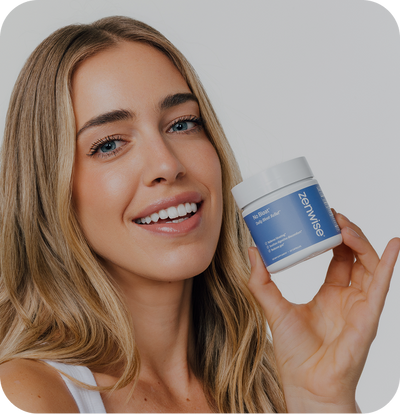
At Zenwise, we don’t think you should have to choose between fast relief and long-term health. Whether you need the crisis management of No Bloat Capsules or the daily foundation of our Digestive Enzymes, we’ve got your back (and your gut).
Don't wait for the next "bloat emergency" to take action. Start building a better internal ecosystem today. Subscribe & Save now to get 15% off and ensure your gut health routine never skips a beat. Your future, comfortable self will thank you.
1. Can I take digestive enzymes and probiotics at the same time? Yes! In fact, they work synergistically. Enzymes help break down food in the upper GI tract, while probiotics support the lower GI tract. Many of our supplements, like our core Digestive Enzymes, actually include both in one capsule for convenience.
2. Which is better for immediate bloating after a big meal? For immediate, meal-specific relief, digestive enzymes are the winner. They go to work on the food in your stomach right away. If you’re in a "bloat crisis," our No Bloat Capsules are specifically designed for fast-acting relief using enzymes and gas-reducing botanicals.
3. Do I really need a probiotic if I eat yogurt? While yogurt contains probiotics, the amount and the specific strains can vary wildly. Furthermore, many commercial yogurts are high in sugar, which can actually feed "bad" bacteria. A high-quality supplement ensures you are getting a clinical dose of specific, hardy strains like DE111® that are guaranteed to survive the trip to your gut.
4. How long does it take to see results from these supplements? Digestive enzymes usually provide benefits within hours of your first dose, as they work on the meal you just ate. Probiotics, however, are like a garden—they need time to "grow." Most people notice a significant difference in regularity and overall comfort after 2 to 4 weeks of consistent, daily use. This is why we recommend the Subscribe & Save option to ensure you don't break the cycle.
These statements have not been evaluated by the Food and Drug Administration. This product is not intended to diagnose, treat, cure or prevent any disease.



