




What’s the Difference Between Probiotics and Digestive Enzymes?
February 09, 2026
February 09, 2026

We’ve all been there: you’re sitting at a restaurant, staring at a plate of decadent pasta or a towering burger, and instead of excitement, you feel a flicker of "menu anxiety." You’re mentally calculating how long it will take for your jeans to feel two sizes too small or how quickly you’ll need to find a restroom. Digestive discomfort—the occasional gas, the belly bloat, the "food baby" that appears out of nowhere—has a way of taking the joy out of eating.
When you start looking for solutions, two terms pop up more than anything else: probiotics and digestive enzymes. They’re often grouped together in the "gut health" aisle, leading many to wonder, "Wait, aren't they the same thing?" or "Which one do I actually need to stop this bloating?" While they both live under the umbrella of digestive support, they play very different roles in your body. Think of them as the "demolition crew" versus the "property managers." One breaks things down, while the other maintains the neighborhood.
In this deep dive, we’re going to demystify these two gut-health powerhouses. We’ll look at how they function, why your body needs them, and how you can use them to reclaim your food freedom. At Zenwise Health (Zenwise®), we believe that "The Key To Good Health Is Gut Health.®" and our goal is to help you navigate these choices so you can live by our favorite motto: "Zenwise. Then Eat.®"
Digestive enzymes are non-living proteins that act as biological catalysts. Their primary job is to speed up the chemical reactions that break down the food you eat into smaller, absorbable nutrients. Imagine your food as a long, complex chain of LEGO bricks. Your body can’t use that giant chain; it needs the individual bricks. Digestive enzymes are the tiny hands that pull those bricks apart so they can enter your bloodstream and be used for energy.
Your body is naturally an enzyme-producing machine. The process starts in your mouth, where salivary amylase begins breaking down starches the moment you take a bite. It continues in the stomach and really kicks into high gear in the small intestine, fueled by enzymes produced by your pancreas.
However, life happens. As we age, our natural enzyme production can start to dip. Stress, processed diets, and even eating too quickly (guilty as charged!) can leave your system struggling to keep up with the workload. When food isn’t broken down properly, it sits in the gut and begins to ferment, leading to that all-too-familiar gas and pressure.
Enzymes are highly specific. Like a lock and key, each enzyme is designed to fit a certain type of food molecule:
For the person who loves a late-night pizza but hates the "brick in the stomach" feeling that follows, a high-quality supplement like our Digestive Enzymes can be a game-changer. These daily capsules provide a comprehensive blend of enzymes to help your body tackle fats, proteins, carbs, and fiber before they cause trouble.
If enzymes are the demolition crew, probiotics are the property managers of your gut. Probiotics are living microorganisms—beneficial bacteria and yeasts—that reside primarily in your large intestine (the colon). They make up a significant portion of your microbiome, a bustling microscopic city that influences everything from your digestion to your immune system and even your mood.
Probiotics don't "digest" your food in the same mechanical way enzymes do. Instead, they focus on the environment. They help keep the "bad" bacteria in check, support the integrity of your gut lining, and produce beneficial byproducts like short-chain fatty acids.
When your microbiome is balanced, things tend to run smoothly. When it’s out of whack—perhaps due to a round of antibiotics, a high-sugar diet, or chronic stress—you might experience irregularity, sluggishness, or a general sense of "gut rot." Probiotics work over time to replenish the "good guys," ensuring your internal ecosystem stays hospitable.
One of the biggest challenges with probiotics is survivability. Your stomach is an incredibly acidic environment designed to kill off invading bacteria. Many standard probiotics don’t survive the journey to the lower GI tract. That’s why we use DE111® in our core formulas. This is a spore-forming probiotic that is clinically studied for its ability to survive stomach acid and arrive in the gut ready to work.
For those looking for daily maintenance that addresses both the breakdown of food and the health of the microbiome, our Digestive Enzymes actually offer a "3-in-1" solution, combining enzymes, prebiotics, and the hardy DE111® probiotic in one go.
Understanding the difference between probiotics and digestive enzymes is easier when you look at three specific factors: what they do, when they work, and where they work.
Enzymes have a mechanical function. They are tools that dismantle polymers (large molecules) into monomers (small molecules). Probiotics have a biological function. They are living entities that interact with your body’s cells and other microbes to maintain harmony.
This is a big one for anyone seeking relief.
Digestive enzymes do the bulk of their work in the upper gastrointestinal tract—the stomach and the small intestine—where most nutrient absorption happens. Probiotics, meanwhile, do their best work in the lower gastrointestinal tract (the large intestine), where they ferment fiber and keep the colon healthy.
Key Takeaway: If you feel uncomfortable immediately after eating, you likely need enzyme support. If you struggle with general irregularity or "off" days, probiotics are your best friend.
We know that clinical definitions are great, but how does this apply to your actual life? Let’s look at some common situations.
You’ve been eating clean all week, but tonight is the night for tacos, chips, and maybe a little too much queso. You know from experience that this meal usually leads to your stomach feeling like a hard, inflated balloon.
You’re not necessarily eating huge meals, but you just don’t feel "right." You’re occasionally irregular, you feel sluggish after lunch, and you want to make sure you’re actually getting the nutrients from the healthy food you do eat.
For women, gut health is often intricately linked to other areas of wellness. Bacterial imbalances in the gut can sometimes lead to imbalances elsewhere, particularly in the vaginal and urinary tracts.
You finished your meal, and you didn't have your enzymes handy. Now you’re sitting on the couch feeling like you need a little "kickstart" to get things moving and reduce that post-dinner heaviness.
When it comes to the difference between probiotics and digestive enzymes, one thing they both share is the need for quality. The supplement market is flooded with products that use "window dressing"—listing ingredients in amounts too small to actually do anything—or using cheap strains of bacteria that die before they even reach your stomach.
At Zenwise Health, we pride ourselves on using clinically studied ingredients like DE111® and BioCore Optimum Complete. We don't believe in "magic pills"; we believe in science-backed support that helps your body do what it was designed to do.
But here’s the secret sauce: consistency.
Your gut microbiome is a living, breathing thing. It changes based on what you eat, how much you sleep, and how stressed you are. If you only take your probiotics once a week, you’re not giving those beneficial bacteria a chance to colonize and make a real difference. This is why we are so vocal about our Subscribe & Save program. Not only does it save you 15% off every order, but it ensures you never run out. Consistency is the bridge between "I think this is working" and "I feel amazing."
It’s the topic nobody wants to talk about at dinner parties, but we’re Zenwise®, so we’re going to go there. Your bathroom habits are the ultimate report card for your gut health. We like to say, "The Proof Is In The Poop™."
If you are experiencing frequent irregularity, or if things are... let's say, less than ideal in the porcelain department, it’s a sign that the "demolition crew" and the "property managers" aren't communicating.
When you get the balance right, the result isn't just a flatter-looking stomach (though that’s a nice perk!); it’s a sense of lightness and energy. When your body isn't spending all its resources struggling to process a meal, that energy can go elsewhere—to your brain, your muscles, and your life.
The short answer? Absolutely. In fact, for many people, taking both is the "gold standard" for digestive wellness.
By taking enzymes, you ensure that food is broken down into small enough pieces that they don't sit in the gut and cause gas. This actually makes the probiotics' job easier! When the environment isn't filled with fermenting, undigested food, the beneficial bacteria can thrive and maintain the gut lining more effectively.
This is why our flagship Digestive Enzymes are so popular. We’ve done the heavy lifting for you by combining a broad-spectrum enzyme blend with a prebiotic and a probiotic. It’s a comprehensive approach that covers the upper and lower GI tracts, ensuring that from the first bite to the final "Proof Is In The Poop™," your system is supported.
While supplements provide incredible support, we always encourage a holistic approach to gut health. You can support your enzymes and probiotics by making a few lifestyle tweaks:
Understanding the difference between probiotics and digestive enzymes is the first step toward true food freedom. You don’t have to live in fear of the menu or spend your evenings unbuttoning your pants in discomfort. By using the right tools—the "demolition crew" of enzymes for immediate breakdown and the "property managers" of probiotics for long-term balance—you can transform your relationship with food.
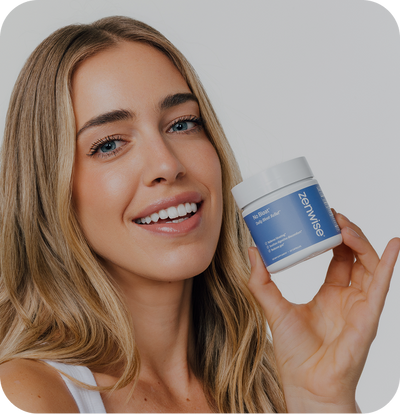
Whether you need the fast-acting relief of No Bloat Capsules after a pasta night or the daily foundational support of our Digestive Enzymes, we’re here to partner with you on your journey. Remember, a happy gut is the foundation for a happy life.
Ready to make gut health a permanent part of your routine? Don't forget to Subscribe & Save today to get 15% off and ensure you never miss a day of support. Your gut (and your favorite pair of jeans) will thank you.
Zenwise. Then Eat.®
1. Can I take digestive enzymes and probiotics at the same time? Yes! They work in different parts of the digestive tract and serve different functions. Enzymes help break down food in the stomach and small intestine, while probiotics support the microbiome in the large intestine. Taking them together, such as in our 3-in-1 Digestive Enzymes, provides comprehensive support.
2. Which one is better for immediate bloating after a big meal? For immediate, post-meal discomfort, digestive enzymes are the clear winner. They go to work right away to help process the food you just ate. Our No Bloat Capsules are specifically formulated for this scenario, providing fast-acting relief from gas and pressure.
3. Do I need probiotics if I eat yogurt and fermented foods? While fermented foods are great, it can be difficult to get a consistent, high dose of specific, clinically studied strains (like DE111®) through diet alone. Supplementing ensures you’re getting a guaranteed amount of beneficial bacteria that are hardy enough to survive stomach acid and actually reach your gut.
4. Is it okay to take these supplements every day? For most people, daily use is highly recommended—especially for probiotics, which require consistency to maintain a healthy microbiome. Daily use of digestive enzymes before your largest meals can also help prevent occasional digestive issues before they start. As always, if you have specific medical concerns, it's a good idea to consult with a healthcare professional.
These statements have not been evaluated by the Food and Drug Administration. This product is not intended to diagnose, treat, cure or prevent any disease.



