




What is Not a Digestive Enzyme? The Real Facts
February 04, 2026
February 04, 2026

We’ve all been there: you’re sitting at a beautiful restaurant, the scent of garlic and toasted crust fills the air, and the menu looks like a dream. But instead of excitement, you feel that familiar twinge of "menu anxiety." You’re mentally scanning the ingredients, calculating the risk of your jeans feeling two sizes too small by the time the check arrives. Or perhaps you’re already in the "post-game" phase, sitting on the couch after a heavy Sunday dinner, wondering why your midsection feels like an over-inflated basketball.
When our digestion hits a snag, we often hear a chorus of advice: "Take a probiotic!" "Try some enzymes!" "Drink more water!" It’s easy to get lost in the sea of wellness jargon. In the quest for "The Proof Is In The Poop™"—that glorious feeling of regularity and comfort—we need to know exactly what we’re putting into our bodies. One of the most common points of confusion in the gut-health world is the distinction between digestive enzymes and other biological heavy hitters like hormones and bile.
You might be asking yourself, "what is not a digestive enzyme?" specifically if you’re trying to decode a supplement label or simply understand why your body reacts the way it does to a double-cheese pizza. In this guide, we’re going to clear the air (literally and figuratively). We will identify the "impostors" that are often mistaken for enzymes, explain the vital role that real enzymes play in breaking down your food, and show you how to support your system so you can get back to what matters most.
At Zenwise®, our mission is simple: Zenwise. Then Eat.® We believe that The Key To Good Health Is Gut Health.®, and that starts with understanding the science of your stomach. Let’s dive into the world of enzymes, hormones, and everything in between.
Before we look at what an enzyme isn't, we need a firm grasp on what an enzyme is. Think of digestive enzymes as the "molecular scissors" of your body. When you eat a piece of steak or a bowl of pasta, those foods are composed of large, complex polymers—basically long chains of molecules. Your body can’t absorb a whole chain; it needs the individual links.
Enzymes are specialized proteins that act as biological catalysts. This means they speed up chemical reactions that would otherwise happen far too slowly to sustain life. They have a specific "active site," which is like a custom-shaped lock. Only a specific substrate (the food molecule) fits into that lock. When they meet, the enzyme breaks the chemical bonds of the food, turning it into smaller, soluble nutrients that can pass through your intestinal wall and into your bloodstream.
The "powerhouse" of this operation is your pancreas, though digestion actually starts in the mouth with salivary amylase. Your stomach and small intestine also join the party, secreting various enzymes to ensure that proteins, fats, and carbs are properly dismantled. When this system works perfectly, you feel light, energized, and ready to tackle the day. When it doesn't? That's when the bloating and discomfort move in.
It is surprisingly common for people to misclassify certain biological substances as enzymes. Whether you’re a student prepping for a biology quiz or a "Symptom-Aware Optimizer" trying to choose the right supplement, knowing these distinctions is crucial.
If you were to take a multiple-choice test asking "what is not a digestive enzyme," insulin would be the classic correct answer. Insulin is a hormone, produced in the pancreas. While it shares an origin story with many enzymes (the pancreas), its job is entirely different.
Digestive enzymes stay within the "tube" of your digestive tract (the gut lumen) to break down food. Insulin, however, is secreted into the bloodstream. Its job is to act as a key that opens your cells to allow glucose (sugar) to enter. It regulates your energy and blood sugar levels, but it doesn't break down the sandwich you just ate.
Bile is another frequent source of confusion. Produced by the liver and stored in the gallbladder, bile is a fluid that helps with fat digestion. However, bile is not an enzyme.
Think of bile like dish soap. If you have a greasy pan, the water just slides off the grease. When you add soap, it breaks the large globs of fat into tiny droplets. This process is called emulsification. While bile makes it easier for enzymes to work by increasing the surface area of the fat, it doesn't actually perform the chemical breakdown itself. That job belongs to an enzyme called lipase.
We often see people using "probiotics" and "enzymes" interchangeably, but they are worlds apart. Probiotics are live, beneficial bacteria (and sometimes yeasts) that live in your gut microbiome. They are like the "good neighbors" in your digestive community.
While probiotics help maintain a healthy environment and can even influence how enzymes work, they are not proteins designed to snip food molecules apart. However, they are a vital part of the "3-in-1" support system found in our Digestive Enzymes, which combines the "scissoring" power of enzymes with the long-term support of probiotics like DE111®.
Just as probiotics are not enzymes, prebiotics aren't either. Prebiotics are specialized plant fibers that act as "food" for the good bacteria in your gut. They help your microbiome flourish, but they don't help you digest that heavy holiday meal in real-time.
To truly appreciate the "Zenwise. Then Eat.®" lifestyle, you should know the names of the "Big Three" enzymes that keep your gut running smoothly:
For those who struggle with specific food groups, there are also "specialist" enzymes. Lactase breaks down the lactose in dairy, while Alpha-galactosidase helps tackle the complex sugars in beans and cruciferous vegetables that lead to—you guessed it—excessive gas. If you're looking for a comprehensive way to cover all these bases, our Digestive Enzymes contain a broad spectrum of these helpers to ensure nothing you eat goes to waste (or causes a scene).
Imagine it’s Friday night. You’re meeting friends for a "pasta night" extravaganza. There’s bread, rich carbonara, and maybe a little dessert. For some, this sounds like a blast. For others, it sounds like three days of "food baby" bloating and regret.
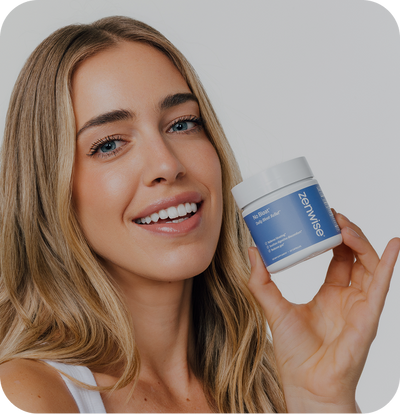
In this scenario, your body’s natural enzyme production might be overwhelmed by the sheer volume of carbs, fats, and dairy. This is where a targeted supplement can change the narrative. If you know you're heading into a "crisis" meal, keeping No Bloat Capsules in your bag is a game-changer.
Unlike a daily maintenance routine, NO BLØAT® is your "Lifestyle Hero." It features BioCore Optimum Complete, a robust blend of enzymes designed specifically to ease bloat within hours. It also includes Dandelion Root to help with temporary water retention and Fennel to soothe the digestive tract. It’s the difference between needing to unbutton your pants under the table and walking out of the restaurant feeling like a million bucks.
When we talk about gut health, we have to talk about the "stomach acid gauntlet." Many over-the-counter enzymes and probiotics are fragile. If they hit the highly acidic environment of your stomach and dissolve too early, they never make it to the small intestine where they are actually needed.
This is why we prioritize high-quality, scientifically-backed ingredients. In our Digestive Enzymes, we use DE111®, a spore-forming probiotic. Because it is a spore, it has a natural protective shell that allows it to survive the harsh trek through your stomach acid. It arrives in the small intestine ready to work, supporting regularity and a healthy microbiome.
By combining these hardy probiotics with a diverse enzyme blend, we provide a "3-in-1" solution that supports your gut from every angle. It’s not just about one meal; it’s about building a foundation for long-term digestive freedom.
Digestive health isn't a one-size-fits-all journey. Sometimes, the gut needs specific support based on your unique biology.
Women often face unique challenges, as gut health is intrinsically linked to vaginal and urinary tract health. An imbalance in gut flora can ripple outward, leading to discomfort that goes beyond bloating. Our Women’s Probiotics are formulated with this in mind. They include Cranberry and D-Mannose to support the urinary tract, alongside a potent probiotic blend to keep the "good bugs" in charge. It’s a holistic approach to feminine wellness that recognizes that everything—from your stomach to your skin—starts with the microbiome.
Let’s be honest: even if we want better gut health, taking another capsule can feel like a chore. That’s why we created Papaya Chewables. These aren't just delicious; they’re functional. By utilizing the natural power of papain (from papaya) and bromelain (from pineapple), these chewables kickstart the digestion of proteins and carbs right after your meal. They are the perfect post-dinner treat that actually treats your gut with respect.
While "crisis management" with products like No Bloat Capsules is vital for those occasional heavy meals, the real magic happens through consistency. Your gut microbiome is a living ecosystem. Like a garden, it doesn't just need a massive flood of water once a month; it needs steady, daily care.
Maintaining a healthy level of enzymes and probiotics helps:
At Zenwise Health, we want to make that consistency as easy (and affordable) as possible. This is why we advocate for our Subscribe & Save model. Not only do you get 15% off every order, but you also ensure that you never run out of your daily essentials. It removes the "friction" of health, making your wellness routine as automatic as brushing your teeth.
While many of us experience occasional gas or bloating due to "the usual suspects" (beans, dairy, or a very large meal), sometimes your body is trying to tell you that its enzyme production is consistently low. This is often referred to as enzyme insufficiency.
Common signs that your "molecular scissors" might be a bit dull include:
If these symptoms are persistent, it’s always a good idea to chat with a healthcare professional. However, for many, simply supplementing with a high-quality "3-in-1" like Digestive Enzymes provides the support needed to turn things around.
We don’t believe gut health should be a clinical, sterile, or boring topic. It’s about life! It’s about the joy of sharing a meal with friends, the comfort of your favorite "guilty pleasure" food, and the confidence to wear whatever you want without worrying about a mid-day bloating "wardrobe malfunction."
By understanding "what is not a digestive enzyme," you’ve already taken a massive step toward mastering your internal health. You’ve learned that:
Armed with this knowledge, you can make better choices. You can reach for No Bloat Capsules when the pasta bowl is calling your name, or stick to your daily Digestive Enzymes to keep the engine humming.
Your gut is the center of your universe. It’s where your energy is created, your immunity is forged, and—let’s be honest—it’s where your mood is often decided. When your digestion is on track, life just feels lighter. At Zenwise®, we are proud to be your partners in this journey. We bridge the gap between clinical science and your everyday lifestyle, providing accessible, effective, and (dare we say) fun solutions for your digestive woes.
Remember: The Key To Good Health Is Gut Health.® Whether you're dealing with "crisis" bloating or just looking for a daily boost, we have a solution that fits your life. Don't let digestive confusion hold you back from the foods you love.
Take the guesswork out of your gut health. Subscribe & Save today to receive 15% off your order and ensure your digestive system has everything it needs to keep you feeling your best. It’s time to stop worrying about the menu and start enjoying the meal. Zenwise. Then Eat.®
1. Is insulin a digestive enzyme? No, insulin is a hormone produced in the pancreas. While digestive enzymes are secreted into the digestive tract to break down food, insulin is secreted into the bloodstream to regulate blood sugar levels.
2. What is the difference between bile and a digestive enzyme? Bile is a fluid produced by the liver that emulsifies fats, meaning it breaks large fat globules into smaller droplets. This increases the surface area for enzymes to work. However, bile itself does not chemically break down food; that is the job of enzymes like lipase.
3. Are probiotics the same as digestive enzymes? No. Probiotics are live, beneficial bacteria that support a healthy gut environment. Digestive enzymes are non-living proteins that catalyze the chemical breakdown of food molecules. While they work together to support gut health, they perform different functions.
4. When is the best time to take a digestive enzyme supplement? For the best results, it is generally recommended to take digestive enzymes right before you start eating. This ensures that the enzymes are present in the stomach and small intestine as the food arrives, allowing them to start the breakdown process immediately.
These statements have not been evaluated by the Food and Drug Administration. This product is not intended to diagnose, treat, cure or prevent any disease.
Share this article


