




What Enzymes Are Responsible for Digestion of Protein?
February 04, 2026
February 04, 2026

We’ve all been there: you’re sitting at a beautiful dinner, the scent of a perfectly seared steak or a hearty lentil stew fills the air, but instead of excitement, you feel a twinge of "menu anxiety." You know that within an hour of finishing that protein-rich meal, your jeans are going to feel two sizes too small, and you’ll be looking for the nearest exit to deal with the inevitable "meat sweats" or heavy, rock-in-the-stomach sensation. This isn't just a "you" problem; it’s a biological breakdown—or a lack thereof. When we talk about that heavy, overstuffed feeling, we are often talking about the body struggling to dismantle one of the most complex structures we consume: protein.
The purpose of this post is to dive deep into the biological machinery of your gut to answer the question: what enzymes are responsible for digestion of protein? We will explore how your body handles everything from a Sunday roast to a plant-based protein shake, identifying the specific enzymes that act as "molecular scissors" to transform complex polymers into absorbable amino acids. Beyond the science, we’ll provide practical, real-world strategies to help you navigate your favorite meals without the aftermath of gas and bloating. At Zenwise®, we believe that you shouldn't have to choose between a high-protein diet and physical comfort. Our philosophy is simple: Zenwise. Then Eat.® because we know that The Key To Good Health Is Gut Health.®
Protein is the building block of life. It’s responsible for your muscles, your skin, your hormones, and even the very enzymes that break it down. However, from a digestive standpoint, protein is "clunky." While simple sugars can start breaking down the moment they hit your saliva, protein requires a more rigorous, multi-stage process. Think of it as a relay race where the baton—your meal—must be passed through several specific environments, each with its own specialized team of enzymes.
The first major stop for protein digestion isn't the mouth (though chewing is vital!), but the stomach. This is where the environment becomes highly acidic, which is necessary for the first star of the show: Pepsin.
Pepsin doesn't just appear out of nowhere. If your body stored active pepsin in its tissues, it would literally digest your own stomach lining. To prevent this, your stomach secretes an inactive form called pepsinogen. When you eat, your stomach produces hydrochloric acid (HCl), which drops the pH to a level between 1.5 and 2.5. This acidity triggers pepsinogen to "unfold" and become active pepsin.
Pepsin is an endopeptidase, meaning it breaks the internal bonds of long protein chains (polypeptides) into smaller fragments called peptides. It’s the "crusher" that turns the boulder into gravel. If you find that heavy meals sit like a stone in your stomach, it might be that your natural pepsin production or stomach acidity needs a little support. This is where a comprehensive supplement like Digestive Enzymes can be a game-changer, as it provides a broad spectrum of proteases to assist this initial breakdown.
Once the "gravel" (peptides) leaves the stomach, it enters the small intestine. Here, the pancreas takes over. The pancreas is arguably the most important organ for chemical digestion, secreting a cocktail of enzymes that finalize the breakdown of protein. These include:
When this "pancreatic relay" is running smoothly, you feel light and energized after a meal. When it falters, you end up with undigested protein fragments that travel further down the digestive tract, where they shouldn't be.
We have a saying at Zenwise®: The Proof Is In The Poop™. It might sound irreverent, but your digestive output is the best indicator of your internal health. If protein isn't broken down efficiently by pepsin and the pancreatic proteases, those undigested fragments reach the colon.
Once in the colon, these proteins become food for bacteria. Unlike the beneficial fermentation of fiber, the fermentation of undigested protein (a process called putrefaction) can lead to the production of odorous gases and metabolites that contribute to that "bloated and heavy" feeling. If you notice occasional gas that could clear a room after a high-protein day, your enzymes might be waving a white flag.
For many of us, the problem isn't a clinical deficiency, but a lifestyle mismatch. We eat quickly, we eat while stressed, and we eat large portions of complex proteins (like whey, casein, or tough meats).
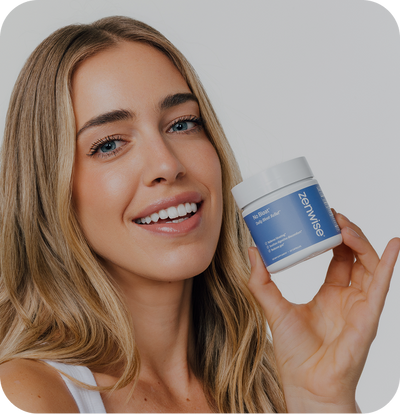
Consider the "Sunday Dinner Scenario." You’ve had the roast beef, the Yorkshire pudding, and maybe a second helping. Your body is suddenly tasked with breaking down a massive amount of dense animal protein. If you don't have enough active protease on hand, that food stalls. For moments like these, having No Bloat Capsules in your bag is the ultimate lifestyle hack. It contains BioCore Optimum Complete, a high-potency enzyme blend specifically designed to tackle those "crisis" meals, helping to ease bloat within hours and flatten the appearance of the stomach by moving food along.
While we are focusing on what enzymes are responsible for digestion of protein, it’s important to remember that we rarely eat protein in isolation. A steak usually comes with a side of fries (carbs) or a salad (fiber). A protein shake might contain milk (lactose).
This is why a targeted approach is often better than a single-enzyme supplement. Our Digestive Enzymes offer a "3-in-1" solution. Not only do they provide the proteases needed for protein, but they also include amylase for carbs, lipase for fats, and cellulase for fiber.
What sets this daily core supplement apart is the inclusion of DE111®. This is a spore-forming probiotic that is clinically studied for its ability to survive the harsh, acidic environment of the stomach (where pepsin lives!) to reach the small intestine alive. Once there, it supports regularity and helps maintain a healthy balance of gut flora. By combining enzymes with prebiotics and probiotics, you aren’t just treating a symptom; you’re optimizing the entire ecosystem.
Digestive health isn't one-size-fits-all. Your enzyme needs change based on your gender, your diet, and your immediate goals.
You’re at a wedding, or perhaps it’s "Taco Tuesday," and you’ve overindulged. You feel the pressure building under your waistband. You don't have time for a long-term gut "reset"—you need comfort now.
You’re a gym-goer or someone who focuses on a high-protein diet for weight management. You want to make sure you are actually absorbing the expensive protein powder and organic chicken you’re buying.
Women often experience digestive shifts due to hormonal cycles, which can affect gut transit time and lead to bloating. Furthermore, gut health is intrinsically linked to vaginal and urinary tract health.
Maybe you don't like swallowing capsules, or you just want a little extra "insurance" after a light lunch that felt a bit too heavy.
To truly understand what enzymes are responsible for digestion of protein, we have to look at the chemistry. Proteins are polymers—long chains of amino acids held together by peptide bonds. Imagine a long pearl necklace. If you want to use those pearls to build something new, you have to cut the string.
The enzymes we’ve discussed—Pepsin, Trypsin, and Chymotrypsin—are essentially highly specialized scissors. Some scissors are only good at cutting the string between blue pearls; others only cut between red pearls. This is why a diverse "protease blend" is so effective. Plant proteins (like those found in beans or soy) have different bond structures than animal proteins (like those in whey or beef).
By using a broad-spectrum enzyme supplement like Zenwise Health products, you are providing your body with a "toolbox" that can handle any "necklace" you throw at it. This leads to what we call "Food Freedom." You can eat the lentils, you can eat the steak, and you can do it with the confidence that your body has the tools to dismantle them efficiently.
While we love the support of a good supplement, we also want to empower you with habits that make your natural enzymes work better. After all, The Key To Good Health Is Gut Health.® and that involves a holistic approach.
We often hear from people who are considering expensive clinical interventions or specialized "medical foods" for their digestive issues. While those have their place, many "Symptom-Aware Optimizers" find that their issues can be managed with accessible, high-quality supplementation.
Our products generally range between $19–$25, making them an affordable way to regain your food freedom. When you choose to Subscribe & Save, you not only get that 15% discount, but you also invest in your future self. Think of it as a small daily tax that pays dividends in the form of no more "food comas," no more "bloat-fits," and a much happier social life.
One of the most common questions we get is: "Do I need different enzymes if I'm vegan?" The answer is both yes and no.
All proteins are made of amino acids, but plant proteins are often "locked" behind cell walls made of cellulose. This makes them inherently harder for the human gut to access. If you are eating a bowl of beans and rice, you don't just need proteases for the protein; you need cellulase to break down the plant fibers so the proteases can even get to the protein in the first place.
This is a classic example of why a single-focus enzyme isn't enough. A "Lifestyle Hero" product like No Bloat Capsules or the daily Digestive Enzymes includes the necessary enzymes to unlock plant-based nutrition, ensuring you get the amino acids you need without the gas that usually accompanies a high-fiber, plant-based diet.
Understanding what enzymes are responsible for digestion of protein is like having a map of your own internal engine. From the acidic "unfolding" of proteins by pepsin in your stomach to the precision cutting by trypsin and chymotrypsin in your small intestine, your body is a marvel of biological engineering. But even the best engines need a tune-up.
Whether you are dealing with occasional bloating after a heavy meal, or you’re looking to support your long-term nutrient absorption and regularity, Zenwise® is here to partner with you. We don't believe in lecture or labels; we believe in results you can feel—and yes, results you can see in the bathroom. Remember, The Proof Is In The Poop™.
Don't let menu anxiety dictate your life. Embrace the freedom to eat what you love and feel great doing it. We invite you to join the Zenwise community and take charge of your digestive destiny. Start your journey toward a flatter stomach and a more comfortable life today.
Ready to transform your gut health? Subscribe & Save today to get 15% off every order. Consistency is the secret ingredient to a happy gut, and we make it easy and affordable to keep your routine on track.
1. What is the most important enzyme for protein digestion in the stomach? The primary enzyme in the stomach is Pepsin. It is secreted in an inactive form called pepsinogen and is activated by stomach acid (HCl). Its main job is to break long protein chains into smaller peptides.
2. Why does eating protein make me feel so bloated? Protein is a complex molecule that takes longer to break down than carbs. If you have insufficient enzymes or low stomach acid, undigested protein fragments can move into the large intestine. There, bacteria ferment them, which can result in gas, foul odors, and that uncomfortable "heavy" feeling.
3. Can I get these enzymes naturally from my food? Yes, some foods contain natural proteases. For example, papaya contains papain and pineapple contains bromelain. However, the concentration in food is often much lower than what is found in a targeted supplement like Papaya Chewables or No Bloat Capsules.
4. Is there a difference between protease and peptidase? These terms are often used interchangeably, but "protease" is a general term for any enzyme that breaks down protein. "Peptidases" are a specific type of protease that focus on breaking the peptide bonds to release individual amino acids. A good supplement will usually contain a blend of several different types to ensure complete digestion.
These statements have not been evaluated by the Food and Drug Administration. This product is not intended to diagnose, treat, cure or prevent any disease.



