




What Are All the Digestive Enzymes and How Do They Work?
February 04, 2026
February 04, 2026

We’ve all been there: you’re at a beautiful dinner, the food looks incredible, and the company is even better. But instead of focusing on the conversation, you’re secretly calculating how much "room" you have left in your waistband before you have to perform the dreaded "under-the-table button pop." Or perhaps you’re staring at a menu, paralyzed by "menu anxiety," knowing that the delicious pasta carbonara or the spicy bean chili will inevitably lead to a night of occasional gas and that heavy, "brick-in-the-stomach" feeling. It’s a common struggle, and it often stems from one simple question: is your body actually equipped to handle what you just ate?
At Zenwise®, we believe that the foundation of a vibrant life starts with your gut. Our philosophy is simple: The Key To Good Health Is Gut Health.® When your digestive system is humming along efficiently, you have the freedom to enjoy your favorite foods without the looming fear of discomfort. But to achieve that freedom, you need to understand the silent heroes of your digestive tract: enzymes.
In this deep dive, we’re going to explore what are all the digestive enzymes, how they function as biological catalysts, and why a "3-in-1" approach to gut health is the game-changer you’ve been looking for. From the amylase in your saliva to the specialized proteases that tackle tough proteins, we’ll break down the science of digestion so you can Zenwise. Then Eat.®
Before we list the specific enzymes, let's talk about what they actually are. Imagine you are trying to take apart a complex Lego set. You could try to pull the pieces apart with your bare hands, but it might be slow, difficult, and frustrating. Now, imagine you have a specialized tool designed specifically to pop those bricks apart instantly. That tool is an enzyme.
Enzymes are specialized proteins that act as biological catalysts. In the world of chemistry, a catalyst is something that speeds up a reaction without being consumed by it. In your body, digestive enzymes are responsible for breaking down the large, complex polymers (macronutrients like fats, proteins, and carbs) into smaller, absorbable monomers (like fatty acids, amino acids, and simple sugars).
Without these enzymes, your body would technically starve even if you were eating 3,000 calories a day. Why? Because your bloodstream can’t absorb a whole piece of steak or a spoonful of mashed potatoes. It can only absorb the tiny molecular building blocks. When you have an adequate supply of these enzymes, digestion is seamless. When you don’t, those undigested food particles sit in your gut, where they become a feast for "bad" bacteria, leading to fermentation, gas, and that uncomfortable bloated feeling. As we like to say, The Proof Is In The Poop™—and if things aren't moving smoothly or feeling right, your enzyme levels might be the culprit.
While there are dozens of different enzymes working in your body at any given time, the heavy lifting of digestion is handled by three primary categories. These are produced mainly by your pancreas, often called the "powerhouse" of the digestive system.
Digestion actually starts in your mouth, not your stomach. As soon as you take a bite of bread or a potato, your salivary glands release amylase. This enzyme begins the process of breaking down complex starches into simpler sugars like maltose. This is why if you chew a piece of plain bread for a long time, it starts to taste sweet!
Once the food reaches your small intestine, the pancreas releases even more amylase to finish the job. If you find that "starchy" meals—like pasta or rice—leave you feeling heavy and sluggish, a supplement like our Digestive Enzymes can provide the extra amylase support needed to process those carbs efficiently.
Proteins are incredibly complex molecules. Think of them like long, tangled chains of amino acids. Protease enzymes, such as pepsin (found in the stomach) and trypsin or chymotrypsin (from the pancreas), act like molecular scissors that snip those chains into individual amino acids.
This is critical because undigested protein in the colon is a recipe for disaster—it can lead to foul-smelling gas and a general feeling of toxicity. For the person who loves a good steak but hates the "meat sweats" and the heavy feeling that follows, ensuring high protease activity is key. Our Digestive Enzymes contain a comprehensive blend of proteases to help break down animal and plant proteins, as well as gluten and casein.
Fats are the most calorie-dense macronutrient and the hardest to break down. Lipase is the enzyme responsible for deconstructing triglycerides into fatty acids and glycerol. This process also requires bile from your gallbladder to "emulsify" the fat (like dish soap breaking up grease on a pan) so the lipase can do its work.
If you’ve ever felt "greasy" or nauseated after a high-fat meal, your lipase levels might be struggling to keep up. By supporting your system with extra lipase, you help your body absorb fat-soluble vitamins like A, D, E, and K, which are vital for everything from bone health to immune function.
Beyond the "Big Three," several other enzymes play crucial roles in handling specific types of food that are notoriously difficult to digest.
Lactase is the enzyme that breaks down lactose, the sugar found in milk and dairy products. Many adults naturally produce less lactase as they age, leading to that all-too-familiar bloating and gas after a bowl of ice cream. Including lactase in a daily regimen allows many people to enjoy dairy again without the digestive drama.
Ever wonder why beans are called "the musical fruit"? It’s because they contain complex sugars called oligosaccharides that the human body cannot break down on its own. Alpha-galactosidase is the specific enzyme that cleaves these sugars. If you’re a fan of plant-based diets or a classic "beans and greens" bowl, this enzyme is your best friend.
Interestingly, the human body does not naturally produce cellulase, the enzyme needed to break down cellulose (plant fiber). We rely on the bacteria in our gut to do some of this work, but supplemental cellulase can help break down the cell walls of raw vegetables, making those big kale salads much easier on your stomach.
Derived from papaya and pineapple respectively, these are natural proteases. They are fantastic for kickstarting digestion immediately after a meal. This is exactly why our Papaya Chewables are such a fan favorite—they provide a tasty, effortless way to reduce post-meal discomfort and support protein breakdown.
To understand why we suggest "Zenwise. Then Eat.®", you have to visualize the timeline of a meal.
If you take a supplement like Digestive Enzymes right before your first bite, you are essentially pre-loading your "enzyme toolkit." The enzymes are present and ready to go the moment the food hits your small intestine.
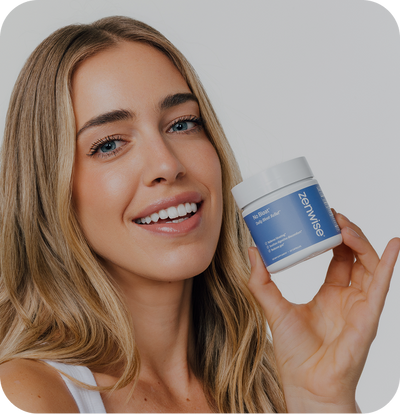
For those moments when you forgot your daily maintenance or you’re facing a "crisis" meal—like a massive holiday dinner or a greasy takeout night—you might need something faster and more targeted. That’s where No Bloat Capsules come in. While our standard enzymes focus on long-term digestive efficiency, NO BLØAT® is designed for "Lifestyle Hero" moments. It combines the BioCore Optimum Complete enzyme blend with botanicals like Dandelion Root, Fennel, and Ginger to ease bloat within hours and help flatten the appearance of the stomach by reducing water retention and gas.
A common question we hear is, "If I take a probiotic, do I still need enzymes?" The answer is almost always yes, because they do completely different jobs.
Think of your gut like a construction site.
You can have the best workers in the world, but if they don't have the right tools, the job won't get done efficiently. This is why our Digestive Enzymes are a "3-in-1" solution. We combine a broad spectrum of enzymes with prebiotics and our clinically studied DE111® probiotic.
DE111® is a spore-forming probiotic, which is a fancy way of saying it has a "hard shell" that allows it to survive the harsh, acidic environment of your stomach. Many standard probiotics die before they ever reach your intestines. DE111® is guaranteed to arrive alive, where it can then support regularity and immune health.
We don’t live in a clinical lab; we live in a world of pizza parties, brunch dates, and taco Tuesdays. Here’s how to navigate real-life scenarios with Zenwise®:
If you live for Italian food but hate the "carb coma" and the bloating that follows, you need a two-pronged approach. Take Digestive Enzymes daily to keep your baseline amylase levels high. If you know the meal is going to be particularly heavy or include extra cheese, keep No Bloat Capsules in your bag for fast-acting relief from gas and discomfort.
Women often face unique digestive challenges that can be tied to hormonal shifts or specific health needs. For total body support, we recommend our Women’s Probiotics. Not only does this formula support gut flora, but it also contains Cranberry and D-Mannose to promote vaginal and urinary tract health. It’s the perfect way to ensure your "down there" health is as balanced as your "in there" health.
Sometimes you just need a quick "reset" after a lunch that didn't sit quite right. Our Papaya Chewables are the perfect desk or car companion. They’re delicious, they kickstart the digestive process, and they provide that immediate post-meal support that makes the rest of your afternoon much more productive (and less gassy).
Not all enzyme supplements are created equal. When you’re looking at what are all the digestive enzymes on a label, you want to see specific measurements of activity (like HUT for proteases or DU for amylase), not just weight in milligrams.
At Zenwise®, we prioritize:
The gut microbiome is a living ecosystem. It doesn't change overnight, and it doesn't stay healthy if you only treat it well once a week. Consistency is the single most important factor in maintaining a healthy gut and ensuring you never have to worry about "The Proof Is In The Poop™" being a negative experience.
To make consistency effortless, we offer a Subscribe & Save model. When you subscribe, you get 15% off every order, and your supplements arrive at your door before you run out. It takes the guesswork out of your routine and ensures that your body always has the "tools" it needs to handle whatever you decide to put on your plate.
Understanding what are all the digestive enzymes is the first step toward reclaiming your food freedom. You shouldn't have to live in fear of the "bloat" or skip out on social gatherings because you're worried about how your stomach will react. By partnering with your body and providing the specific catalysts it needs—whether that's the daily support of Digestive Enzymes or the rapid relief of No Bloat Capsules—you can move through the world with confidence and comfort.
Remember, your gut health is the foundation for everything from your mood to your immune system. Treat it well, give it the tools it needs, and remember our golden rule: Zenwise. Then Eat.®
Ready to start your journey to better gut health? Explore the full Zenwise Health collection here and don’t forget to Subscribe & Save for 15% off and a lifetime of better digestion!
Digestive enzymes are proteins that physically break down food into smaller nutrients. Probiotics are live, beneficial bacteria that support the health of the gut lining, help balance the microbiome, and support immune function. Think of enzymes as the tools and probiotics as the workers.
For the best results, take your enzymes immediately before you start eating. This ensures that the enzymes are present in the stomach and small intestine the moment the food arrives, allowing them to begin the breakdown process instantly.
While some foods like pineapple (bromelain), papaya (papain), and fermented foods (like sauerkraut) contain natural enzymes, the heat of cooking often destroys them. Additionally, the concentration of enzymes in food is often much lower than what is found in a targeted supplement like Digestive Enzymes.
No Bloat Capsules are designed for relatively fast relief. Many users report a reduction in occasional gas and a "flatter" stomach feeling within just a few hours of consumption, thanks to the combination of enzymes and fast-acting botanicals like Fennel and Dandelion Root.
These statements have not been evaluated by the Food and Drug Administration. This product is not intended to diagnose, treat, cure or prevent any disease.
Share this article


