




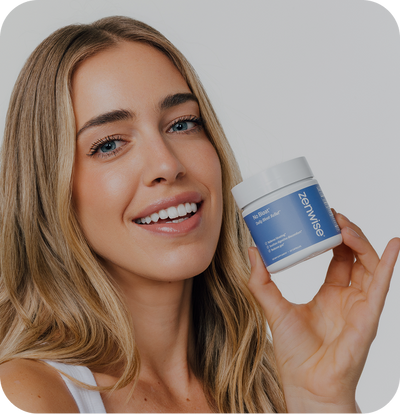
Probiotics vs. Digestive Enzymes: Which One Does Your Gut Need?
February 09, 2026
February 09, 2026

We’ve all been there: you’re at a dinner party, eyeing the artisanal cheese board or the double-layer lasagna, but instead of excitement, you feel a mounting sense of "menu anxiety." You know that within twenty minutes of that first delicious bite, your jeans are going to feel two sizes too small, and you’ll be searching for the nearest exit—or at least a very large pillow to hide the "food baby" currently staging a protest in your midsection. Occasional bloating, gas, and that sluggish, heavy feeling after meals aren't just uncomfortable; they’re a sign that your digestive system is working overtime without the proper tools.
When seeking relief, most people stumble upon two major players in the wellness aisle: probiotics and digestive enzymes. But what is the difference between probiotics and digestive enzymes, and how do you know which one belongs in your daily routine? While they both reside under the umbrella of gut health, they perform entirely different jobs. It’s the difference between the construction crew that builds the house (probiotics) and the power tools that break down the raw materials (enzymes).
In this deep dive, we are going to demystify these two digestive powerhouses. We will explore how enzymes tackle the mechanical breakdown of your lunch, how probiotics support the long-term environment of your microbiome, and why the "Zenwise. Then Eat.®" philosophy is built on the idea that you shouldn't have to choose between your favorite foods and your comfort. Because at Zenwise Health, we believe "The Key To Good Health Is Gut Health.®"
Digestive enzymes are non-living proteins that act as biological catalysts. Their primary mission is simple but vital: they speed up the chemical reactions that break down the large, complex macromolecules in your food into tiny, absorbable nutrients. Think of them as the "scissors" of the digestive tract. Without them, that steak remains a protein polymer that your body can’t use for muscle repair, and that sweet potato remains a complex starch that can’t be turned into energy.
Your body naturally produces these enzymes at several pit stops along the digestive highway:
Not all enzymes are the same. Each one has a specific "lock and key" relationship with a certain type of food:
For the person who loves a Friday night pizza but hates the "brick in the stomach" feeling that follows, a lack of sufficient enzymes is often the culprit. As we age, or when we are under stress, our natural enzyme production can dip. This leads to undigested food sitting in the gut, where it begins to ferment, causing that all-too-familiar gas and bloating. This is where Digestive Enzymes come in as a daily core maintenance tool. By providing a broad-spectrum blend of enzymes before you eat, you’re essentially giving your body the "helper scissors" it needs to ensure nothing goes to waste (and nothing stays behind to cause trouble).
If enzymes are the tools, probiotics are the residents. Probiotics are live, beneficial microorganisms (mostly bacteria and some yeasts) that live in your gut. They don’t directly "digest" your food in the way enzymes do, but they create the environment that makes healthy digestion possible.
The human gut is home to trillions of microbes, collectively known as the microbiome. Imagine a bustling, microscopic city. When the "good" bacteria outnumber the "bad," the city runs smoothly. When the balance shifts—due to poor diet, antibiotics, or stress—you experience "dysbiosis," which manifests as irregularity, occasional diarrhea, or a weakened immune response.
Probiotics work through a variety of sophisticated mechanisms:
For many women, gut health is also inextricably linked to other areas of wellness. Our Women’s Probiotics are specifically formulated to support not just the gut, but also vaginal and urinary tract health. By including specific strains alongside D-Mannose and Cranberry, we help maintain the delicate microbial balance that keeps the "entire city" of the female body thriving.
Now that we know who the players are, let’s look at the specific differences in how they function. When people ask "what is the difference between probiotics and digestive enzymes," the answer usually falls into three categories: Function, Timing, and Location.
| Feature | Digestive Enzymes | Probiotics |
|---|---|---|
| What are they? | Non-living proteins (catalysts). | Living microorganisms (bacteria/yeast). |
| Primary Goal | Break down food into nutrients. | Balance the gut microbiome and support immunity. |
| When to take | Right before or during a meal. | Daily, often on an empty stomach or with a light snack. |
| Action Time | Immediate (works on the meal you just ate). | Cumulative (takes days or weeks to colonize). |
| Where they work | Mostly upper GI (Stomach/Small Intestine). | Mostly lower GI (Large Intestine/Colon). |
At Zenwise®, we like to say "The Proof Is In The Poop™." It sounds funny, but it’s the ultimate truth of digestive health. If your enzymes are doing their job, your body is absorbing nutrients efficiently, and your waste is... well, regular and "uneventful." If your probiotics are in balance, your transit time is consistent, and you aren't dealing with the frequent bathroom drama that ruins a good day.
Understanding the science is great, but how does it apply to your actual life? Let’s look at some common scenarios where one (or both) of these solutions might be the hero of your story.
You’re at an Italian restaurant. You’ve had the breadsticks, the heavy cream sauce, and maybe a glass of wine. You can already feel your waistband tightening. This isn't a long-term microbiome issue; it’s an immediate "I have too much food and not enough help" issue.
You generally eat well, but you notice that certain healthy foods—like kale, broccoli, or beans—make you feel gassy and uncomfortable. You want to support your long-term health and ensure you're getting every bit of nutrition out of your organic groceries.
It’s 3:00 PM. You’ve just finished a quick lunch at your desk, and your stomach feels a little "grumbly." You aren't in a full-blown bloat crisis, but you want a little kickstart to your digestion to prevent a mid-afternoon slump.
Why choose between probiotics and enzymes when they work so much better together? At Zenwise®, we don't believe in making things more complicated than they need to be. Our flagship Digestive Enzymes are built on a "3-in-1" philosophy:
By taking a comprehensive supplement, you’re addressing the mechanics of digestion (enzymes) and the environment of digestion (probiotics) simultaneously. This holistic approach is why so many of our customers find "Food Freedom"—the ability to enjoy a meal without the looming fear of how they’ll feel an hour later.
We aren't just putting random ingredients into a bottle; we’re using clinically-backed components that solve specific problems.
Most probiotics are delicate. They are sensitive to heat, light, and—most importantly—the highly acidic environment of your stomach. Many standard probiotic capsules are essentially "dead on arrival" by the time they hit your intestines. DE111® (Bacillus subtilis) is different. It is a spore-forming bacterium. Think of the spore as a microscopic suit of armor. It protects the probiotic as it travels through the stomach, ensuring it arrives in the small and large intestines ready to work. It has been studied for its ability to support regularity and a healthy immune system, making it a cornerstone of our Zenwise Health products.
When we talk about enzymes, "strength" and "diversity" are the two most important factors. You don't just need one enzyme; you need a team. BioCore Optimum Complete is a comprehensive blend designed to function across the wide pH range of the human digestive tract. Whether your stomach is highly acidic or more neutral, these enzymes stay active, helping to break down everything from the lactose in your latte to the fiber in your salad. This is the heavy-lifting component inside our No Bloat Capsules.
Let’s be real: talking about gas, bloating, and "oily stools" isn't exactly typical dinner table conversation. But at Zenwise®, we think the stigma is the real problem. If you can’t talk about your gut, you can’t fix it.
We use humor because it de-stigmatizes the very human experience of digestion. Whether you're dealing with "The Silent But Deadly" or "The Never-Ending Bloat," these are just signals from your body that it needs a little extra support. When you stop being embarrassed and start being "Symptom-Aware," you can take control of your wellness. Remember, everyone poops—we just want to make sure yours is something to be proud of.
One of the biggest mistakes people make with gut health is "stopping when they feel better." While a product like No Bloat Capsules is perfect for occasional use, your microbiome is a living, breathing ecosystem that requires consistent "feeding" and "weeding."
Think of your gut like a garden. You wouldn't water your plants once and expect them to thrive for a year. You need to provide constant nourishment. This is why we are so passionate about our Subscribe & Save model.
Understanding what is the difference between probiotics and digestive enzymes is the first step toward true digestive freedom. Enzymes are your mealtime allies, providing the immediate power to dismantle your food and absorb the nutrients you need. Probiotics are your long-term partners, building a resilient microbiome that supports your immunity, mood, and regularity.
By integrating both into your lifestyle, you’re not just treating symptoms; you’re optimizing your entire system from the inside out. Whether you’re reaching for Papaya Chewables after a light lunch or keeping No Bloat Capsules in your pocket for a celebratory dinner, you are taking proactive steps toward a more comfortable, confident life.
Don't let "menu anxiety" dictate your social life. Embrace the Zenwise philosophy: "Zenwise. Then Eat.®" Put your gut health first, and the rest of your wellness will follow. To make sure you never run out of the support you need, Subscribe & Save today and get 15% off your order. Your gut (and your favorite pair of jeans) will thank you.
Absolutely! In fact, we recommend it. Enzymes work primarily in the stomach and upper small intestine to break down food, while probiotics colonize the lower GI tract to support the microbiome. They don’t interfere with each other; they complement each other. Our Digestive Enzymes actually include both in one convenient capsule.
For immediate relief within a few hours of eating a heavy meal, digestive enzymes are the superior choice. They actively help break down the food that is causing the pressure and gas. Probiotics are wonderful, but they are a long-term solution and won't typically "de-bloat" you in the middle of a dinner party. For those "crisis" moments, reach for No Bloat Capsules.
While a healthy diet is the foundation of gut health, many modern factors can deplete our natural enzymes and disrupt our bacteria. Stress, aging, and even the way our food is processed can make it harder for the body to keep up. Even healthy foods like raw vegetables and beans contain complex fibers that can be difficult to break down without supplemental enzyme support.
Unlike enzymes, which work on the meal you just ate, probiotics need time to "set up shop." Most people begin to notice a difference in their regularity and overall digestive comfort after 2 to 4 weeks of consistent, daily use. This is why consistency is key—missing days can disrupt the colonization process.
These statements have not been evaluated by the Food and Drug Administration. This product is not intended to diagnose, treat, cure or prevent any disease.



