




How the Gut Microbiome Influences Serotonin Levels
April 01, 2026
April 01, 2026

You’re sitting at a restaurant, the menu is a sprawling map of delicious possibilities, but instead of excitement, you feel a familiar twinge of "menu anxiety." It isn't just about choosing between the lasagna or the kale salad; it’s about the silent calculation your brain is making regarding how your stomach will feel in forty-five minutes. Will those jeans feel two sizes too small by dessert? Will you spend the car ride home wishing you’d brought a change of sweatpants? This internal tug-of-war is the perfect example of the gut-brain axis in action. We often think of our "moods" as something happening exclusively between our ears, but the truth is far more grounded in our midsection.
The purpose of this post is to explore the fascinating, high-speed highway that connects your digestive tract to your emotional state. Specifically, we are diving deep into how the gut microbiome influences serotonin levels—the "feel-good" chemical that we usually associate with brain health, but which is actually primarily manufactured in your gut. We will look at the science of tryptophan, the role of specific "good" bacteria, and how occasional digestive discomfort like gas and bloating can be a sign that your gut-brain communication is experiencing some static.
At Zenwise Health, we believe that you shouldn't have to choose between a life of flavor and a life of comfort. Our philosophy is simple: "The Key To Good Health Is Gut Health.®" By understanding the biological link between what you eat and how you feel, you can regain your confidence. Our mission is to provide the support you need so you can live by our favorite mantra: "Zenwise. Then Eat.®"
For decades, science viewed the gut as a simple tube that processed fuel and discarded waste. However, we now know it is home to the Enteric Nervous System (ENS), often referred to as the "second brain." This complex network of millions of neurons lines your entire digestive tract. While the ENS doesn't write poetry or solve calculus, its primary job is to manage digestion—from swallowing to the release of enzymes that break down food.
The "second brain" communicates constantly with the "big brain" in your skull via the vagus nerve. This is a bidirectional highway. When you feel "butterflies" in your stomach before a big presentation, that’s your brain talking to your gut. Conversely, when your gut is unhappy—perhaps due to occasional bloating or irregularity—it sends signals to the brain that can affect your mood, stress levels, and even your cognitive clarity.
Because so much of our internal communication happens in the GI tract, maintaining a balanced microbiome is essential. If the community of bacteria in your gut is out of sync, it’s like having a bad cell phone connection on an important call. The messages get garbled, and you end up feeling "off" both physically and mentally.
Serotonin (5-hydroxytryptamine) is a neurotransmitter that regulates a vast array of functions, including sleep, appetite, and, most famously, mood. Most people are shocked to learn that an estimated 90% to 95% of the body's serotonin is produced in the gut, not the brain.
The production process is a delicate dance involving your diet and your resident microbes:
When your microbiome is flourishing and diverse, these signals are clear, and serotonin levels remain optimal for supporting gut motility and mood. However, if your gut is struggling to break down food or is overwhelmed by "bad" bacteria, serotonin production can become erratic. This is why supporting your daily digestion with a comprehensive supplement like Digestive Enzymes is so critical. By providing a 3-in-1 solution of enzymes, prebiotics, and probiotics, you aren't just helping your stomach; you’re supporting the factory that produces your body's "happy chemicals."
Think of tryptophan as the "guest of honor" at a dinner party. Everyone wants a piece of it. In a healthy gut, your body uses tryptophan to create serotonin and melatonin (for sleep). However, if your gut is in a state of "dysbiosis"—a fancy word for a bacterial imbalance—that tryptophan can be hijacked.
Instead of being turned into serotonin, tryptophan might be diverted toward the "kynurenine pathway." This pathway is often activated during times of physical stress or when the body is dealing with occasional inflammation in the gut. When tryptophan is pushed down this secondary path, it can lead to the production of metabolites that aren't as friendly to your mood.
To keep tryptophan on the "serotonin track," you need a gut environment that is efficient and calm. This means breaking down proteins effectively so the amino acids are readily available. For those who find that heavy, protein-rich meals leave them feeling sluggish and bloated, adding Papaya Chewables after eating can be a game-changer. These tasty chewables kickstart the digestive process, helping to ensure that your meal is being used for fuel and mood support rather than sitting like a brick in your stomach.
While enzymes do the heavy lifting of breaking down food, probiotics are the "good citizens" that keep the peace in your gut. But not all probiotics are created equal. Many traditional probiotic strains are delicate and die off in the harsh, acidic environment of the stomach before they ever reach the small intestine where they are needed.
This is why we utilize DE111® in our core formulations. DE111® is a spore-forming probiotic (Bacillus subtilis) that is clinically studied for its ability to survive the journey through the stomach. Once it arrives in the gut, it helps:
If you are a woman looking to target both gut health and vaginal/urinary tract health simultaneously, our Women’s Probiotics are specifically formulated with these needs in mind. They combine gut-supportive strains with Cranberry and D-Mannose, ensuring that your internal ecosystem is balanced from top to bottom.
We’ve all been there. It’s a Friday night, and you’ve just enjoyed a glorious bowl of fettuccine alfredo or a few slices of extra-cheesy pizza. You know you’re going to pay for it later. Within an hour, the "food baby" begins to form. Your stomach feels tight, you’re making frequent trips to the bathroom, and suddenly, your mood shifts from "weekend excitement" to "I need to lie down in the dark."
This is a classic case of your gut sending "distress signals" to your brain. When your body struggles to break down fats, carbs, and dairy, it creates gas as a byproduct. That gas stretches the intestinal walls, triggering the nerves in your ENS to send "Ouch!" and "Help!" messages to your brain.
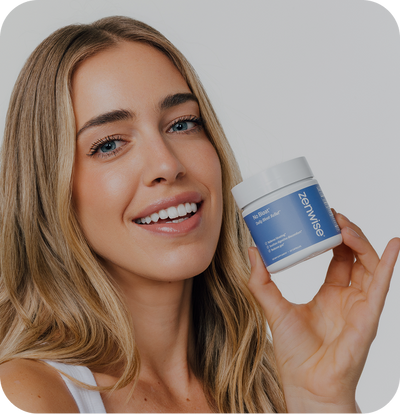
In these moments, you don't need a lecture on your diet; you need a lifestyle hero. This is where No Bloat Capsules come in. Unlike daily maintenance supplements, NO BLØAT® is designed for fast-acting relief. It features:
By addressing the bloat within hours, you stop the negative feedback loop between your gut and your brain, allowing you to get back to enjoying your night.
You might be wondering: What makes Zenwise different from the generic enzymes I see at the grocery store? The answer lies in the precision of our ingredients.
When we talk about Digestive Enzymes, we aren't just talking about one or two enzymes. Our formula includes BioCore Optimum Complete, a comprehensive suite of enzymes designed to tackle the four major food groups:
When these enzymes are paired with the resilient DE111® probiotic, you create a 3-in-1 environment where digestion is efficient, nutrient absorption is high, and the microbiome is stable. This stability is the foundation for healthy serotonin levels. When your gut isn't constantly "on fire" from trying to process undigested food, it can focus on its more sophisticated jobs—like communicating with your brain and keeping your mood stable.
Let’s be honest: talking about gut health can be a little gross. We use polite words like "irregularity" and "discomfort," but we’re really talking about gas, burping, and what happens in the bathroom. At Zenwise Health, we believe that the best way to handle these taboo topics is with a bit of irreverent honesty.
If your poop is inconsistent—too hard, too soft, or too infrequent—it’s a clear signal from your microbiome that something is out of balance. Because the gut and brain are so closely linked, people with "unpredictable" bathroom habits often report higher levels of daily stress and "brain fog." This isn't a coincidence.
By focusing on gut health, you aren't just improving your digestion; you’re clearing the path for your brain to function at its best. When you use No Bloat Capsules to manage the immediate crisis and Digestive Enzymes for daily upkeep, you’ll start to see that The Proof Is In The Poop™. Regular, comfortable elimination is a sign that your serotonin factory is running at peak efficiency.
Your microbiome is like a garden. You can’t just water it once and expect it to bloom forever. Consistency is the most important factor in maintaining a healthy balance of bacteria. This is why we are such strong advocates for our Subscribe & Save model.
When you subscribe to your favorite products, like our Digestive Enzymes, you ensure that your gut receives a steady supply of enzymes and probiotics every single day. This consistency allows the DE111® to colonize properly and ensures that your enterochromaffin cells have the support they need to produce serotonin consistently. Plus, you get 15% off every order, making high-quality gut health accessible for less than the price of a fancy latte.
If you are someone who is "symptom-aware"—meaning you notice when your body is off and you want to fix it without jumping straight to intense clinical interventions—you are in the right place. Most digestive issues aren't a "disease"; they are a functional hiccup. Your body is simply asking for a little help breaking down the modern diet.
For the person who loves dairy but hates the aftermath, our Digestive Enzymes provide the Lactase needed to break it down before it can cause trouble. For the traveler who finds that new foods lead to "vacation constipation" and bloating, keeping No Bloat Capsules in your carry-on is the ultimate travel hack.
By partnering with your body rather than lecturing it, you achieve "food freedom." You can go to that dinner party, enjoy the pasta night, and feel confident that your gut—and your mood—will stay on track.
To recap, your gut microbiome influences serotonin levels through several fascinating pathways:
When we say "The Key To Good Health Is Gut Health.®", we mean it. Your digestive system is the foundation upon which your physical and mental well-being is built.
Beyond supplementation, there are several ways to support your microbiome's serotonin production:
Integrating Papaya Chewables into your post-lunch routine or taking Women’s Probiotics every morning are simple, frictionless ways to stay on top of these goals.
Understanding how the gut microbiome influences serotonin levels is a major step toward taking control of your health. You no longer have to view your "moods" and your "digestion" as two separate problems. They are two sides of the same coin. By supporting your gut with the right enzymes and probiotics, you are giving your body the tools it needs to maintain a balanced, happy state of mind.
At Zenwise Health, we want to help you move past the "menu anxiety" and the "food babies." We want you to eat with confidence and live with comfort. Remember, your gut is the second brain—treat it with the respect it deserves.
Ready to start your journey toward better gut-brain harmony? Don’t wait for the next "pasta night" crisis. Subscribe & Save today to get 15% off your order and ensure that your gut health routine is consistent, reliable, and effective.
Absolutely. Since about 95% of your serotonin is produced in the gut, any imbalance in your microbiome can directly impact the signals sent to your brain. Supporting your gut with Digestive Enzymes can help maintain a healthy environment for serotonin production, which supports overall emotional well-being.
NO BLØAT® is designed for fast-acting relief. Many users feel a reduction in gas and pressure within a few hours of taking the capsules after a heavy meal. It is specifically formulated for "crisis management" when you need to flatten your stomach appearance and ease discomfort quickly.
DE111® is a "spore-forming" probiotic, meaning it has a natural protective shell that allows it to survive stomach acid. Most standard probiotics die before they reach the gut. By using DE111®, we ensure that the "good bacteria" actually arrive at their destination to support your microbiome and help influence serotonin levels.
They serve different purposes! Digestive Enzymes are your daily maintenance core—you take them before every meal to prevent issues before they start. No Bloat Capsules are your "lifestyle hero" for when you eat a particularly heavy meal or feel an unexpected flare-up of bloating and gas.
These statements have not been evaluated by the Food and Drug Administration. This product is not intended to diagnose, treat, cure or prevent any disease.



