




How Many Probiotic Drinks Per Day? Finding Your Gut Flow
April 02, 2026
April 02, 2026

We’ve all been there: you’re at a nice dinner, the artisan sourdough looks incredible, and the pasta carbonara is calling your name. But instead of excitement, you feel that familiar pang of "menu anxiety." You’re already calculating the "jean-button tax"—that moment three hours from now when your waistband starts to feel like a tourniquet. You might have even reached for a trendy, fizzy probiotic soda or a bottle of kombucha from the refrigerated aisle, hoping those "good bugs" will do the heavy lifting for your upcoming meal. But then a question hits you as you stare at the colorful labels: how many probiotic drinks per day is actually helpful, and when does it become "too much of a good thing"?
The rise of functional beverages has made gut health trendy, which is a win for everyone. However, chugging multiple bottles of fermented tea or sugar-laden probiotic juices isn't always the shortcut to food freedom we want it to be. In fact, if you’re not careful, the very drinks meant to help might leave you feeling more like a parade float than a human being.
In this guide, we are going to dive deep into the world of probiotic beverages. We’ll discuss the ideal frequency, the hidden pitfalls of liquid probiotics, and how to build a gut-health routine that actually works. At Zenwise®, we believe that The Key To Good Health Is Gut Health.® and our mission is simple: Zenwise. Then Eat.® We want you to enjoy your food without the looming fear of the "aftermath." By the end of this article, you’ll know exactly how to balance your probiotic intake and why a comprehensive approach—combining consistency with the right targeted support—is the real secret to feeling your best.
Walk into any grocery store today, and you’ll find an entire wall dedicated to "gut-friendly" drinks. From kombucha and kefir to probiotic-infused seltzers and apple cider vinegar tonics, the options are endless. These drinks are designed to deliver live microorganisms (probiotics) to your digestive tract, theoretically helping to balance your microbiome.
But here is the catch: not all probiotic drinks are created equal. Some are fermented naturally, like traditional kombucha, while others are essentially "probiotic sodas" where specific strains have been added to a flavored base. While these can be a delicious alternative to standard sugary sodas, they often come with baggage.
First, there is the sugar content. Fermentation requires sugar, and while the bacteria consume much of it, many commercial brands add extra sweeteners to make the drink palatable. High sugar intake can actually feed the "bad" bacteria in your gut, potentially counteracting the benefits of the probiotics themselves. Second, there is the carbonation. If you are already prone to occasional bloating, adding a pressurized, fizzy drink to your system might just provide more gas for the fire.
When people ask "how many probiotic drinks per day?", they are usually looking for a magic number. While one or two can be a great addition to your diet, they shouldn't be your only line of defense. For those who want the benefits without the bubbles or the sugar, a daily staple like our Digestive Enzymes offers a "3-in-1" solution of enzymes, prebiotics, and probiotics that doesn't require a bottle opener.
The short answer for most healthy adults is one to two servings per day. However, this isn't a hard and fast rule. The "right" amount depends on several factors:
If you’ve never had a probiotic drink before, jumping straight into three bottles of kombucha a day is a recipe for disaster. Your gut needs time to adjust to the influx of new bacteria. This adjustment period is sometimes called a "die-off" or "healing crisis," where you might actually experience more gas and bloating temporarily as the microbiome rebalances. We always recommend starting slow—maybe half a drink a day—and seeing how your body reacts.
CFUs represent the number of live and active microorganisms in each serving. Some drinks contain 1 billion CFUs, while others might claim 50 billion. However, more isn't always better. What matters most is the strain and the survivability. Many probiotics in drinks are fragile and may die off on the shelf or succumb to your stomach acid before they even reach your intestines. This is why we use DE111® in our products—a hardy, spore-forming probiotic that is guaranteed to survive the harsh environment of the stomach to do its work where it counts.
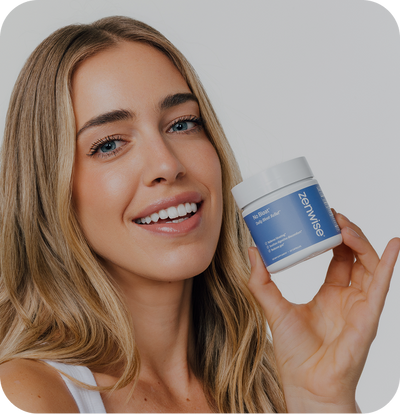
Are you just looking for a tasty beverage, or are you trying to manage a specific issue like post-meal discomfort? If you’re at a party and there’s a heavy spread of appetizers, a probiotic drink might not work fast enough. That’s when you want something specifically formulated for crisis management, like our No Bloat Capsules, which contain fennel, dandelion root, and ginger to help ease bloat within hours.
It is one of life’s cruel ironies: you drink a "gut health" soda to help with your bloating, and ten minutes later, you feel like you’ve swallowed a basketball. This happens for two main reasons.
Probiotic drinks are often carbonated. Carbonation is literally trapped gas. When you drink it, that gas has to go somewhere. For some people, it escapes as a burp (charming, we know). For others, it travels through the digestive tract, contributing to that tight, uncomfortable feeling in the midsection. If you’re already struggling with gas, adding more air to the system is counterproductive.
Kombucha is fermented tea. For people with sensitive stomachs, the fermentation process can produce trace amounts of alcohol and organic acids that may irritate the stomach lining. Additionally, if the fermentation isn't controlled properly, it can lead to an overgrowth of yeast or bacteria that your body isn't ready for.
For a more gentle, post-meal approach that avoids the fizz, many of our customers swear by Papaya Chewables. They are a delicious, effortless way to kickstart digestion and reduce discomfort without the risk of carbonated bloat. Plus, they’re easy to keep in your bag for when you’re on the go.
We know that life doesn't happen in a vacuum. Your digestive needs on a lazy Sunday morning are different from your needs during a high-stakes work lunch. Let’s look at some real-world scenarios and how to navigate them.
You’re out with friends, and the table is covered in fried calamari, garlic knots, and heavy cream sauces. You know these foods are delicious, but you also know they usually lead to a restless night and a "food hangover."
You notice that every afternoon around 3:00 PM, you feel sluggish, bloated, and a little "gassy" at your desk. You’ve been trying to drink a probiotic yogurt drink every morning, but the results are hit or miss.
You’re looking for gut support, but you also want to take care of your vaginal and urinary tract health. You’ve heard that certain probiotic drinks can help, but you’re tired of the sugar and the "vinegary" taste.
When debating "how many probiotic drinks per day," the conversation often focuses on volume. But in the world of microbiology, quality is much more important than quantity. If you drink a gallon of a probiotic beverage that contains weak strains or is mostly sugar, you aren't doing your gut any favors.
At Zenwise Health, we focus on high-functioning ingredients. For example, our use of DE111® is a game-changer. Unlike many of the delicate bacteria found in refrigerated drinks, DE111® is a spore-forming probiotic. Think of it like a tiny seed with a protective shell; it stays dormant until it reaches the ideal conditions in your gut, where it then "sprouts" and begins its work. This ensures that the probiotics you're paying for actually arrive at their destination alive and ready to support your regularity and immune health.
Furthermore, we bridge the gap between clinical science and lifestyle wellness. We know you don't want a lecture on microbiology; you want to be able to eat a taco without feeling like you need a nap and a pair of sweatpants. That’s why we focus on "Empathetic Expertise"—we understand the struggle, and we provide the tools to fix it.
Let’s be real—gut health can get expensive. A single bottle of high-end kombucha or a probiotic "wellness shot" can cost anywhere from $4.00 to $7.00. If you’re drinking two of those a day, you’re spending over $300 a month just on beverages!
In contrast, our solutions like Digestive Enzymes or No Bloat Capsules typically range between $19 and $25 for a month's supply. When you choose to Subscribe & Save, you’re not just getting 15% off; you’re making an investment in your long-term health that is significantly more affordable than a daily habit of luxury beverages. It’s about getting the most "bang for your buck" while achieving consistent, reliable results.
We don't want you to live a life of restriction. We don't believe in "good" foods and "bad" foods—just foods that sometimes need a little help being digested. Our philosophy, Zenwise. Then Eat.®, is about empowerment. It’s about taking a proactive step before you sit down at the table so that the meal itself is a source of joy, not a source of stress.
Whether it’s the daily maintenance of enzymes or the fast-acting relief of No Bloat Capsules, we want to be your partner in digestive wellness. We believe that when your gut is happy, everything else follows—your energy, your mood, and your confidence.
If you love your probiotic drinks and don't want to give them up, you don't have to! Here is how to incorporate them into a balanced routine:
Imagine a world where you don't have to check the ingredients of every sauce at a restaurant. Imagine going on a beach vacation and not worrying about how your stomach looks in a swimsuit after lunch. That is the goal of a proper gut-health routine.
By understanding that "how many probiotic drinks per day" is just one small piece of the puzzle, you can start building a more robust strategy. Probiotic drinks are the "fun extra," but targeted supplements are the foundation. They provide the specific enzymes needed to break down polymers (complex molecules) into smaller, absorbable nutrients, ensuring that the food you eat actually fuels your body instead of just sitting in your gut and fermenting.
At the end of the day, The Proof Is In The Poop™. When your digestion is on track, your bathroom habits are regular, your energy is stable, and that mid-afternoon bloat becomes a distant memory. That’s the feeling we want everyone to have.
Finding the right balance for your gut doesn't have to be a clinical, sterile experience filled with "don'ts." It should be about finding what makes you feel fantastic. While one or two probiotic drinks per day can be a tasty part of your lifestyle, true digestive freedom comes from a comprehensive approach that includes targeted enzymes and hardy, spore-forming probiotics.
Don't let "menu anxiety" or post-meal discomfort hold you back from the foods you love. Take control of your gut health today. We highly recommend starting with our "3-in-1" Digestive Enzymes for daily support or keeping No Bloat Capsules ready for those big, celebratory meals.
The best way to ensure your gut stays in peak condition is through consistency. Join the thousands of people who have found food freedom by choosing to Subscribe & Save. You’ll get 15% off every order, and you’ll never have to worry about running out of the support you need. Remember: Zenwise. Then Eat.® and let your gut do the rest.
Yes. While it’s generally safe, consuming excessive probiotic drinks (like 4 or 5 bottles of kombucha) can lead to an upset stomach, excessive gas, and bloating due to the high levels of carbonation, sugar, and the sheer volume of new bacteria being introduced to your system. It’s best to stick to 1-2 servings and supplement with a controlled capsule like Digestive Enzymes for more balanced results.
Both have their place, but capsules are generally more reliable. Probiotic drinks are often subject to temperature changes and shelf-life issues that can kill off the live cultures. Additionally, they often contain sugar and carbonation. Capsules like ours use spore-forming probiotics like DE111® that are specifically designed to survive stomach acid and deliver the benefits exactly where they are needed without the added calories or "fizz."
Most probiotic drinks take time to work because they are focused on balancing your microbiome over the long term. If you need fast relief from a heavy meal, you are better off with a targeted solution like No Bloat Capsules, which includes digestive enzymes and herbal ingredients specifically chosen to reduce gas and water retention quickly.
Most people can enjoy probiotic drinks without issue. However, if you have a severely compromised immune system or are dealing with specific medical conditions, you should consult with a healthcare professional first. For the average person looking for better digestion, starting slow and using a high-quality daily supplement is a safe and effective way to support gut health.
These statements have not been evaluated by the Food and Drug Administration. This product is not intended to diagnose, treat, cure or prevent any disease.



