




How Do You Know If You Need Digestive Enzymes?
March 04, 2026
March 04, 2026

You’ve likely been there: You’re out at your favorite Italian spot, the breadsticks are warm, the carbonara is creamy, and everything is delicious—until about twenty minutes later when your jeans feel three sizes too small. You’re doing the "under-the-table unbutton," praying that nobody notices you’re currently harboring a "food baby." This "menu anxiety"—the fear of what a meal will do to your midsection—is a reality for millions. Whether it's the occasional "heavy meal" bloat or a persistent feeling of sluggishness after every bite, your body is likely trying to tell you something.
In this guide, we’re going to peel back the curtain on the world of digestive support. We’ll cover what these microscopic workhorses actually do, the tell-tale signs that your body might be running low on them, and how you can reclaim your seat at the table with confidence. At Zenwise Health (Zenwise®), we believe you shouldn't have to choose between a meal you love and a stomach that feels good. Our mission is simple: "Zenwise. Then Eat.®" because we know that "The Key To Good Health Is Gut Health.®"
Before we look at the signs of deficiency, we need to understand the job description. Digestive enzymes are specialized proteins that act as biological catalysts. Their primary role is to facilitate a process called hydrolysis. In plain English, they take the complex polymers in your food—the big molecules of fats, proteins, and carbohydrates—and break them down into smaller, absorbable units like fatty acids, amino acids, and simple sugars.
Think of enzymes like a pair of biological scissors. Without them, that steak or kale salad is just a mass of material your body can’t actually use. Your body naturally produces these enzymes in the mouth (saliva), the stomach, the small intestine, and most notably, the pancreas—the "powerhouse" of enzyme production.
When your body doesn't produce enough of these, or when you eat more than your natural supply can handle, digestion stalls. This is when the "Check Engine" light of your gut starts blinking.
How do you know if you need digestive enzymes? It isn’t always a dramatic event. Sometimes, it’s a slow realization that you don’t feel as "light" as you used to. Here are the most common indicators that your internal "scissors" might be getting dull.
If you look in the mirror after lunch and see a significantly different silhouette than you did at breakfast, you’re experiencing bloating. This happens when undigested food enters the large intestine and begins to ferment. The bacteria there have a field day, releasing gas as a byproduct. If you find yourself reaching for No Bloat Capsules after every pasta night, your body is likely struggling to keep up with the enzymatic demand.
We’re all about "The Proof Is In The Poop™" (and the gas), so let's be honest: occasional gas is normal, but constant, foul-smelling flatulence is a sign of malabsorption. When proteins aren't broken down by proteases, they putrefy. When carbs aren't broken down by amylase, they ferment. The result? Discomfort and social awkwardness.
If you feel "full to the brim" after only eating a small portion of your meal, it could be a sign of slow gastric emptying. Without enough enzymes to jumpstart the breakdown process, food sits in the stomach longer than it should, leading to a premature sense of fullness and heaviness.
This is the most literal sign possible. If you can identify exactly what you ate for dinner while looking at your stool the next morning, your digestive system didn't do its job. While some high-fiber items (like corn husks) are notoriously difficult to digest, a frequent appearance of food particles suggests a lack of enzymatic activity.
If your stool is difficult to flush, looks greasy, or leaves an oily residue in the bowl, you likely have a lipase deficiency. Your body isn't breaking down fats properly, so they are passing through your system untouched. This isn't just a "bathroom issue"; it means you aren't absorbing vital fat-soluble vitamins like A, D, E, and K.
If a scoop of ice cream or a slice of pizza leads to an immediate sprint to the bathroom or intense cramping, you are likely low on lactase. Lactose intolerance is incredibly common, especially as we age, because our bodies naturally stop producing as much lactase over time.
We’ve all heard of the "food coma," but if you feel like you need a three-hour nap after every balanced meal, something is wrong. Digestion is an energy-intensive process. If your body has to work overtime to break down food because it lacks the necessary enzymes, it drains your energy reserves, leaving you exhausted instead of fueled.
The gut-skin axis is a real scientific phenomenon. When your gut is inflamed due to undigested food and "leaky" boundaries, it often shows up on your face. Breakouts, redness, and dull skin can all be external symptoms of internal digestive struggles.
You can eat all the organic, farm-to-table kale in the world, but if you don't have the enzymes to unlock the nutrients within those cell walls, you're essentially just "expensive plumbing." If your bloodwork shows you’re low on B12, Magnesium, or Iron despite a healthy diet, your absorption might be the culprit.
Age is a major factor. Research suggests that our natural enzyme production begins to decline as early as our late 20s, and by the time we hit 40 or 50, the drop-off can be significant. This is often why foods you "used to eat just fine" suddenly start causing issues.
We don't believe in a "one size fits all" approach because everyone's gut is a unique ecosystem. At Zenwise Health, we’ve designed targeted solutions for different digestive lifestyles.
For the person who loves variety but hates the aftermath, our Digestive Enzymes are the daily gold standard. This is a comprehensive "3-in-1" formula. It doesn't just provide a broad spectrum of enzymes (including Amylase, Protease, and Lipase); it also includes prebiotics and probiotics.
What makes this formula special is the inclusion of DE111®, a spore-forming probiotic. Unlike many fragile probiotics that die in the harsh, acidic environment of the stomach, DE111® is "armored" to survive the journey to your small intestine, where it can actually go to work supporting regularity and immune health. This is your daily insurance policy for food freedom.
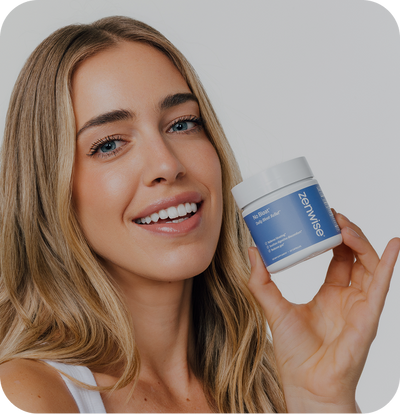
We’ve all had those days—the holiday dinner, the wedding buffet, or the spontaneous "let's get Mexican food" night. When you know a meal is going to be a challenge, or when you’re already feeling the "pinch" of your waistband, No Bloat Capsules are your best friend.
This isn't just a maintenance supplement; it's designed for fast relief. It features the BioCore Optimum Complete enzyme blend, but we’ve also added botanical heavy-hitters like Dandelion Root (to help with water retention), Fennel, and Ginger. It’s specifically formulated to help flatten the appearance of a bloated stomach and ease gas within hours.
Maybe you don’t like swallowing capsules, or you just want a little something extra after a heavy brunch. Our Papaya Chewables are a delicious, effortless way to support digestion. Using the natural power of papain (from papaya) and bromelain (from pineapple), these chewables start working the moment they hit your system, helping to break down proteins and reduce that post-meal "brick in the stomach" feeling.
Women’s digestive health is often linked to their vaginal and urinary tract health. If you’re a woman who struggles with gut balance and wants to support your "whole self," our Women’s Probiotics are the answer. This formula pairs potent probiotics with D-Mannose and Cranberry extract. It helps maintain the delicate flora of the gut and the vaginal tract, proving that gut health is indeed the foundation for everything else.
One of the biggest mistakes people make with digestive health is being "reactive" rather than "proactive." They wait until they are in pain to take action. While products like No Bloat Capsules are incredible for those crisis moments, the real magic happens with consistency.
Your microbiome—the trillions of bacteria living in your gut—thrives on routine. When you consistently provide your body with the enzymes it needs through Digestive Enzymes, you aren't just treating a symptom; you are supporting the normal function of your entire metabolic system.
This is why we focus so heavily on our Subscribe & Save program. Not only does it save you 15% off every order, but it also ensures that you never run out. Consistency in your supplement routine leads to consistency in your "output." And as we always say, "The Proof Is In The Poop™." Regular, comfortable bowel movements are the ultimate sign that your enzymatic and bacterial balance is right where it needs to be.
You might be thinking, "Can't I just eat more pineapple and papaya?" While it’s true that some foods contain natural enzymes, there are a few hurdles:
Our products are designed to be an accessible, effective alternative to expensive clinical interventions. Ranging typically between $19–$25, they offer a high-value way to take control of your wellness without breaking the bank.
If you’ve decided that you likely need digestive enzymes, here is how to get the most out of them:
Understanding the signals of your body is the first step toward food freedom. Whether it’s the occasional bloating after a "pasta night" that requires No Bloat Capsules or a daily need for Digestive Enzymes to support nutrient absorption and regularity, there is no shame in giving your gut a helping hand.
Remember, you don't have to live with "menu anxiety" or the discomfort of the post-meal poof. By partnering with your body’s natural processes, you can get back to enjoying your favorite foods without the friction. At Zenwise, we are here to support that journey every step of the way. Because when your gut is happy, your whole life is better.
Ready to make gut health your new reality? Zenwise. Then Eat.®
Take the next step toward better gut health today. Subscribe & Save now to get 15% off and ensure your digestive routine never misses a beat!
Unlike probiotics, which can take days or weeks to "colonize" and show results, digestive enzymes generally work on the food they are currently in contact with. This means you can often feel a difference in post-meal comfort (less bloating and heaviness) after the very first time you use them, especially with targeted products like No Bloat Capsules.
Absolutely. In fact, we recommend it! While enzymes break down the food, probiotics support the environment and the gut lining. That’s why our Digestive Enzymes are a "3-in-1" solution—they contain enzymes, prebiotics, and probiotics in one convenient capsule to give you comprehensive support.
There is no clinical evidence to suggest that supplemental digestive enzymes create a "dependency" or cause your pancreas to stop working. Instead, they act as a support system, especially when you are eating large meals, difficult-to-digest foods, or as you age and your natural production naturally tapers off.
Most people tolerate digestive enzymes very well. However, because they are changing the way your food is broken down, some people may notice a slight change in stool consistency or minor gas during the first few days as their system adjusts. If you have any underlying medical conditions, it’s always a good idea to chat with your healthcare provider first.
These statements have not been evaluated by the Food and Drug Administration. This product is not intended to diagnose, treat, cure or prevent any disease.



