




Do Digestive Enzymes Help With GERD? A Real Talk Gut Guide
February 24, 2026
February 24, 2026

We’ve all been there: you’re staring at a menu, and the spicy chicken tacos are calling your name. But then, the "menu anxiety" kicks in. You start calculating the risks. Will those tacos lead to that familiar, internal fire three hours later? Will you find yourself discreetly unbuttoning your jeans under the table because the bloating makes you feel like a human balloon? This game of digestive Russian roulette is exhausting.
For many, this isn't just a one-time "oops, I ate too much" moment; it’s a chronic struggle with what we often call GERD (Gastroesophageal Reflux Disease) or persistent acid reflux. When your digestive system feels like it’s on strike, it’s natural to look for a partner in your wellness journey. You might have heard whispers in the wellness community asking, "do digestive enzymes help with GERD?" It’s a valid question, especially when traditional options feel like they’re just putting out fires rather than supporting the underlying system.
In this deep dive, we’re going to explore the relationship between supplemental enzymes and esophageal comfort. We’ll break down the science of how these tiny proteins work, why your "Lower Esophageal Sphincter" (the gatekeeper of your stomach) might be acting up, and how you can support your gut so you can get back to the joy of eating. At Zenwise Health, our mission is simple: "Zenwise. Then Eat.®" because we believe that "The Key To Good Health Is Gut Health.®" By understanding the mechanics of your digestion, you can move from a state of "food fear" to food freedom.
Before we talk about solutions, we have to understand the problem. GERD is essentially what happens when the "valve" at the bottom of your esophagus—the Lower Esophageal Sphincter (LES)—doesn't close properly or opens too often. This allows stomach acid and undigested food to creep back up where they don’t belong.
But why does this happen? Often, it's a pressure issue. When food sits in your stomach for too long because it isn't being broken down efficiently, it creates gas and bulk. This "backup" puts upward pressure on the LES. Think of it like a crowded elevator; if too many people are trying to get in and the doors can’t close, things start spilling out.
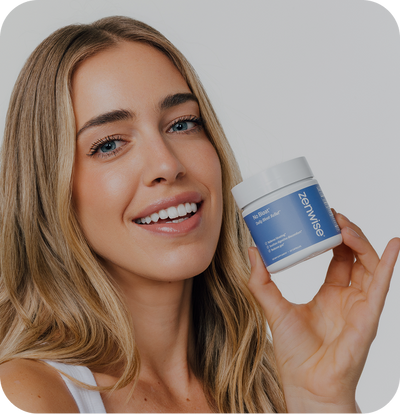
This is where the conversation about enzymes begins. If your body isn't efficiently breaking down those fats, carbs, and proteins, the transit time slows down. Supporting that breakdown process is a core pillar of maintaining a happy, functional gut. For those looking for daily maintenance to keep the digestive assembly line moving, our Digestive Enzymes serve as a "3-in-1" support system, combining enzymes, prebiotics, and probiotics to ensure your system has the tools it needs before the first bite.
Think of digestive enzymes as the "molecular scissors" of your body. Your body naturally produces them in your mouth (saliva), stomach, and pancreas. Their job is to snip large, complex food molecules into tiny, absorbable nutrients.
There are three main categories of these scissors:
When these scissors are sharp and plentiful, digestion is a breeze. When they are dull or in short supply—due to age, stress, or diet—food lingers. This lingering is often the root cause of that "heavy" feeling and the subsequent reflux. While enzymes aren't a "cure" for a clinical condition like GERD, they are structural supports for the function of digestion. By helping the body break down food faster, you reduce the time food spends fermenting and creating the pressure that leads to occasional reflux.
Interestingly, some research suggests that it isn't just stomach acid causing trouble in reflux cases; it’s also an enzyme called pepsin. Pepsin is a protease meant to stay in the stomach. When it refluxes into the esophagus or throat, it can stick to the delicate tissues and become reactivated by acidic foods (like soda or citrus). This is why a holistic approach—one that supports proper breakdown inside the stomach—is so critical. When you use a supplement like Zenwise Health products, you are partnering with your body to keep the digestive process orderly and efficient.
So, let’s get to the heart of the matter: do they help? While supplemental enzymes do not "treat" the underlying medical cause of GERD, they can be a game-changer for managing the lifestyle factors that make reflux worse.
The longer food stays in your stomach, the more acid your body produces to try and deal with it. By introducing supplemental enzymes like those found in our Digestive Enzymes, you’re helping to "pre-game" the breakdown process. This can lead to faster gastric emptying, meaning there’s less "stuff" sitting there to reflux back up.
We all have those foods that we know will cause trouble. For some, it’s the lactose in dairy; for others, it’s the complex sugars in beans (galactooligosaccharides). If your body lacks the specific enzymes for these (like lactase or alpha-galactosidase), you end up with gas and bloating. That gas increases intra-abdominal pressure, which is a one-way ticket to Heartburn City.
For the person who loves a Friday night pizza but dreads the "brick in the stomach" feeling, our No Bloat Capsules are the ultimate lifestyle hero. They contain BioCore Optimum Complete, a high-potency enzyme blend designed to tackle even the most stubborn "cheat meals."
We can't talk about enzymes without talking about probiotics. The "Proof Is In The Poop™," and consistent, healthy bowel movements are a sign that your gut flora is in balance. Our core enzyme formula includes DE111®, a spore-forming probiotic that is clinically studied to survive the harsh, acidic environment of the stomach. By supporting a healthy bacterial balance, you reduce the gas-producing "bad" bacteria that can contribute to reflux-inducing pressure.
Understanding the "why" is great, but how do you use this in the real world? Let’s look at some common scenarios.
You’re at an Italian restaurant. The breadsticks are endless, and the carbonara is calling. You know the heavy fats and carbs are a recipe for a rough night.
You don’t necessarily have a "crisis" every day, but you feel sluggish, occasionally bloated, and just "off" after lunch.
You ate too fast. You were in a meeting, wolfed down a burrito, and now you feel the internal pressure building.
For women, digestive issues often go hand-in-hand with other health concerns. Hormonal shifts can slow down digestion, leading to more frequent bouts of bloating and reflux.
While we love the support that supplements provide, we believe in a holistic approach to gut health. If you’re struggling with occasional reflux or GERD-like symptoms, consider these "Zen" lifestyle shifts:
You might see digestive enzymes at the local grocery store for a few dollars, but when it comes to your gut, you get what you pay for. Many generic supplements use enzymes that are destroyed by stomach acid before they ever get to the small intestine where they are needed.
At Zenwise, we use science-backed ingredients like BioCore Optimum Complete and DE111®. Our formulas are designed to survive the "acid trek" and deliver support exactly where it’s needed. We don't believe in "snake oil" or overnight miracles; we believe in providing your body with the structural tools it needs to function at its best. Our products are priced accessibly—usually between $19 and $25—because we believe everyone deserves "Food Freedom."
Actually, supplemental enzymes are generally pH-neutral or designed to work within the existing pH of your digestive tract. They don't "add" acid; they help break down the food so your body doesn't have to overproduce acid to get the job done.
This is a common concern, but there is no evidence that supplemental enzymes cause a "lazy pancreas." Think of it more like using a calculator for complex math—it doesn't make you forget how to do basic addition; it just makes the big jobs more efficient.
Not true! Even if you don't have regular reflux, enzymes can support nutrient absorption. You are what you absorb, not just what you eat. By breaking down food into smaller particles, you're making it easier for your body to pull out those vital vitamins and minerals.
If you’ve spent years dealing with digestive discomfort, you can’t expect your gut to transform overnight. The microbiome is a complex ecosystem. That’s why we emphasize the Subscribe & Save option. Not only do you get 15% off, but you ensure that you never run out of your "gut health toolkit." Consistent support leads to long-term results—like being able to go out to dinner without scouting for the nearest exit or the closest pharmacy.
So, do digestive enzymes help with GERD? While they aren't a medical "fix" for a clinical diagnosis, they are powerful allies in supporting the process of digestion. By speeding up the breakdown of food, reducing the pressure of bloating, and supporting a healthy microbiome with probiotics like DE111®, enzymes help address the lifestyle factors that often trigger reflux symptoms.
At Zenwise, we want you to stop fearing your plate. We want you to enjoy the spicy tacos, the pasta nights, and the Sunday brunches. Remember: "Zenwise. Then Eat.®" Start your meal with the confidence that your body has the "molecular scissors" it needs to thrive.
Your gut health is the foundation of everything—your energy, your mood, and your comfort. Take the first step today by choosing a support system that bridges the gap between science and lifestyle. Whether it's the daily support of our Digestive Enzymes or the fast-acting relief of No Bloat Capsules, your gut will thank you.
Ready to take control? Subscribe & Save today to get 15% off your order and ensure your digestive journey is consistent and supported. Let's make "food freedom" your new reality.
1. Can I take digestive enzymes if I'm already taking an antacid or PPI? While many people use both, it is always best to consult with your healthcare provider. Antacids work by neutralizing or reducing stomach acid, while enzymes help break down food. They serve different functions, but your doctor can help you coordinate the timing for the best results.
2. How soon will I feel the effects of digestive enzymes? For products like No Bloat Capsules or Papaya Chewables, many people notice a reduction in post-meal heaviness or gas within a few hours. For long-term gut microbiome support with our Digestive Enzymes, we recommend consistent use for at least 2-4 weeks to see the full benefits of the probiotics and prebiotics.
3. Are there any side effects to taking digestive enzymes? Most people tolerate digestive enzymes very well. Occasionally, when you first start a high-quality supplement with probiotics (like DE111®), you may experience a slight change in bowel habits as your microbiome rebalances. This is usually temporary and a sign that the "good guys" are moving in!
4. Can I get enough enzymes from food alone? While foods like pineapple (bromelain), papaya (papain), and honey contain natural enzymes, the concentrations are often too low to significantly impact a heavy meal. Furthermore, cooking and processing food often destroys these natural enzymes. Supplementation ensures you’re getting a standardized, potent dose every time.
These statements have not been evaluated by the Food and Drug Administration. This product is not intended to diagnose, treat, cure or prevent any disease.



