




Do Digestive Enzymes Help Histamine Intolerance?
March 04, 2026
March 04, 2026

You’re sitting at a trendy bistro, looking at a menu filled with "superfoods." You order the spinach salad with aged balsamic, a side of sauerkraut for those "good probiotics," and maybe a glass of red wine because, hey, antioxidants! But thirty minutes later, you don’t feel like a wellness warrior. Instead, your jeans are suddenly three sizes too small, your skin feels strangely prickly, and your head is starting to throb. You’ve just experienced "menu anxiety" in reverse—the aftermath of eating what you thought was healthy, only to have your body stage a protest.
This confusing reaction is often the hallmark of histamine intolerance. It’s a frustrating cycle where "healthy" foods feel like the enemy, leaving you wondering why your digestive system seems to have lost the manual. If you’ve been scouring the internet for answers, you’ve likely bumped into the question: Do digestive enzymes help histamine intolerance?
In this deep dive, we are going to unpack the science behind histamine, why your body’s natural cleanup crew (enzymes) might be taking an unscheduled coffee break, and how targeted supplementation can help you get back to enjoying your favorite meals. At Zenwise®, we believe that The Key To Good Health Is Gut Health.® By understanding how enzymes interact with the compounds in your food, you can move away from food fear and toward a lifestyle of Zenwise. Then Eat.®
To understand histamine intolerance, we first have to de-stigmatize histamine itself. It isn't just the villain in your hay fever story; it’s a vital signaling protein. Histamine plays a role in your immune system, your sleep-wake cycle, and—most importantly for our purposes—your digestion. It signals your stomach to produce acid, which is essential for breaking down that steak or kale salad.
The problem isn't histamine; the problem is the "bucket." Imagine your body has a bucket for histamine. You produce some internally, and you get some from the food you eat. As long as the bucket doesn't overflow, you feel great. However, if your body can't empty the bucket fast enough, it overflows. This overflow is what we call histamine intolerance.
Common "overflow" symptoms include:
While it’s not a traditional food allergy, it’s often called a "pseudo-allergy" because it mimics those reactions. The culprit is usually a deficiency in a specific enzyme called Diamine Oxidase (DAO).
When people ask if digestive enzymes help with histamine, there is often a bit of a mix-up. In the human body, DAO is the primary enzyme responsible for breaking down histamine in the gut. If you don't have enough DAO, the histamine from your food (like that aged cheese or fermented tea) enters your bloodstream and causes chaos.
So, where do standard digestive enzymes come in? While most over-the-counter digestive enzymes don't contain DAO specifically, they play a massive supporting role in the "bucket" management strategy.
Standard enzymes—like those found in our Digestive Enzymes—are designed to break down fats, proteins, carbohydrates, and fibers. When your food is broken down efficiently, it moves through the digestive tract at a healthy pace. When food sits and ferments due to poor enzyme activity, it can actually trigger the release of more internal histamine and irritate the gut lining. By supporting the overall breakdown of food, you are reducing the total stress on your gastrointestinal system, which helps your body focus its resources on managing histamine.
Our Digestive Enzymes feature a "3-in-1" solution: Enzymes, Prebiotics, and Probiotics. Specifically, they utilize BioCore Optimum Complete, a robust blend of enzymes designed to handle a wide variety of pH levels in the stomach. When you use these daily, you’re ensuring that your "gut machinery" is well-oiled. If your gut is healthy and the lining is intact, your body is better equipped to produce its own natural DAO. After all, the mature cells in your intestinal villi are the ones responsible for secreting DAO. If those cells are stressed by undigested food particles, DAO production can take a hit.
If you’ve ever felt like your digestive tract is a black box of mystery, you’re not alone. But the reality is that everything is connected. Histamine intolerance is often a secondary issue—a symptom of an "unhappy" gut environment.
When your microbiome is out of balance (a state often called dysbiosis), certain "bad" bacteria can actually produce histamine as a byproduct of their own metabolism. This adds more liquid to your already-full histamine bucket. This is why we focus so heavily on the microbiome.
Consider Sarah. Sarah loves her gut health. She drinks kombucha every morning and eats a giant spinach and avocado salad for lunch. Lately, though, Sarah has noticed she’s itchy and bloated by 2:00 PM every day. In this scenario, Sarah is accidentally flooding her system with high-histamine foods (fermented tea, spinach, avocado).
For someone like Sarah, a daily maintenance routine is key. By taking Digestive Enzymes before her meals, she provides her body with the Protease, Amylase, and Lipase needed to ensure those "healthy" foods don't sit and cause trouble. Furthermore, the inclusion of DE111®—a spore-forming probiotic—helps crowd out those histamine-producing bacteria and supports a flourish of "good" microbes. Consistency is the secret sauce here; it’s why we highly recommend the Subscribe & Save option to ensure you never skip a day of gut support while saving 15%.
One of the most immediate and "anti-social" symptoms of histamine intolerance is the bloat. It’s that uncomfortable, tight-skin feeling that makes you want to cancel your evening plans and put on your "eating pants" (we all have them).
Histamine causes blood vessels to dilate and can increase permeability in the gut, which often leads to water retention and gas. When you're in the middle of a histamine-induced bloating crisis—perhaps after a delicious pasta night or a celebratory charcuterie board—you need more than just general maintenance.
Imagine you’re heading out for a "cheat meal"—think pizza, a glass of red wine, and maybe some chocolate mousse. This is a histamine nightmare: gluten, fermented dough, alcohol, and cocoa. For these moments, you need the lifestyle hero: No Bloat Capsules.
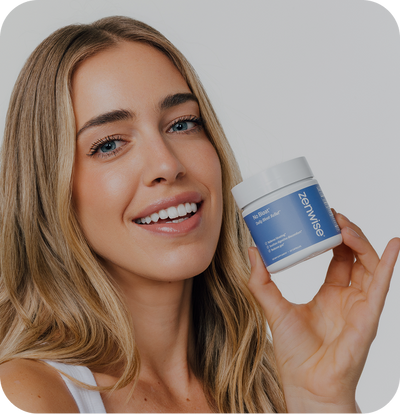
Unlike a daily enzyme, No Bloat Capsules are designed for fast-acting relief. They combine digestive enzymes with botanical powerhouses like Dandelion Root, Fennel, and Ginger.
It’s about food freedom. You shouldn't have to live in fear of a tomato or a slice of pepperoni. With the right tools, you can enjoy the meal and skip the "I look six months pregnant" aftermath. The Proof Is In The Poop™, as we like to say—when your digestion is supported, your body’s waste management system (and your comfort levels) will show it.
This is where things get a little tricky. In the world of histamine intolerance, not all probiotics are created equal. Some traditional probiotic strains (like Lactobacillus bulgaricus) are known to increase histamine production in the gut. If you’re already struggling with a full "bucket," the wrong probiotic can actually make your symptoms worse.
However, a healthy gut needs probiotics to keep the lining strong and the immune system calm. The key is choosing strains that are "histamine-neutral" or supportive of the gut barrier.
For the ladies in the room, vaginal and urinary tract health are also closely linked to the gut microbiome. If you find that your histamine issues seem to flare up alongside other feminine health concerns, our Women’s Probiotics are an excellent addition to your routine. They contain specialized strains along with Cranberry and D-Mannose to support urinary tract health, without adding to the digestive chaos.
For general gut support that won't aggravate your histamine levels, the DE111® found in our Digestive Enzymes is a standout. It’s a hardy, spore-forming probiotic, meaning it actually survives the harsh acid of your stomach to reach your lower intestine where it can do the most good. By building a better microbial neighborhood, you’re indirectly helping your body manage its histamine levels more effectively.
Your body is a complex chemical plant. To produce its own enzymes (like DAO), it needs raw materials. If you’re deficient in certain vitamins and minerals, your "enzyme factory" might be running on a skeleton crew.
Key nutrients that support histamine breakdown include:
This is why we emphasize that gut health is a holistic endeavor. You can't just fix one thing; you have to support the whole system. Eating a diet rich in whole grains, poultry, and fresh vegetables (the low-histamine kind!) provides these co-factors. And for those times when you’ve overindulged on a "trigger" food, a quick boost from Papaya Chewables can provide the papain and amylase needed to kickstart digestion and keep things moving. They’re tasty, effortless, and perfect for your purse or pocket when you’re on the go.
We know that life doesn't happen in a laboratory. It happens at birthday parties, at Italian restaurants, and at "quick-grab" lunches between meetings. Here is how to navigate real-world histamine challenges using the Zenwise® philosophy.
Consistency is what builds a resilient gut. Start your morning with a focus on balance. If you’re someone who deals with occasional irregularity or bloating, taking Digestive Enzymes before your first meal of the day sets the tone. It’s the "3-in-1" insurance policy for your gut. By choosing the Subscribe & Save model, you ensure that this foundational habit is never interrupted—plus, you get that 15% discount that makes wellness much more accessible than expensive clinical consultations.
You’re at a work lunch, and the only options are high-histamine culprits: spinach salads, vinegar-heavy dressings, or deli meats.
If you decide to indulge in a little chocolate or a fruit tart (strawberries are a common histamine trigger!), reach for Papaya Chewables immediately after. It’s a simple, delicious way to support the breakdown of those sugars and proteins before they can contribute to a "heavy" feeling in your stomach.
While supplements are powerful allies, they work best when you aren't constantly pouring more "liquid" into your histamine bucket. Understanding which foods are high in histamine can help you make better choices.
High-Histamine Foods (The "Bucket Fillers"):
Low-Histamine Foods (The "Safe Zone"):
By focusing your diet on these fresh, whole foods and supplementing with Digestive Enzymes, you give your body the space it needs to heal and recalibrate.
Let’s be honest: digestive issues aren't sexy. Talking about gas, bloating, and your bathroom habits can feel a bit "TMI." But at Zenwise®, we believe in tackling these topics with a bit of irreverent, authentic humor. Why? Because if we can’t laugh about the time a sourdough crust made us look four months pregnant, we’ll just stay stressed—and stress is a major trigger for histamine release!
The reality is that The Proof Is In The Poop™. When your enzymes are working, your transit time is optimal, and your histamine levels are managed, your bathroom habits become predictable and "boring." And in the world of gut health, "boring" is the ultimate goal! We want you to stop worrying about where the nearest restroom is and start worrying about which trail you’re going to hike or which movie you’re going to see.
So, do digestive enzymes help histamine intolerance? The answer is a resounding yes, but perhaps not in the way you originally thought. While they aren't a "cure" for a DAO deficiency, they are an essential part of a comprehensive gut-support strategy. By breaking down food more efficiently, supporting the gut lining with probiotics like DE111®, and managing the immediate discomfort of bloating with botanicals, you can significantly lower the "burden" on your digestive system.
Managing histamine is about more than just avoiding a list of foods; it’s about building a resilient, healthy gut environment. It’s about moving from a state of "Digestive Crisis" to "Digestive Confidence."
We invite you to take the first step toward food freedom today. Don't wait for the next "pufferfish" moment to take action. Start a routine that supports your gut 24/7. Subscribe & Save on our Digestive Enzymes or No Bloat Capsules to get 15% off and ensure you’re always prepared.
Remember: Zenwise. Then Eat.® Because your life is too big to be lived in the shadow of digestive discomfort.
1. Can I take standard digestive enzymes if I have a histamine intolerance? Yes! While most standard enzymes don't contain DAO, they help by ensuring food is fully broken down. Undigested food can lead to gut irritation and dysbiosis, both of which can increase your "histamine bucket" levels. Using a high-quality product like Digestive Enzymes supports the overall health of the intestinal villi where your body naturally produces its own DAO.
2. Why do I get bloated even when I eat "healthy" fermented foods? Fermented foods like sauerkraut and kombucha are naturally very high in histamine. If your body is low on the DAO enzyme, these foods will cause an "overflow" in your system, leading to gas and bloating. In these cases, it’s often better to get your probiotics from a histamine-neutral supplement like our Digestive Enzymes, which contains the spore-forming DE111®.
3. How quickly do Zenwise® products work for histamine-related bloating? For immediate, occasional bloating after a high-histamine meal, our No Bloat Capsules are designed to work within hours to help ease gas and water retention. For long-term support and "emptying the bucket," consistent daily use of our Digestive Enzymes is recommended to see the best results in gut health and regularity.
4. Is histamine intolerance the same as a food allergy? No. A food allergy is an immediate IgE-mediated immune response. Histamine intolerance is a cumulative issue (the "bucket theory") caused by the body’s inability to break down the histamine found in food. However, because the symptoms (hives, bloating, headaches) look similar, it is often called a "pseudo-allergy." Always consult with a healthcare professional to rule out serious allergies.
These statements have not been evaluated by the Food and Drug Administration. This product is not intended to diagnose, treat, cure or prevent any disease.



