




Do Digestive Enzymes Help After Gallbladder Removal?
February 09, 2026
February 09, 2026

Picture this: You’re at your favorite Italian bistro. The aroma of garlic, olive oil, and slow-roasted meats fills the air. Before your gallbladder surgery, you wouldn’t have thought twice about ordering the lasagna. But now? You’re scanning the menu with what we call “menu anxiety,” wondering if that extra ounce of fat is going to result in a frantic sprint for the restroom or a night spent curled up with the dreaded “bloat-o-sphere” belly. If your jeans are feeling a little too tight after every meal, you aren't alone.
The removal of the gallbladder—a procedure known as a cholecystectomy—is one of the most common surgeries in the United States. While it’s often a necessary step to stop the pain of gallstones, it leaves your digestive system without its primary storage unit for bile. This change doesn't mean you have to give up your food freedom, but it does mean your gut needs a new strategy.
In this deep dive, we’re going to explore the million-dollar question: do digestive enzymes help after gallbladder removal? We’ll break down the biology of what changed inside you, why your liver is now working overtime, and how supplementing with the right enzymes can help you get back to the table with confidence. At Zenwise®, we believe that "The Key To Good Health Is Gut Health.®" and that "The Proof Is In The Poop™." Our goal is to help you navigate this "new normal" so you can live by our favorite motto: "Zenwise. Then Eat.®"
To understand why things feel different now, we have to look at what that little pear-shaped organ was actually doing. Think of your gallbladder as a specialized storage warehouse. Your liver is the factory; it produces bile (a yellowish-green fluid) 24/7. Bile’s primary job is to act like dish soap for your digestive tract—it emulsifies fats, breaking large fat globules into tiny droplets so that enzymes can actually get to work on them.
Before your surgery, when you ate a fatty meal, your gallbladder received a hormonal signal to contract, squeezing a concentrated "squirt" of bile into the small intestine right when you needed it most. This concentrated dose was perfect for tackling that slice of pizza or avocado toast.
Once the gallbladder is removed, the warehouse is gone. Your liver is still producing bile, but there’s no place to store it. Instead of a powerful, timed release, the bile now "drips" continuously into your small intestine like a leaky faucet.
This creates two main problems:
This is why many people find that, post-surgery, they deal with occasional gas, bloating, and "oily" stools. It’s not that you can't digest food; it’s just that your system has become significantly less efficient.
So, do digestive enzymes help after gallbladder removal? The short answer is a resounding yes. Since your body is struggling with the efficiency of fat breakdown, providing it with a supplemental boost can bridge the gap.
When we talk about digestive enzymes, we are looking at proteins that act as biological catalysts. They take the food you eat and "unlock" the nutrients inside. After a cholecystectomy, the star of the show is Lipase.
Lipase is the enzyme specifically designed to break down fats (lipids). Without the concentrated bile from a gallbladder to prep the fat, your natural pancreatic lipase has to work twice as hard. By taking a high-quality supplement like our Digestive Enzymes, you’re essentially bringing in a "cleanup crew" to help finish the job that your liver and pancreas are struggling to manage alone.
But it isn't just about fat. Digestion is a team sport. Even if fat is the primary "troublemaker" after gallbladder removal, the way fat interacts with proteins and carbohydrates means you need a broad-spectrum approach. Our 3-in-1 formula includes:
We’ve all been there—you finish a meal that was a little too rich, and within thirty minutes, you have to unbutton your pants. This "post-meal poof" is often caused by undigested food fermenting in the gut, which creates gas. Without a gallbladder, this process can happen more frequently because the fat stays in the digestive tract longer than it should.
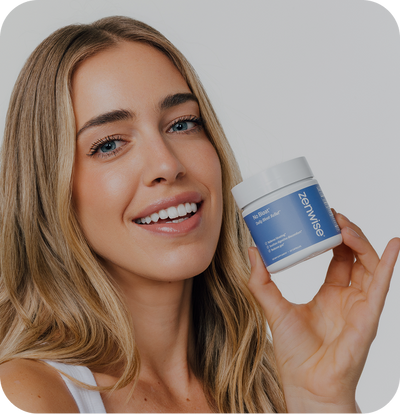
For those moments when you know you’re about to indulge—maybe it’s a holiday dinner or a "pasta night" with the family—you need something that works fast. This is where No Bloat Capsules become your best friend.
While our daily enzymes focus on long-term maintenance, NO BLØAT® is designed for "crisis management." It contains:
If you’re traveling or dining out, keeping these in your bag ensures you can "Zenwise. Then Eat.®" without fear of the aftermath.
It’s easy to focus solely on enzymes, but we cannot forget the "good guys" living in your gut. The continuous drip of bile into the small intestine can sometimes shift the balance of your microbiome. When the "bad" bacteria start to outnumber the "good" ones, you might experience even more gas and irregularity.
This is why we advocate for a holistic approach. Our core Digestive Enzymes isn't just an enzyme supplement; it’s a 3-in-1 solution that includes prebiotics and probiotics. Specifically, it features DE111®, a spore-forming probiotic.
Why does "spore-forming" matter? Most probiotics are delicate and can be destroyed by the harsh acid in your stomach before they even reach your intestines. DE111® is built like a tank; it’s a hardy strain that survives the trek through the stomach, ensuring it arrives in your gut alive and ready to support regularity and immune health. For someone without a gallbladder, maintaining this bacterial balance is crucial for keeping the "Proof Is In The Poop™" positive and consistent.
Let’s look at some common situations where a little extra support can make a massive difference.
You love your morning latte, but ever since the surgery, the combination of dairy fat and caffeine sends you running for the hills.
You’ve decided to eat more "healthy fats" like salmon, nuts, and avocados. Surprisingly, these healthy fats are making you just as bloated as the fried stuff did.
Between work, family, and the gym, your gut is under constant stress. After gallbladder removal, you’ve noticed that your digestive issues are often accompanied by other "down there" concerns.
While we love the power of enzymes, we also know that supplements work best when paired with mindful lifestyle choices. If you’re living without a gallbladder, consider these small shifts:
Instead of three large meals, try eating five or six smaller meals throughout the day. This prevents your system from being overwhelmed by a "fat bomb" that the continuous bile drip can't handle. It gives your liver’s "leaky faucet" a chance to keep up with the demand.
You expect fat in a burger, but it’s often hidden in salad dressings, creamy soups, and even some granolas. Being "symptom-aware" means reading labels and perhaps keeping a bottle of No Bloat Capsules in your car for those unexpected fatty encounters.
Soluble fiber (found in oats, barley, and some fruits) can help "soak up" excess bile and slow down its transit through the gut. This can be very helpful if you deal with loose stools. However, don't double your fiber intake overnight, or you’ll be calling us about gas! Increase it gradually and let your microbiome adjust.
Bile is mostly water. Staying hydrated helps maintain the proper consistency of bile and supports the overall movement of food through your digestive tract.
The biggest mistake people make with gut health is being "reactive" rather than "proactive." They wait until they are in pain to take an enzyme. But remember our philosophy: "The Key To Good Health Is Gut Health.®"
Your gut microbiome and your digestive efficiency aren't built in a day. It takes consistent support to help your body adapt to the absence of a gallbladder. This is why we are so passionate about our Subscribe & Save program.
When you Subscribe & Save, you get 15% off every order, but more importantly, you ensure that you never run out of your "gut toolkit." Consistency is scientifically critical. By taking your Digestive Enzymes before every meal, you’re creating a reliable environment for your digestion to thrive. Plus, at around $19–$25, it’s a much more accessible (and pleasant) alternative to expensive clinical interventions or just living in constant discomfort.
One of the most overlooked consequences of gallbladder removal is nutrient malabsorption. Vitamins A, D, E, and K are "fat-soluble." This means your body literally cannot absorb them without the presence of fat and the bile/enzymes required to break that fat down.
If you aren't digesting fats properly, you could be eating the most expensive organic kale in the world and still be nutrient-deficient. By using a supplement that includes Lipase, you aren't just preventing gas; you are ensuring that your body is actually getting the fuel it needs to function. It’s about more than just a flat stomach; it’s about vitality and long-term wellness.
At Zenwise, we get it. Digestive issues can be embarrassing. It’s hard to talk about "oily stools" or "sudden urgency" at a dinner party. But we believe that using a little humor and a lot of empathy can de-stigmatize these topics. Dealing with life post-cholecystectomy can be a literal pain in the butt, but it doesn't have to define your life.
Whether you are six weeks post-op or six years, your body is incredibly resilient. It wants to find a balance. By partnering with your body and providing the enzymes it can no longer store, you’re taking the friction out of eating. You’re moving from a state of "surviving" your meals to "enjoying" them.
If you’re looking for a quick recap on how to handle life without your gallbladder, here is the Zenwise-approved checklist:
Living without a gallbladder doesn't have to mean living with digestive dread. While your anatomy has changed, your ability to enjoy food hasn't—it just requires a little more teamwork. By supplementing with the right enzymes, you can help your liver and pancreas keep up with your lifestyle, ensuring that fats are broken down, nutrients are absorbed, and the "Proof Is In The Poop™" remains something you can be proud of.
Remember, the foundation of your energy, your immunity, and your confidence starts in your gut. We are here to partner with you on that journey, bridging the gap between clinical needs and daily lifestyle wellness. Don't wait for the next "bloat-tastrophe" to take action.
Take the first step toward food freedom today. Subscribe & Save on your favorite Zenwise® products to get 15% off and ensure your gut health routine stays on track. Because when your gut is happy, you’re free to live life to the fullest. Zenwise. Then Eat.®
1. How soon after gallbladder surgery can I start taking digestive enzymes? Most people can begin incorporating digestive enzymes once they return to a regular diet, but every body is different. We always recommend checking with your surgeon or healthcare provider before adding new supplements to your post-op recovery plan.
2. Can I get enough enzymes from food alone after my gallbladder is gone? While foods like pineapple (bromelain), papaya (papain), and avocado (lipase) contain natural enzymes, they are often not concentrated enough to replace the missing function of stored bile during a full meal. Supplementation provides a standardized, potent dose to ensure efficiency.
3. Why do I still get bloated even if I’m eating "clean"? "Clean" foods like raw vegetables and lean proteins still require enzymes (like cellulase for fiber and protease for protein). Without the gallbladder, any disruption in the "digestive timing" can lead to gas. A broad-spectrum enzyme helps cover all your bases, regardless of how clean the meal is.
4. Will I have to take enzymes for the rest of my life? While some people's bodies adapt over several months or years, many find that they feel significantly better when they continue enzyme support long-term. Because the gallbladder doesn't grow back, the "efficiency gap" in fat digestion remains, making enzymes a helpful permanent addition to your wellness toolkit.
These statements have not been evaluated by the Food and Drug Administration. This product is not intended to diagnose, treat, cure or prevent any disease.



