




Do Antibiotics Kill Your Gut Bacteria? What You Need to Know
February 16, 2026
February 16, 2026

You finally finished that ten-day course of antibiotics, and the original infection is history. You should be feeling great, right? Instead, you find yourself staring at your closet, wondering why your favorite pair of jeans suddenly feels three sizes too small. Or perhaps you’re looking at a dinner menu with a newfound sense of "menu anxiety," worried that even a simple salad will lead to a night of uncomfortable gas and "the runs." If your midsection feels like an over-inflated balloon and your bathroom habits have become a game of unpredictable "will-they-won't-they," you aren't imagining things. You’re experiencing the classic aftermath of what happens when medicine does its job a little too well.
The question "do antibiotics kill your gut bacteria?" is one we hear often, and the short answer is: yes. But the long answer is far more interesting and, frankly, a bit more complicated. While these medications are absolute lifesavers—modern miracles that have added decades to the human lifespan—they don't always come with a "surgical strike" capability. Instead, they often act like a carpet bomb, clearing out the bad guys while inadvertently taking out the friendly microbial neighbors that keep your digestion moving smoothly.
In this guide, we are going to dive deep into the relationship between your prescriptions and your "inner garden." We’ll explore why antibiotics cause that dreaded bloat, how long it takes for your microbiome to bounce back, and the practical, everyday steps you can take to support your system. At Zenwise®, we believe that The Key To Good Health Is Gut Health.® By understanding how to nurture your microbiome back to life, you can move past the discomfort and get back to the lifestyle you love. Our goal is to help you reach a place where you can simply Zenwise. Then Eat.® without the fear of the "aftermath."
To understand why your stomach is in an uproar, we first have to look at how these medications function. Bacteria are incredibly diverse organisms. There are trillions of them living inside you, mostly concentrated in your large intestine. This community, known as the gut microbiome, is responsible for everything from breaking down the fiber in your morning oatmeal to supporting your immune system and even influencing your mood.
When you have a bacterial infection—like strep throat, a UTI, or a sinus infection—your doctor prescribes an antibiotic to kill the specific pathogenic bacteria causing the trouble. Some antibiotics work by attacking the protective cell wall of the bacteria, while others interfere with the bacteria's ability to reproduce or create essential proteins.
The problem is that many common prescriptions are "broad-spectrum." This means they are designed to kill a wide variety of bacteria. Think of it like a forest where you’re trying to remove one invasive weed species. Instead of pulling just that weed, a broad-spectrum antibiotic essentially "carpet bombs" the entire forest. It kills the weed, but it also takes out the ancient oaks, the ferns, and the helpful shrubs.
When we ask, "do antibiotics kill your gut bacteria?", we are really talking about a loss of diversity. A healthy gut is a diverse gut. In a balanced system, you have thousands of different species of bacteria, each filling a specific "niche." Some specialize in breaking down fats, others handle complex carbs, and some keep the lining of your gut strong.
Research shows that even a single course of antibiotics can significantly reduce the number of species living in your gut. This state of imbalance is known as "dysbiosis." When the "good guys" (like Bifidobacteria and Lactobacilli) are cleared out, it creates an empty space. This vacancy can be filled by less desirable microbes that produce excess gas as a byproduct of fermentation, leading to that tight, "inflated" feeling in your abdomen. For daily maintenance and to help keep those microbial niches occupied by the right players, many of our community members rely on Digestive Enzymes, which include a robust blend of enzymes, prebiotics, and probiotics.
How do you know if your "inner forest" has been leveled? Usually, the evidence is pretty clear, and as we like to say, The Proof Is In The Poop™. When your microbiome is disrupted, the symptoms usually manifest in three main ways:
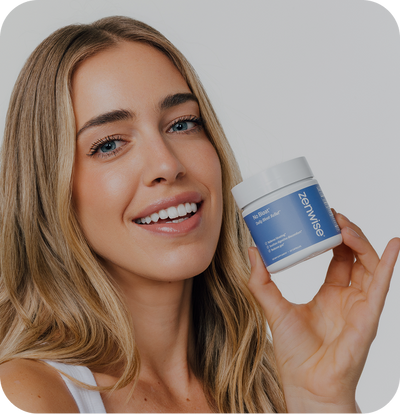
For those moments when the bloating feels like an emergency—perhaps you have a big event or a dinner date and your clothes feel uncomfortably tight—a targeted solution like No Bloat Capsules can be a lifesaver. It’s designed to provide fast relief from that "balloon" feeling, using ingredients like Dandelion Root and Ginger to support water balance and soothe the digestive tract.
Imagine this: You’ve just finished a round of antibiotics for a lingering sinus infection. You feel better, so you decide to celebrate with a big bowl of creamy fettuccine Alfredo. Normally, you’d handle this fine, but tonight, within thirty minutes, you’re doubled over with gas and a stomach that looks like you swallowed a basketball.
What happened? The antibiotics likely reduced your population of Lactobacillus, which helps break down lactose (dairy sugar), and perhaps some of the bacteria that handle heavy fats. Without those "workers" on the assembly line, the pasta just sits there, creating a digestive logjam.
In this scenario, taking Digestive Enzymes before the meal could have provided the supplemental Lipase (for fats) and Lactase (for dairy) needed to do the heavy lifting while your natural microbiome recovers. It’s about giving your body the tools it currently lacks so you can still enjoy the foods you love.
A common worry is whether the damage is permanent. The good news is that the human microbiome is incredibly resilient. For most healthy adults, the gut begins to recover as soon as the antibiotic treatment ends. However, "recovery" can mean different things.
While the total number of bacteria might bounce back within a few weeks, the diversity (the different types of bacteria) can take several months to return to its original state. In some cases, certain rare species might not return at all without intentional support.
To ensure your recovery is on the right track, consistency is key. We often recommend a Subscribe & Save model for our core supplements. Not only does this save you 15% off, but it ensures you never miss a day of support. Consistency is scientifically critical for maintaining a healthy gut microbiome; you wouldn't expect a garden to grow if you only watered it once a month, right?
When people ask, "do antibiotics kill your gut bacteria?", the immediate follow-up is usually, "should I take a probiotic?"
The answer is a resounding yes, but with a caveat: not all probiotics are created equal. Many standard probiotics are fragile; they often die in the harsh, acidic environment of the stomach before they ever reach the small and large intestines where they are needed.
This is why we utilize DE111® in our Digestive Enzymes and other formulas. DE111® is a spore-forming probiotic (Bacillus subtilis). Think of it like a seed with a hard outer shell. This "shell" protects the probiotic as it travels through your stomach acid. Once it reaches the safe, nutrient-rich environment of the gut, it "sprouts" and begins to work, supporting the growth of other beneficial bacteria and promoting regularity.
Women often face unique challenges after antibiotics. Because antibiotics can disrupt the flora throughout the entire body—not just the gut—it's common for women to experience imbalances in vaginal and urinary tract health. Our Women’s Probiotics are specifically formulated to address this. They include D-Mannose and Cranberry to support the urinary tract, alongside probiotics that promote a healthy vaginal pH and gut flora. It’s a comprehensive way to hit "reset" on your system after medicine has moved through it.
While probiotics help "replant" the garden, digestive enzymes act like the garden tools. Even after you finish your prescription, your body’s natural production of enzymes might be temporarily sluggish. This leads to that "heavy" feeling after eating, where food seems to sit in your stomach like a brick.
Our Digestive Enzymes feature a "3-in-1" solution:
If you’re looking for a simpler, more portable way to kickstart digestion after a meal, especially if you’re out at a restaurant, Papaya Chewables are a fantastic option. They are tasty, effortless, and use the natural power of papaya to help reduce post-meal discomfort.
Beyond supplementation, your lifestyle plays a massive role in how quickly your gut bounces back after antibiotics kill your gut bacteria. Here are four science-backed strategies to help "re-wild" your microbiome:
Bacteria need to eat too! Prebiotics are types of dietary fiber that humans can't digest, but our gut bacteria love. Focus on foods like:
By eating these, you are essentially "fertilizing" the good bacteria that survived the antibiotic treatment, helping them to multiply faster.
Fermented foods are natural sources of probiotics. Try to incorporate a small serving of one of these daily:
Did you know that physical activity can actually increase the diversity of your gut bacteria? Aerobic exercise, in particular, has been shown to encourage the growth of bacteria that produce short-chain fatty acids (SCFAs), which help protect the lining of your gut. Whether it’s a brisk walk, a yoga session, or a bike ride, your microbes appreciate the movement.
We live in a world that is often "too clean." Research suggests that spending time in nature—gardening, hiking, or even just playing with a pet—exposes us to a wider array of environmental microbes. These "old friends" from the dirt and the air can help train our immune systems and boost our internal diversity.
We’ve all been there: you’re trying to do everything right, eating your fiber and taking your probiotics, but you still wake up with a stomach that feels like a pressurized keg. Or perhaps you’re traveling and the combination of airplane air, different water, and a recent course of antibiotics has left you feeling backed up and bloated.
This is the exact context where No Bloat Capsules shine. While our daily enzymes are about long-term maintenance, NO BLØAT® is your "lifestyle hero" for crisis management. It works within hours to help ease bloat and reduce gas. It contains BioCore Optimum Complete, a specialized enzyme blend, alongside botanical powerhouses like Fennel and Dandelion Root. Fennel has been used for centuries to relax the muscles in the digestive tract, allowing gas to pass more easily, while Dandelion Root helps the body manage temporary water retention that often accompanies bloating.
Scientists often talk about the "multiple hit hypothesis." This is the idea that our gut microbiomes can handle one or two "hits" (like a course of antibiotics or a week of poor eating) fairly well. But when those hits become frequent—multiple rounds of antibiotics in a year, combined with high stress and a processed diet—the microbiome’s ability to "snap back" diminishes.
This is why we advocate for a proactive approach to gut health. You shouldn't wait until you’re in pain to think about your microbes. By integrating a high-quality supplement like Digestive Enzymes into your daily routine, you are building "bio-resilience." You are making your internal ecosystem stronger and more diverse, so that the next time you do need an antibiotic, your gut is better equipped to handle the disruption and recover faster.
At the end of the day, digestive health shouldn't be a source of stress. We don't want you to spend your life worrying about "what if I eat this?" or "how will my stomach feel in an hour?" Our mission at Zenwise Health is to bridge the gap between clinical science and your actual lifestyle.
We know that life involves antibiotic prescriptions, pizza nights, and travel. We know that "taboo" topics like gas and regularity are real concerns that affect your confidence and comfort. By providing empathetic expertise and high-quality, accessible solutions, we help you navigate these challenges. We want you to feel empowered to take care of your gut, find your "Zen," and Then Eat.® with total confidence.
1. How long does it take for gut bacteria to recover after antibiotics? Most people see an improvement in digestive symptoms within a few weeks of finishing their prescription. However, it can take anywhere from three to six months for the full diversity of your microbiome to stabilize. Using a spore-forming probiotic like those found in Digestive Enzymes can help support this recovery process.
2. Should I take probiotics at the same time as my antibiotics? You should always consult your healthcare provider first, but many experts suggest starting probiotics during your course of antibiotics. The key is to time them correctly—usually taking the probiotic at least two to four hours away from your antibiotic dose so the medication doesn't immediately kill the beneficial bacteria you just swallowed.
3. Why do antibiotics make me feel so bloated? Antibiotics kill off the "good" bacteria that help break down food. When food isn't properly broken down, it ferments in the gut, producing excess gas. Additionally, the imbalance of bacteria can lead to water retention. For fast relief from this specific type of discomfort, No Bloat Capsules are highly effective.
4. Can I get enough probiotics from food alone after antibiotics? While fermented foods like yogurt and kimchi are excellent, they may not provide the concentrated, diverse "boost" needed to jumpstart a microbiome that has been significantly depleted by antibiotics. Supplementing with a targeted probiotic and enzyme blend ensures you are getting a therapeutic dose of "good" bacteria that is guaranteed to survive the journey to your gut.
So, do antibiotics kill your gut bacteria? Yes, they do—but it’s not the end of the story. While the "carpet bomb" effect of these medications can leave you feeling bloated, irregular, and uncomfortable, your microbiome is a living, breathing ecosystem that is ready to grow back. By providing the right "fertilizer" through a fiber-rich diet and the right "seeds" through high-quality supplements like Digestive Enzymes and Women’s Probiotics, you can accelerate your recovery and reclaim your food freedom.
Remember, gut health isn't a one-time fix; it’s a daily practice. Consistency is the secret ingredient to a happy stomach. We invite you to join our Subscribe & Save program to receive 15% off every order. It’s the easiest way to ensure your gut has the support it needs, every single day, without the friction of clinical intervention. Take control of your digestive wellness today, so you can get back to what matters most: enjoying your life and your food.
These statements have not been evaluated by the Food and Drug Administration. This product is not intended to diagnose, treat, cure or prevent any disease.



