




Is Coconut Milk Good for Gut Health? Benefits and Tips
October 04, 2026
October 04, 2026

You’ve finally decided to ditch the dairy. You’re standing in the plant-milk aisle, staring at a wall of cartons, feeling the familiar pressure of "dairy dread." We’ve all been there—that specific anxiety of wondering if your morning latte is going to lead to a mid-afternoon marathon to the nearest restroom. Choosing an alternative should be easy, but when your stomach is sensitive, every choice feels like a high-stakes gamble.
At Zenwise Health, we believe you should be able to enjoy your favorite creamy treats without the digestive drama. Our "Zenwise. Then Eat.®" philosophy is all about preparing your gut so that food becomes a source of joy, not a source of stress. Whether you are eyeing a carton for your coffee or a can for a spicy curry, understanding how this tropical staple interacts with your "gut bugs" is the first step toward food freedom.
Coconut milk has surged in popularity as a rich, lactose-free alternative to cow’s milk. Many people swear by its creamy texture and healthy fats, while others worry the high fat content might be too much for a delicate system to handle. This article explores the biological reality of how coconut milk affects your digestion, which ingredients to avoid, and how to make it a supportive part of your daily routine.
Quick Answer: Yes, coconut milk is generally good for gut health because it is naturally lactose-free and contains medium-chain fatty acids (MCFAs) like lauric acid, which has antimicrobial properties. However, store-bought versions often contain thickeners and gums that may cause gas or bloating in sensitive individuals.
It is important to distinguish coconut milk from its thinner cousin, coconut water. Coconut water is the clear liquid found inside a young, green coconut. It is high in electrolytes but low in fats. Coconut milk, however, is a processed product made from the white flesh of mature coconuts.
To create it, the solid coconut meat is grated and simmered in water. The mixture is then strained. The result is a rich, opaque liquid that mimics the consistency of dairy milk. Depending on how much water is added, you get either "thick" coconut milk (often found in cans for cooking) or "thin" coconut milk (usually found in cartons as a milk substitute).
Because it comes from a plant, it is naturally free of lactose. Lactose is a type of sugar found in animal milk that many adults struggle to break down. When you lack the enzyme lactase, that sugar sits in your colon and ferments, leading to the classic symptoms of bloating, gas, and urgency. By removing lactose from the equation, coconut milk immediately becomes a friendlier option for a large portion of the population.
The most significant nutritional feature of coconut milk is its fat content. Specifically, it is rich in medium-chain fatty acids (MCFAs). Most fats in the American diet are long-chain fatty acids, which require a complex multi-step process to digest. MCFAs are different.
Because their chemical structure is shorter, MCFAs are sent straight from the digestive tract to the liver. Here, they are used for immediate energy rather than being stored as fat. This makes them easier on the digestive system for many people, providing a quick fuel source without the "heavy" feeling that sometimes follows a high-fat meal.
About half of the fatty acids in coconut milk come from lauric acid. When you consume lauric acid, your body converts it into a compound called monolaurin. Research suggests that monolaurin has antimicrobial and antifungal properties.
In the context of gut health, this means it may help balance your microbiome by targeting "bad" bacteria and yeast without harming the beneficial microbes your system needs. A balanced microbiome is the cornerstone of regularity and a strong immune system.
Some animal studies have suggested that coconut milk may help protect the mucus lining of the stomach. A healthy stomach lining is essential for preventing irritation from stomach acid. While human studies are still emerging, the traditional use of coconut in many cultures for "soothing the belly" aligns with these findings.
Key Takeaway: The medium-chain fats in coconut milk are easier to digest than traditional fats and contain lauric acid, which may help maintain a healthy balance of microbes in your gut.
While the coconut itself is gut-friendly, the stuff added to the carton often isn't. If you’ve ever switched to coconut milk and felt more bloated, the culprit is likely a food additive used to keep the milk from separating.
Manufacturers often add guar gum, xanthan gum, or gellan gum to give plant milk a creamy mouthfeel. These are types of soluble fiber (polysaccharides). While they are safe for most, they are highly fermentable. If you have a sensitive gut, your bacteria may break these gums down too quickly, producing a lot of gas in the process.
Carrageenan is another common additive derived from red seaweed. It is used as a stabilizer in many "original" or "plain" coconut milk brands. Some research suggests that carrageenan can contribute to intestinal inflammation in certain people. If you are already dealing with digestive discomfort, it is often best to choose a brand that is carrageenan-free.
Many "original" flavors of coconut milk are loaded with cane sugar. High sugar intake can disrupt the balance of your gut flora, feeding the types of yeast and bacteria that lead to gas and "brain fog." Always look for the word "Unsweetened" on the label.
Myth: All plant-based milks are better for bloating than dairy. Fact: If a plant milk is loaded with gums, thickeners, and added sugars, it can cause just as much (or more) bloating as dairy for sensitive people.
If you are trying to decide which milk belongs in your fridge, it helps to see how they stack up against each other.
| Milk Type | Gut Pros | Gut Cons | Best For |
|---|---|---|---|
| Coconut Milk | Lactose-free, contains MCFAs, antimicrobial properties. | High in saturated fat, often contains gums. | Cooking, creamy lattes, dairy sensitivity. |
| Almond Milk | Low calorie, usually easy to digest. | Low protein, high water content, often has thickeners. | Weight management, light smoothies. |
| Oat Milk | Contains beta-glucan (fiber). | High in carbs, can cause spikes in blood sugar, may contain gluten. | People with nut allergies. |
| Lactose-Free Dairy | High protein, familiar taste. | Still contains milk proteins (casein/whey) which some find irritating. | Athletes, muscle recovery. |
Coconut milk is high in fat, and for some, that is the primary hurdle. If your body doesn't produce enough lipases—the specific digestive enzymes responsible for breaking down fats—you might experience "greasy" stools or a heavy feeling after eating.
This is where a little extra help can go a long way. Our Digestive Enzymes are a 3-in-1 solution that combines enzymes, prebiotics, and probiotics. These enzymes help break down fats, proteins, carbohydrates, and fibers, ensuring you get the nutrients out of your coconut-milk-based meals without the discomfort.
We also include DE111®, a spore-forming probiotic. Unlike many "fragile" probiotics that die in the harsh, acidic environment of your stomach, DE111® is clinically shown to survive the journey to your small intestine. This helps support regularity and a healthy gut microbiome over time.
We all have those nights where the Thai curry was too good to pass up, or the "dairy-free" dessert was a little more processed than we realized. If you find yourself feeling like you’ve swallowed a literal balloon, NO BLØAT® is designed for those "now" moments.
It features BioCore Optimum Complete enzymes alongside herbal support like Dandelion Root, Fennel, and Ginger. These ingredients work together to help move gas through the system and ease that "my pants are too tight" feeling within hours. It is the perfect partner for travel or eating out when you can't control every ingredient in your meal.
If you want to be 100% sure your coconut milk is good for your gut, the best way is to make it yourself. This eliminates the gums, carrageenan, and hidden sugars found in store-bought cartons. It is surprisingly easy.
Step 1: Gather your ingredients. You only need two things: one cup of unsweetened shredded coconut (make sure it’s just coconut, no sulfur or sugar) and two cups of hot (but not boiling) water.
Step 2: Blend on high. Put the coconut and water into a high-speed blender. Blend for about two minutes until the mixture looks thick, white, and creamy.
Step 3: Strain the solids. Pour the mixture through a nut milk bag or a fine-mesh strainer into a glass jar. Squeeze the bag firmly to get every last drop of the "milk" out.
Step 4: Store and shake. Store it in the fridge for up to four days. Because there are no chemical stabilizers, it will separate. The fat will rise to the top. This is normal! Just give it a good shake before you use it.
It is worth noting that what is good for your gut is often good for your skin. "The Proof Is In The Poop™" isn't our only motto; we also know that an unhappy gut often shows up on your face.
Coconut milk is rich in Vitamin C and Vitamin E, both of which support skin elasticity and hydration. By choosing a lactose-free alternative like coconut milk, you may also avoid the hormonal fluctuations some people experience with dairy, which can lead to breakouts. When your digestion is smooth and your microbiome is balanced, your skin often reflects that internal "Zen."
Coconut milk is a great tool, but gut health isn't built on a single ingredient. It’s built on consistency. Your gut microbiome is a living ecosystem that responds to what you do every day, not just once in a while.
Most people find that their digestion improves most significantly when they pair smart food choices—like switching to unsweetened coconut milk—with a daily support system. A consistent option for daily digestive support is Digestive Enzymes.
Bottom line: Coconut milk is an excellent dairy alternative that provides healthy fats and antimicrobial benefits, provided you choose versions without irritating additives.
Pure coconut milk rarely causes gas, but store-bought versions containing gums (like guar or xanthan gum) can cause fermentation in the gut, leading to gas and bloating. If you find yourself gassy after drinking it, check the ingredient label for these thickeners or added sugars. For occasional discomfort, NO BLØAT® may be a convenient option.
For many people, yes, because coconut milk is naturally lactose-free, and lactose is a common trigger for those with sensitive digestive systems. However, everyone is different, and the high fat content or presence of additives like carrageenan can still cause issues for some individuals. A daily routine with Digestive Enzymes may provide additional digestive support.
Yes, you can enjoy coconut milk daily as part of a balanced diet. Because it is high in saturated fat, it is best used in moderation—for example, a splash in your coffee or as a base for one meal—rather than drinking multiple glasses a day.
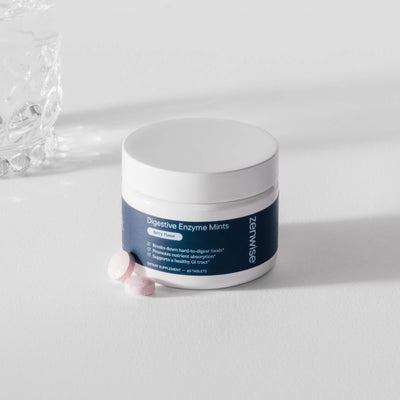
Canned coconut milk is usually thicker and better for cooking, while cartons are formulated as beverages. For gut health, the "best" one is whichever has the fewest ingredients. Always look for brands that contain only coconut and water, avoiding those with added sugars and chemical stabilizers. For convenient post-meal support, Digestive Enzyme Mints are an easy option.
Switching to coconut milk is a fantastic way to support your digestive wellness and embrace the "Zenwise. Then Eat.®" lifestyle. However, remember that your gut thrives on routine. Supporting your microbiome isn't a one-off event; it’s a daily habit.
To help you stay on track, we offer a Subscribe & Save program. Not only do you get 15% off every order, but it also ensures you never run out of the daily support your gut needs. Consistency is the scientific secret to a happy microbiome. When you provide your "gut bugs" with regular, high-quality support, they reward you with better energy, clearer skin, and the confidence to eat the foods you love.
Whether it’s a creamy coconut curry or a simple morning smoothie, we are here to help you enjoy every bite. Because at the end of the day, the key to good health is gut health.®
These statements have not been evaluated by the Food and Drug Administration. This product is not intended to diagnose, treat, cure or prevent any disease.
Share this article


