




Can Digestive Enzymes Help With Gastroparesis Support?
February 16, 2026
February 16, 2026

We’ve all been there—staring at a menu with a mix of excitement and "menu anxiety," wondering if that delicious-looking pasta is going to make us feel like we swallowed a lead balloon. For many, that feeling isn’t just an occasional "oops, I ate too much" moment; it’s a daily struggle where the stomach seems to have forgotten its primary job: moving food along. When your digestive system decides to take a permanent coffee break, leaving food to sit around longer than a guest who won’t take the hint, it can lead to some seriously uncomfortable situations. This slow-motion digestion is what many refer to as gastroparesis.
If you’ve found yourself searching for ways to get things moving again, you’ve likely come across a burning question: can digestive enzymes help with gastroparesis? While this condition can feel like an uphill battle, understanding how your body breaks down food—and how you can support that process—is the first step toward reclaiming your "food freedom." At Zenwise®, we believe that "The Key To Good Health Is Gut Health.®" and we are here to partner with you on this journey.
In this post, we’re going to dive deep into the mechanics of a slow-moving stomach, the role of supplemental enzymes, and how lifestyle tweaks can help you feel like yourself again. Our goal is to move you from a place of discomfort to a place where you can confidently say, "Zenwise. Then Eat.®"
To understand how enzymes might help, we first have to look at the problem. In a perfectly functioning world, your stomach is a finely tuned engine. You eat, the stomach muscles (controlled by the vagus nerve) contract, and the food is ground up and pushed into the small intestine. It’s a rhythmic, beautiful process.
In the case of gastroparesis, that rhythm is broken. The term literally means "stomach paralysis." This doesn't necessarily mean the stomach is completely frozen, but it is significantly delayed. Without a physical blockage, food just... sits there. Imagine a highway where the cars are all functional, but the speed limit has been dropped to one mile per hour. The traffic jam (bloating, nausea, and that "too full" feeling) is inevitable.
The most common culprit is a miscommunication between the brain and the gut, often involving the vagus nerve. This nerve is the "command center" for your digestive tract. When it's damaged or not firing correctly—which can happen due to blood sugar imbalances, certain surgeries, or even after a nasty viral infection—the stomach muscles don’t get the signal to contract.
When food stays in the stomach too long, it can lead to:
Because we know that "The Proof Is In The Poop™," we recognize that if things aren't moving properly at the top of the system, they certainly aren't going to be ideal at the bottom.
Now, let’s talk about the stars of the show: digestive enzymes. Think of these as your body’s "biological scissors." Their job is to snip large, complex food molecules (polymers) into tiny, absorbable pieces (monomers).
Your body naturally produces these in the mouth (saliva), the stomach, and primarily the pancreas. However, when the stomach is slow, it can struggle to mechanically break down food enough for your natural enzymes to do their job efficiently. This is where supplemental support comes in.
Recent research has explored the idea that if we can "liquify" food faster, it might have an easier time passing through a sluggish stomach. A study highlighted by the American Academy of Gastroenterology showed that using a combination of enzymes like amylase, lipase, and protease helped break down food loads into a more liquid state.
For someone whose stomach muscles aren't pushing hard, liquid passes through much easier than a solid "chunk" of steak or a fibrous piece of broccoli. By supplementing with high-quality Digestive Enzymes, you are essentially helping the stomach do the "pre-work" it’s currently struggling with.
While enzymes are not a "cure" for a paralyzed stomach, they serve as a vital support system. When we look at the question "can digestive enzymes help with gastroparesis," we focus on the function of digestion.
For daily maintenance and to keep the "digestive fire" burning, our Digestive Enzymes are a 3-in-1 powerhouse. They contain not just enzymes, but also prebiotics and probiotics (specifically DE111®) to support the entire GI tract.
We’ve all had those moments. Maybe it’s a family wedding, a vacation, or just a Tuesday where you really wanted that deep-dish pizza. When you have slow digestion, these "heavy" meals can feel like a death sentence for your comfort. You know the bloat is coming, and you know it’s going to be uncomfortable.
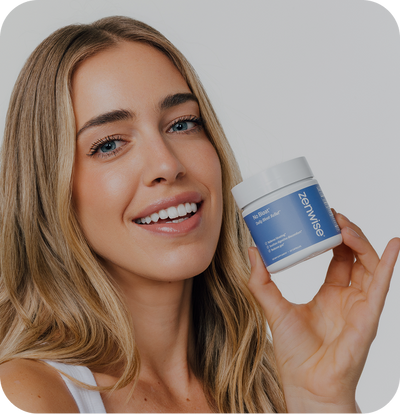
This is where No Bloat Capsules become your lifestyle hero. Unlike a daily maintenance routine, NO BLØAT® is designed for "crisis management" or those times when you know your stomach is going to need an extra push.
If you’re planning a meal that usually leaves you feeling like a balloon, taking No Bloat Capsules before you eat can help ease the aftermath and keep you from spending the rest of the night on the couch in your "stretchy pants."
Meet Sarah. Sarah loves brunch with her friends, but for the last year, she’s been dealing with a stomach that just won’t empty. She’s tried eating like a bird, but even a small omelet leaves her feeling nauseous and bloated for hours. She’s started declining invitations because she’s tired of explaining why she’s barely touching her food.
For someone like Sarah, a two-pronged approach is key:
By partnering with her body instead of fighting it, Sarah finds she can participate in life again. She isn't "curing" her slow stomach, but she is optimizing the process so she can enjoy the "Zenwise. Then Eat.®" lifestyle.
Digestive issues don't exist in a vacuum. For women, gut health is often intricately linked with hormonal and vaginal health. If a slow-moving gut is causing a ripple effect throughout your system, our Women’s Probiotics offer a tailored solution. They support the gut flora while also including Cranberry and D-Mannose for urinary tract and vaginal health. It’s all connected, and keeping the microbiome balanced is essential when the "upper" plumbing is acting up.
And for those who hate swallowing pills or just want a quick "insurance policy" after a snack? Our Papaya Chewables are a fan favorite. They are tasty, effortless, and provide papain (an enzyme from papaya) to kickstart the breakdown of proteins. It’s a gentle, effective way to support your stomach without the clinical feel of a tablet.
While we love the power of enzymes, they work best when combined with smart lifestyle choices. If you’re dealing with delayed gastric emptying, consider these "pro-tips" to keep things moving:
Instead of three big meals, try five or six small ones. Think of your stomach as a narrow funnel. If you dump a whole bag of sand in at once, it clogs. If you pour it in a little at a time, it flows through.
Raw vegetables are full of insoluble fiber, which is like a workout for a healthy stomach but a nightmare for a slow one. Cook your veggies until they are soft. Blend your soups. Opt for "pureed" textures where possible to take the mechanical load off your stomach.
Never lie down right after eating. Take a gentle 10-minute walk. This uses gravity to help move food toward the exit (the pyloric sphincter) and stimulates natural contractions.
Fat and fiber are the two things that slow down stomach emptying the most. Even in healthy people, a high-fat meal stays in the stomach longer. For those with gastroparesis, reducing these can provide immediate relief.
Stay hydrated, but avoid using straws or drinking carbonated beverages. Straws cause you to swallow extra air, which leads to—you guessed it—more bloating.
When it comes to gut health, the "one-and-done" approach rarely works. Your microbiome—the trillions of bacteria living in your gut—thrives on consistency. This is why we are so passionate about our Subscribe & Save program.
By choosing to Subscribe & Save, you not only get 15% off every order, but you ensure that you never run out of your essential support. Maintaining a steady supply of Digestive Enzymes or Women’s Probiotics means your gut environment stays stable, which is scientifically critical for long-term comfort and regularity.
Think of it like watering a plant. You can't give it a gallon of water once a month and expect it to thrive; it needs a little bit every day. Your gut is the same way.
Let's be real: talking about "delayed gastric emptying" is just a medical way of saying you feel like poop because you haven't pooped. It’s okay to laugh about it! At Zenwise®, we don't think digestive health should be a stiff, clinical topic that you only discuss in hushed tones.
Whether it's the "pasta bloat" that makes you look six months pregnant or the gas that always seems to strike in a quiet elevator, we’ve all been there. Embracing the reality of our bodies helps us take the steps needed to fix the problem. Remember, "The Proof Is In The Poop™." When you start feeling lighter, moving better, and worrying less about the nearest bathroom, you know your routine is working.
Since gastroparesis is often a nerve issue, it can be helpful to look at "vagus nerve hygiene." While enzymes handle the food, you can help handle the signals.
When you combine these "nerve hacks" with the "food hacks" provided by No Bloat Capsules, you’re attacking the problem from both ends of the brain-gut axis.
Digestive enzymes are a support tool, not a permanent cure for the underlying nerve or muscle issues. However, they can significantly improve the quality of life and the efficiency of digestion on a daily basis. By helping break down food into a more liquid state, they support the stomach's primary function of moving food along.
Absolutely! In fact, we recommend it. Our Digestive Enzymes are a "3-in-1" formula specifically designed to combine enzymes, prebiotics, and probiotics. This ensures that you are supporting both the chemical breakdown of food and the health of your microbiome simultaneously.
If you need fast-acting support for occasional bloating after a heavy or problematic meal, No Bloat Capsules are your best bet. They contain specialized ingredients like dandelion root and fennel to ease discomfort within hours. For daily, long-term support, stick with our core Digestive Enzymes.
For the best results, especially with a slow-moving stomach, it is usually recommended to take enzymes just before you start eating. This allows the "biological scissors" to be present and ready the moment the food hits your stomach. If you forget, taking a Papaya Chewable right after you finish can still provide beneficial support.
Living with a stomach that feels like it’s stuck in low gear can be frustrating, isolating, and downright uncomfortable. But you don't have to navigate it alone. By understanding the mechanics of how enzymes support the liquification of food, and by making smart lifestyle choices, you can turn the tide on digestive discomfort.
At Zenwise®, our mission is to provide you with the tools to eat what you love and feel great doing it. From the daily maintenance of Digestive Enzymes to the "emergency" support of No Bloat Capsules, we have a solution for every "gut feeling."
Don't let "menu anxiety" dictate your social life any longer. Take the first step toward a happier gut today. Subscribe & Save to get 15% off your routine and ensure you’re always prepared for whatever is on the menu. Because at the end of the day, a healthy gut leads to a happy life, and we want to help you get there.
Zenwise Health: Then Eat.®
These statements have not been evaluated by the Food and Drug Administration. This product is not intended to diagnose, treat, cure or prevent any disease.



