




Do Probiotics Help You Gain Weight?
April 02, 2026
April 02, 2026

We’ve all been there: you’re standing in front of the mirror, struggling to zip up your favorite pair of jeans that fit perfectly just two weeks ago. You haven’t changed your diet, and you haven’t skipped the gym, yet there’s that unmistakable feeling of "fullness" that feels more like a permanent guest than a temporary visitor. This often leads to "menu anxiety"—that frantic internal debate at a restaurant where you wonder if the kale salad will make you feel like a fitness icon or if the artisanal sourdough will result in a "food baby" that requires unbuttoning your pants under the table.
In the search for answers, many people turn to gut health supplements. But a common question lingers in the minds of the health-conscious: do probiotics help you gain weight? It’s a valid concern. If we are adding billions of live bacteria to our internal ecosystem, will that change the numbers on the scale? Does a healthier gut mean a more efficient body that holds onto every calorie, or does it mean a streamlined system that keeps things moving?
In this blog, we are going to dive deep into the relationship between your microbiome and your waistline. We will explore the science of how bacteria influence metabolism, the difference between actual weight gain and occasional bloating, and how you can optimize your digestion to feel your best. At Zenwise Health, we believe that The Key To Good Health Is Gut Health.® Our mission is simple: Zenwise. Then Eat.® We want to give you the tools to enjoy your food without the fear of how your body will react.
To understand the weight-and-probiotic connection, we first have to look at what’s happening inside your "gut garden." Your digestive tract is home to trillions of microorganisms, including bacteria, fungi, and viruses. This community is known as the microbiome. When this garden is in bloom, you feel energetic, your digestion is smooth, and your clothes fit comfortably. When the weeds take over, you might experience gas, occasional bloating, and irregularity.
The idea that probiotics—beneficial bacteria—could influence weight isn't as far-fetched as it sounds. These microscopic workers are responsible for breaking down the food your body can’t digest on its own, such as certain fibers. They also produce vitamins and help regulate the signals that tell your brain you’re full or hungry.
When people ask, "do probiotics help you gain weight," they are usually asking one of two things: Will this supplement make me fat? Or, will this supplement help me finally absorb enough nutrients to reach a healthy weight? The answer, as it turns out, is all about balance.
For the vast majority of people, taking a high-quality probiotic supplement will not lead to unwanted fat gain. In fact, most research suggests that a diverse and balanced microbiome is associated with a healthy weight. However, there is a nuance to the "weight gain" conversation that often gets lost in translation.
If you have been struggling with irregularity or poor digestion, your body might not be absorbing nutrients efficiently. When you start a regimen like our Digestive Enzymes, you are providing your system with the tools it needs to break down fats, proteins, carbohydrates, and fiber.
By improving nutrient absorption, your body finally gets the fuel it needs. For some individuals who are underweight due to digestive struggles, this "optimization" might lead to reaching a healthier, more stable weight. This isn't "getting fat"; it's your body finally functioning the way it was designed to.
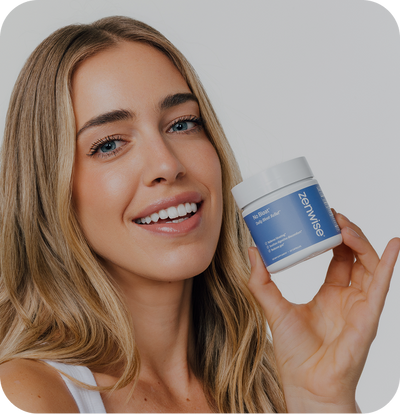
When you first introduce a high-potivity probiotic, your gut microbiome undergoes a shift. During this transition, some people might experience temporary, occasional bloating or gas. This can make you feel like you’ve gained weight or make your stomach look slightly distended. It’s important to remember that this isn't fat gain—it's just your internal garden being reorganized. To manage these "crisis" moments when you need to fit into that wedding outfit or a snug pair of trousers, No Bloat Capsules are the lifestyle hero you need to ease that discomfort within hours.
One of the biggest misconceptions in digestive health is confusing a "bloated belly" with "weight gain." If your weight fluctuates by three or four pounds in a single day, it is almost certainly not fat. It is water retention and gas.
Scenario: Imagine it’s "Pasta Night." You indulge in a delicious bowl of carbonara. Two hours later, you feel like a balloon. You step on the scale the next morning, and you're up two pounds. Did you gain two pounds of fat from one meal? Absolutely not. Your body is likely holding onto water to process the salt and carbohydrates, and your gut bacteria are working overtime (and producing gas) to ferment the fibers and sugars they aren't used to.
In this scenario, a quick-acting solution like No Bloat Capsules can help flatten the appearance of the stomach by using ingredients like Dandelion Root for water retention and Fennel to ease gas. By addressing the bloat, you realize the "weight gain" was just a temporary digestive traffic jam.
We often think of metabolism as something that happens in our muscles, but it truly starts in the gut. If you aren't breaking down your food, you aren't fueling your metabolism.
Enzymes are the biological "scissors" that cut up large food polymers into smaller, absorbable pieces. Our Digestive Enzymes utilize BioCore Optimum Complete, a robust blend of enzymes designed to tackle everything from the lactose in your cheese to the complex carbs in your beans. When these enzymes do their job, there is less undigested food sitting in your colon to be fermented by gas-producing bacteria.
Not all probiotics are created equal. Many of the "live cultures" found in grocery store yogurts never even make it to your lower intestine—they are annihilated by the harsh acid in your stomach. We use DE111®, a spore-forming probiotic strain. Think of it as a probiotic with a suit of armor. It remains dormant through the stomach acid and only "wakes up" once it reaches the gut, where it can actually go to work supporting regularity and immune function.
By maintaining a consistent environment with DE111®, you help ensure that your body handles calories and waste efficiently. Remember, The Proof Is In The Poop™. Regularity is a sign that your metabolism is firing on all cylinders.
For women, the question "do probiotics help you gain weight" often has an added layer of complexity involving hormonal cycles. Many women experience significant bloating and "perceived weight gain" during certain times of the month.
The gut and the vaginal microbiome are closely linked. An imbalance in one can often lead to issues in the other. Furthermore, the gut is responsible for metabolizing estrogen. If the gut is sluggish, it can affect overall hormonal balance, which in turn influences where the body stores fat and how much water it retains.
Our Women’s Probiotics are specifically formulated to support this unique ecosystem. By including Cranberry and D-Mannose alongside gut-friendly strains, these probiotics support urinary tract health and vaginal flora while keeping the digestive system moving. When your gut is supported, you’re less likely to experience the massive "hormonal bloat" that makes the scale climb and your confidence dip.
Did you know that your gut bacteria can actually influence what you want to eat? It sounds like science fiction, but it’s true. Certain "bad" bacteria thrive on simple sugars and processed carbs. When these populations get too large, they can send signals through the vagus nerve (the direct line between your gut and your brain) that trigger cravings for sweets.
If you find yourself reaching for cookies every afternoon, it might not be a lack of willpower; it might be an overgrowth of sugar-loving microbes. By taking a daily probiotic, you are "crowding out" the bad guys with beneficial strains. Over time, this can lead to fewer cravings for high-calorie, sugary foods, making it much easier to maintain a healthy weight.
To help kickstart this process after a meal that was perhaps a bit too sugary or heavy, Papaya Chewables are a fantastic, tasty way to support digestion. They use the natural power of papaya to help break down proteins and soothe the stomach, keeping you from feeling that post-meal slump that often leads to more snacking.
Let’s look at how to apply this knowledge to real-life situations. We don't live in a lab; we live in a world full of pizza, stressful workdays, and travel.
You’re on a business trip or a vacation. Your diet is inconsistent, you’re sitting on planes for hours, and your "regularity" has completely vanished. You feel heavy, swollen, and sluggish. You might think you’ve gained five pounds in a week.
You love ice cream and cheese, but every time you indulge, you spend the rest of the night on the couch in physical (and audible) distress. You avoid these foods because you fear the "puffiness" they cause.
You eat well and exercise, but you still feel "off" occasionally. You want to make sure your body is getting the most out of the expensive organic produce you buy.
One of the biggest mistakes people make with probiotics is treating them like a headache pill—only taking them when they feel bad. While products like No Bloat Capsules are perfect for crisis management, the real magic happens with daily maintenance.
Your microbiome is a living thing. It is constantly being challenged by stress, processed foods, and environmental toxins. To maintain a healthy weight and a flat stomach, you need to provide your gut with reinforcements daily. This is why we highly recommend our Subscribe & Save program.
When you subscribe, you ensure that you never run out of your Digestive Enzymes or Women’s Probiotics. Not only does this guarantee consistency for your gut health, but it also saves you 15% off every order. It’s an accessible way to invest in your long-term wellness without the friction of clinical costs or the stress of reordering every month.
It’s time to stop fearing the scale and start listening to your gut. When people worry about probiotics helping them gain weight, they are usually overlooking the fact that a poorly functioning gut is often the culprit behind a heavy, sluggish feeling.
Consider the role of the ingredients in No Bloat Capsules:
When you use these tools, you often find that your "weight" was simply a byproduct of poor digestion. By clearing the path, you feel lighter, more energetic, and more confident in your clothes.
To really answer the question "do probiotics help you gain weight," we have to look at Short-Chain Fatty Acids (SCFAs). When probiotics ferment fiber in your gut, they produce SCFAs like butyrate, propionate, and acetate.
These SCFAs are incredible molecules. They provide energy to the cells lining your colon, help regulate inflammation, and can even influence how your body stores fat. Some studies suggest that propionate and butyrate may help increase the release of hormones that signal satiety (fullness), which can prevent overeating.
By supplementing with Digestive Enzymes, which include a prebiotic and probiotic blend, you are providing the "fuel" (prebiotics) and the "workers" (probiotics) necessary to produce these weight-friendly SCFAs.
Let's clear the air and debunk some common misconceptions that might be holding you back from optimal gut health.
False. Different strains have different jobs. Some focus on immune support, while others focus on regularity. If you are concerned about weight and bloating, look for formulas that include DE111® for its proven survivability and its role in supporting a healthy body composition.
While we say Zenwise. Then Eat.®, we aren't suggesting that probiotics are a "magic pill" that negates a poor diet. Probiotics and enzymes are tools that help your body handle food better, but they work best when paired with a balanced lifestyle. However, they do give you the freedom to enjoy those special meals without the debilitating aftermath.
As discussed, what people often perceive as weight gain is usually a temporary shift in the microbiome or water retention. Actual fat gain from a probiotic supplement is extremely unlikely. In fact, most users report feeling "lighter" once their digestion becomes regular.
So, do probiotics help you gain weight? The short answer is: they help you reach your healthiest weight by optimizing how your body processes fuel. They are not a cause of unwanted fat gain, but rather a support system for a more efficient, less bloated version of yourself.
By incorporating a high-quality routine—starting with Digestive Enzymes for daily maintenance and keeping No Bloat Capsules on hand for those indulgent moments—you can regain control over your digestion. No more hiding under oversized sweaters or fearing the restaurant menu.
At Zenwise Health, we want you to experience food freedom. We want you to feel confident that your body can handle whatever you put into it. Because at the end of the day, The Key To Good Health Is Gut Health.®
Ready to start your journey to a happier gut? Join the thousands of people who have found relief and confidence with Zenwise. Subscribe & Save today to get 15% off your order and ensure your gut garden stays in bloom year-round. Visit our Main Homepage to explore our full range of solutions.
1. Can probiotics make me feel bloated at first? Yes, it is common to experience occasional bloating or gas when you first start a probiotic. This is often called a "die-off" or "adjustment" phase as the beneficial bacteria begin to balance your microbiome. This usually subsides within a few days. For immediate relief during this phase, you can use No Bloat Capsules.
2. How long does it take for probiotics to help with bloating? While some people feel a difference within a few days, it can take 2 to 4 weeks of consistent daily use to see a significant change in your overall gut environment and regularity. Consistency is key, which is why we recommend a subscription.
3. Should I take probiotics if I am trying to lose weight? Probiotics can be a helpful part of a weight management plan by supporting healthy digestion, improving nutrient absorption, and potentially reducing cravings for sugary foods. They help ensure your metabolism isn't being slowed down by poor gut health.
4. What is the difference between Digestive Enzymes and No Bloat? Think of Digestive Enzymes as your daily maintenance—you take them before every meal to prevent issues. No Bloat Capsules are your "crisis" hero—you take them when you’re already feeling bloated or after a particularly heavy meal for fast-acting relief.
These statements have not been evaluated by the Food and Drug Administration. This product is not intended to diagnose, treat, cure or prevent any disease.



